

Contents
Biography & Historical Record
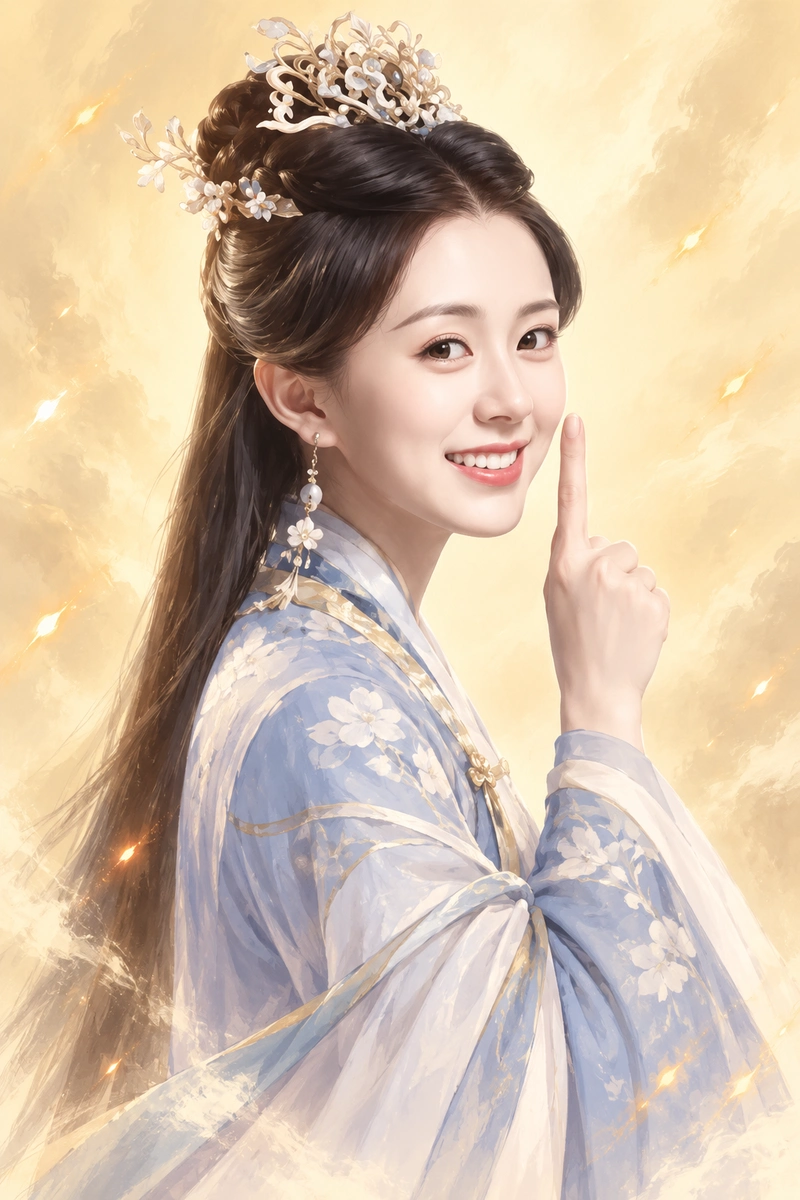
Lady Cao (曹氏, Tào thị, died 237 AD) was a celebrated noblewoman of the state of Cao Wei, renowned across northern China for her extraordinary, transcendent physical beauty, gentle grace, and noble lineage. She was the daughter of Senior General Cao Hong (曹洪, Tào Hồng), one of Cao Cao’s most decorated founding generals and Marquis of Lechang.
Lady Cao married Xun Can (荀粲, Tuân Xán, courtesy name Fengqian), the brilliant philosopher, pioneer of Xuanxue (Neo-Daoist Dark Learning), and youngest son of the legendary chancellor Xun Yu (荀彧, Tuân Úc). Xun Can famously held the aesthetic belief that “women’s virtue is secondary; supreme beauty alone moves the soul”, and when he wed Lady Cao, the couple shared an unprecedented, passionate devotion that captivated contemporary literati. In the freezing winter of 237 AD, Lady Cao contracted a sudden, life-threatening high fever. Desperate to cool her scorching body, Xun Can stripped off his garments, ran outside into the blizzard until his own skin turned icy cold, and returned inside to embrace Lady Cao in an agonizing attempt to absorb her fever. Despite his heroic tenderness, Lady Cao succumbed to illness. Xun Can was so utterly devastated by her passing that he refused all solace, wept continuously, and died of heartbreak shortly afterward at age twenty-nine, immortalizing their romance in the annals of Chinese love folklore.
Role in Romance & Historical Chronicles
“Xun Can married the daughter of Cao Hong, a woman of peerless beauty whom he loved beyond measure. When she caught a burning fever in winter, Can went out into the snow to chill himself, then embraced her to quell the heat. She died nonetheless, and Can died of grief soon after.”
— A New Account of the Tales of the World (Shishuo Xinyu) & Book of Jin (Jin Shu)
In the cultural history of the Wei-Jin transition, Lady Cao stands as the heroine of one of antiquity’s most intensely poetic and tragic romantic legends, illustrating the depth of emotional passion (Qing) celebrated by early Xuanxue philosophers.
Lady Cao (曹氏) — Historical Timeline
Noble Lineage in the Cao Clan
Born to General Cao Hong; grows up celebrated as one of the most stunning beauties of the capital.
Marriage to Xun Can
Weds Xun Can; the two share an extraordinarily passionate intellectual and emotional bond in Luoyang.
Winter Tragedy & Immortal Romance
Falls severely ill in winter; despite Xun Can’s desperate efforts to cool her with his own chilled body, she passes away, causing Xun Can to die of grief.
Key Relationships
Family
- Husband: Xun Can (荀粲, Tuân Xán) — Renowned Xuanxue philosopher and son of Xun Yu.
- Father: Cao Hong (曹洪, Tào Hồng) — Veteran founding general of Cao Wei.
- Father-in-law: Xun Yu (荀彧, Tuân Úc) — Chief strategist and statesman of Cao Cao.
Friends / Allies
- Literary and philosophical circles of the Zhengshi period in Luoyang.
Enemies / Rivals
- Rigid orthodox Confucian moralists who criticized Xun Can’s unabashed passion for feminine beauty.
Other
- Cultural Legacy: Central figure in the immortal romantic tragedy recorded in Shishuo Xinyu (Huo Re Qu Bing / 惑溺).
In Novel
While omitted from the battlefield chapters of Romance of the Three Kingdoms, Lady Cao and Xun Can’t legendary winter romance is immortalized across centuries of classical Chinese literature and poetry.
In History
Summary
Lady Cao (died 237 AD) was the daughter of General Cao Hong and wife of philosopher Xun Can, famous for the poignant winter sacrifice of her husband.
Historical Record
Recorded in Shishuo Xinyu, Section ‘Huoni’ (Fascination), and annotated by Pei Songzhi in Sanguozhi, Volume 10.