








Contents
Biography & Historical Record
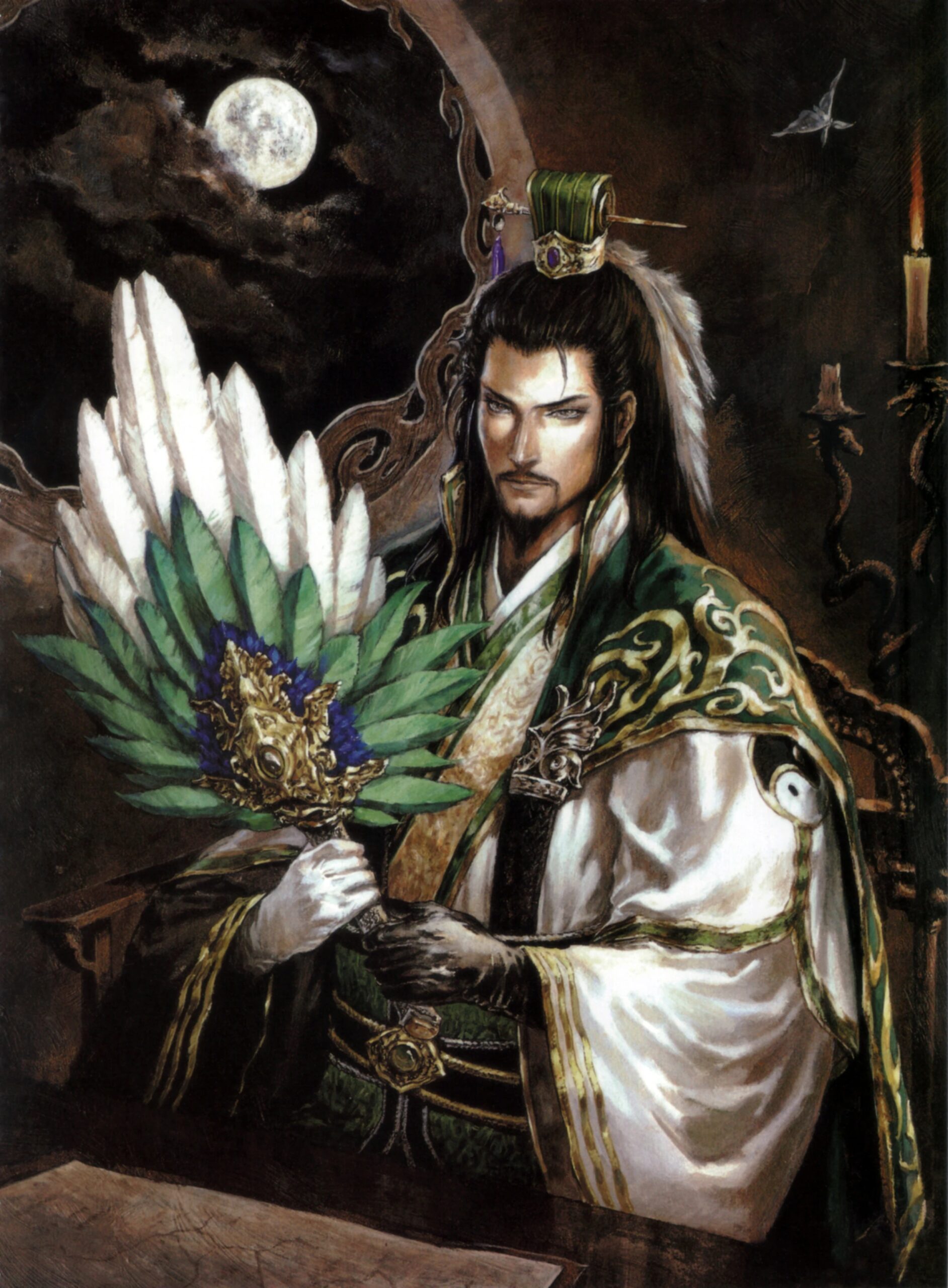
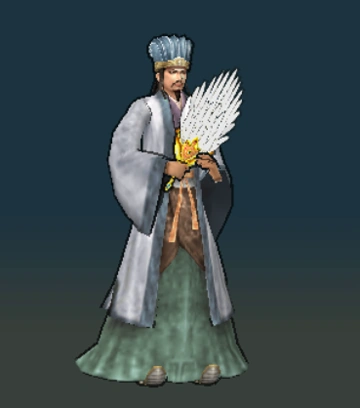
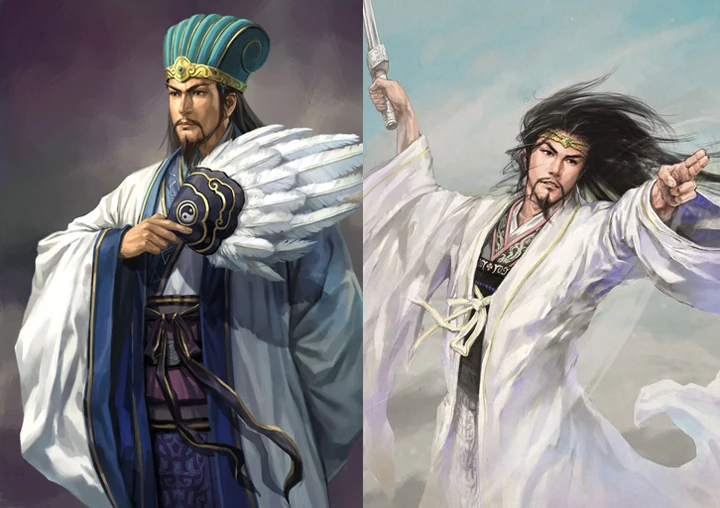
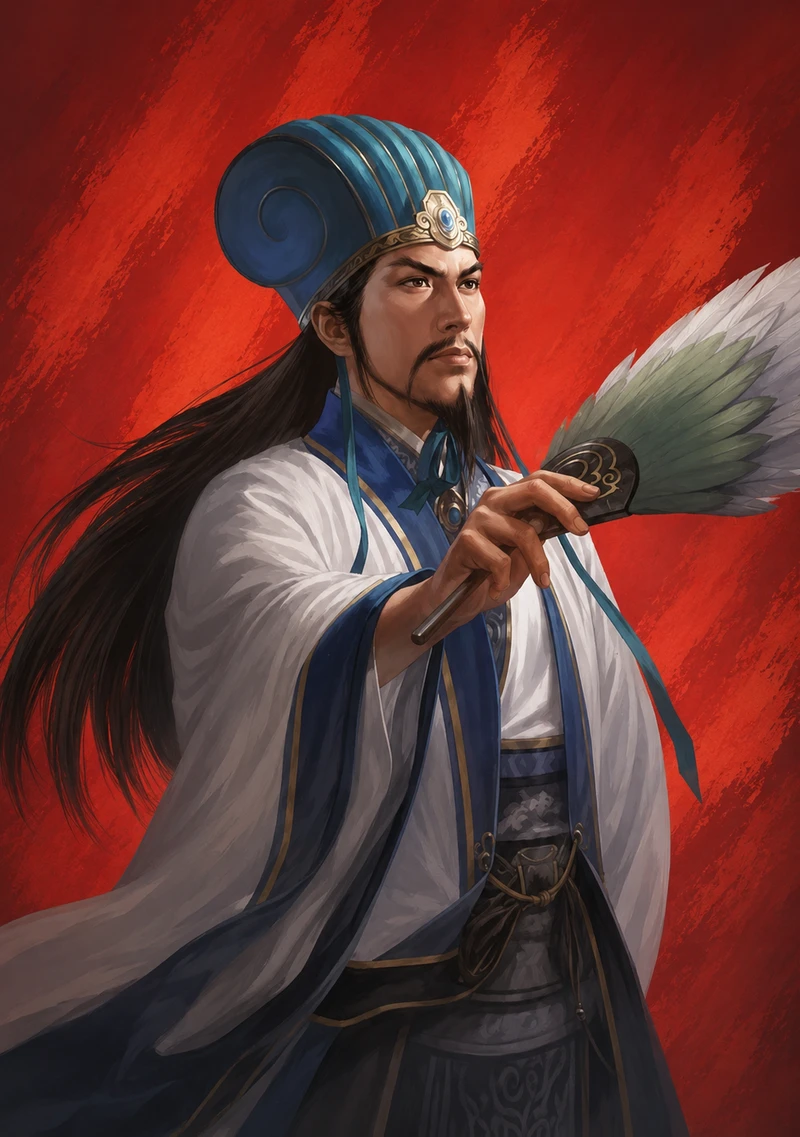
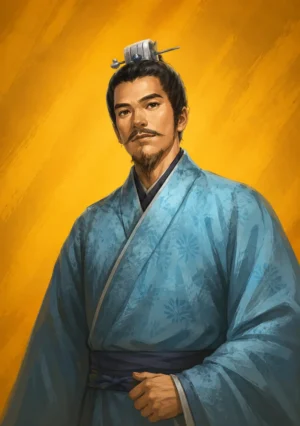
Zhuge Liang (诸葛亮, Gia Cát Lượng), courtesy name Kongming (孔明, Khổng Minh), was a statesman, military strategist, engineer, and Chancellor of Shu Han during the Three Kingdoms period. Known as the “Sleeping Dragon” (卧龙, Ngọa Long), he was born in Yangdu, Langye Commandery, lost his parents young and was raised by his uncle Zhuge Xuan (诸葛玄, Gia Cát Huyền), and lived in seclusion at Longzhong in Jing Province, studying statecraft and befriending scholars such as Pang Tong (庞统, Bàng Thống), Xu Shu (徐庶, Từ Thứ), Shi Tao (石韬, Thạch Thao), and Cui Zhouping (崔州平, Thôi Châu Bình).
In 207 AD, Liu Bei (刘备, Lưu Bị) made the legendary Three Visits to the Thatched Cottage and recruited Zhuge Liang, who presented the Longzhong Plan — divide the empire, secure Jing and Yi Provinces, ally with Eastern Wu, and restore the Han. Zhuge Liang orchestrated early victories at Bowangpo and Red Cliffs, engineered the conquest of Yi Province, and after Liu Bei’s death at Baidicheng served as regent to Liu Shan (刘禅, Lưu Thiện). He pacified the southern tribes under Meng Huo (孟获, Mạnh Hoạch), launched five Northern Expeditions against Cao Wei, and died from illness and overwork at Wuzhang Plains in 234 AD at age 53. His loyalty, statecraft, and inventions remain central to Chinese culture.
Role in Romance of the Three Kingdoms
Chapters 37–38 (The Sleeping Dragon Emerges from the Mountain): Liu Bei visits Longzhong three times; Zhuge Liang presents the Longzhong Plan and becomes chief military counselor — the partnership that defines Shu Han.
Chapter 39 (At Bowang Slope a Strategist Sets Fire): Zhuge Liang’s inaugural battle — coordinated fire ambush at Bowang Slope routs Xiahou Dun (夏侯惇, Hạ Hầu Đôn) with Zhao Yun (赵云, Triệu Vân) and Guan Yu (关羽, Quan Vũ) executing the trap.
Chapters 43–49 (Red Cliffs): Diplomatic mission to Eastern Wu silences Chaisang scholars; borrows 100,000 arrows with straw boats (Chapter 46); erects the Seven-Star Altar for the southeasterly wind (Chapter 49); assists Zhou Yu (周瑜, Chu Du) in the fire attack that shatters Cao Cao’s fleet.
Chapters 63–65 (Yi Province): After Pang Tong’s death, marches into Sichuan with Zhang Fei and Zhao Yun, deploys the Eight Trigrams Formation, captures Zhang Ren (张任, Trương Nhiệm), and accepts Liu Zhang (刘璋, Lưu Chương)’s surrender of Chengdu — securing Shu’s base.
Chapters 87–90 (Southern Campaign): Personally leads the Nanman expedition, capturing and releasing Meng Huo seven times, defeating King Mulu’s beast army and burning Wutugu’s rattan armor in Hutao Valley to win enduring southern loyalty without permanent occupation.
Chapter 85 (Liu Bei Entrusts Orphans at Baidicheng): At Baidi (White Emperor City), Liu Bei on his deathbed entrusts the orphan emperor Liu Shan and the state to Zhuge Liang with the famous words “if he is capable, assist him; if not, take the throne yourself.” Zhuge Liang assumes regency, submits the Chu Shi Biao, and repels Cao Wei’s five-pronged invasion without moving troops.
Chapters 91–104 (Northern Expeditions): Five campaigns against Cao Wei — recruits Jiang Wei (姜维, Khương Duy), employs the Empty Fort Stratagem (Chapter 95), executes Ma Su (马谡, Mã Tú) for Jieting (Chapter 96), invents wooden oxen transports (Chapter 102), traps Sima Yi (司马懿, Tư Mã Ý) in Shangfang Valley (Chapter 103), and dies at Wuzhang Plains; his wooden effigy scares Sima Yi into retreat (Chapter 104).
Notable Quotes & Famous Sayings
- “Entrusted with tasks of great mortal importance during times of despair, I shall dedicate my utmost strength and remain loyal unto death!” — from the Chu Shi Biao (Memorial on the Case for War).
- “A dead Zhuge frightens away a living Sima!” — proverb from his posthumous stratagem at Wuzhang Plains.
- “If I do not enter hell to save this realm, who will?” — expression of supreme duty to Shu Han.
Zhuge Liang (诸葛亮) — Historical & Literary Timeline
207 AD — Chapters 37–38
Three Visits & Longzhong Plan
Liu Bei visits Longzhong three times; Zhuge Liang presents the Longzhong Plan and enters Liu Bei’s service.
208 AD — Chapter 39
Bowang Slope Victory
First battle command — fire ambush routs Xiahou Dun at Bowang Slope.
208 AD — Chapters 43–49
Red Cliffs Alliance & Fire Attack
Diplomacy at Wu, straw-boat arrows, Seven-Star wind altar — allied victory at Red Cliffs.
211–214 AD — Chapters 63–65
Conquest of Yi Province
Marches into Sichuan with Zhang Fei and Zhao Yun; Chengdu surrenders to Liu Bei.
223 AD — Chapter 85
Baidi Regency
Receives Liu Bei’s deathbed entrustment at Baidicheng; becomes regent for Liu Shan.
225 AD — Chapters 87–90
Southern Campaign
Captures and releases Meng Huo seven times; pacifies the southern tribes.
228–234 AD — Chapters 91–104
Northern Expeditions
Five campaigns against Cao Wei; final standoff with Sima Yi at Wuzhang Plains.
234 AD — Chapter 104
Death at Wuzhang Plains
Dies of illness; wooden effigy secures Shu’s retreat — “dead Zhuge scares living Sima.”
For detailed historical records, archives, and official chronicles, explore Zhuge Liang on Wikipedia.
Key Relationships
Family
- Zhuge Gui (诸葛珪, Gia Cát Khuê): Father; Taishan Deputy Administrator who died c. 189 AD when Kongming was about eight.
- Madam Zhang (章氏, Chương Thị): Mother; Zhang-clan wife of Zhuge Gui, unnamed in Sanguozhi but recorded in clan genealogies.
- Zhuge Xuan (诸葛玄, Gia Cát Huyền): Paternal uncle and guardian after Gui’s death; led the orphans to Jing Province and served as Administrator of Yuzhang under Liu Biao until c. 197 AD.
- Huang Yueying (黄月英, Hoàng Nguyệt Anh): Wife and intellectual companion during his Longzhong years.
- Zhuge Zhan (诸葛瞻, Gia Cát Chiêm): Son who served Shu as general and official; died fighting Deng Ai (邓艾, Đặng Ái).
- Zhuge Qiao (诸葛乔, Gia Cát Kiều): Adopted son, biological child of brother Zhuge Jin, who served in the Shu military.
- Zhuge Jin (诸葛瑾, Gia Cát Cẩn): Elder brother who served Eastern Wu as diplomat — divided loyalties of the Zhuge clan.
Friends
- Liu Bei (刘备, Lưu Bị): Sovereign whose Three Visits began their partnership and the Shu Han state.
- Pang Tong (庞统, Bàng Thống): Peer strategist who served alongside him as Liu Bei’s advisor until death at Luofeng Pass.
- Jiang Wei (姜维, Khương Duy): Protégé and successor who continued the Northern Expeditions after 234 AD.
- Zhao Yun (赵云, Triệu Vân): Trusted vanguard who served under his command in Yi Province and the Northern Expeditions.
- Guan Yu (关羽, Quan Vũ) and Zhang Fei (张飞, Trương Phi): Liu Bei’s sworn brothers who coordinated with Zhuge Liang to build Shu Han.
Enemies
- Sima Yi (司马懿, Tư Mã Ý): Primary strategic rival during the Northern Expeditions (228–234 AD), culminating at Wuzhang Plains.
- Cao Cao (曹操, Tào Tháo): Northern warlord targeted by the Longzhong Plan and the Red Cliffs alliance in 208 AD.
- Zhou Yu (周瑜, Chu Du): Eastern Wu commander — allied against Cao Cao but rival over Jing Province control.
Other
- Liu Shan (刘禅, Lưu Thiện): Second emperor of Shu Han, whom Zhuge Liang served as regent after Baidi.
- Meng Huo (孟获, Mạnh Hoạch): Southern tribal leader captured and released seven times during the 225 AD campaign.
Appearance



In Novel
Chapter 37
- Zhuge Liang (诸葛亮, Gia Cát Lượng): Renowned scholar known as the Sleeping Dragon, courtesy name Kongming (孔明), who resided at Longzhong until Liu Bei (刘备, Lưu Bị) made Three Visits to the Thatched Cottage to recruit him.
Chapter 38
- Zhuge Liang (诸葛亮, Gia Cát Lượng): Delivered the Longzhong Strategic Plan to divide the empire into three realms, formally entering Liu Bei’s (刘备, Lưu Bị) service as chief military counselor.
Chapter 39
- Zhuge Liang (诸葛亮, Gia Cát Lượng): Directed his inaugural battle at Bowang Slope, routing Xiahou Dun’s (夏侯惇, Hạ Hầu Đôn) army with a coordinated fire ambush.
Chapter 40
- Zhuge Liang (诸葛亮, Gia Cát Lượng): Defeated Cao Ren’s (曹仁, Tào Nhân) army with fire and water at Xinye, guiding civilian refugees safely across the river.
Chapter 42
- Zhuge Liang (诸葛亮, Gia Cát Lượng): Traveled to Jiangxia and Eastern Wu to forge the grand Shu-Wu anti-Cao Cao alliance.
Chapter 43
- Zhuge Liang (诸葛亮, Gia Cát Lượng): Engaged in the historic rhetorical debate with Wu’s civil scholars in Chaisang, silencing all opposition.
Chapter 44
- Zhuge Liang (诸葛亮, Gia Cát Lượng): Provoked Zhou Yu (周瑜, Chu Du) into resolving for war by reciting Cao Zhi’s Bronze Sparrow Terrace Ode.
Chapter 45
- Zhuge Liang (诸葛亮, Gia Cát Lượng): Saw through Zhou Yu’s (周瑜, Chu Du) stratagems and Jiang Gan’s (蒋干, Tưởng Cán) deceived mission.
Chapter 46
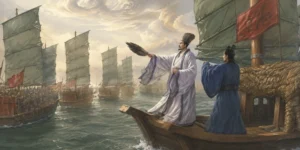
- Zhuge Liang (诸葛亮, Gia Cát Lượng): Acquired over one hundred thousand arrows in a single night by deploying straw-covered boats through morning fog along the Yangtze.
Chapter 48
- Zhuge Liang (诸葛亮, Gia Cát Lượng): Assisted Zhou Yu (周瑜, Chu Du) in anticipating Cao Cao’s (曹操, Tào Tháo) naval deployments at Red Cliffs.
Chapter 49
- Zhuge Liang (诸葛亮, Gia Cát Lượng): Erected the Seven Star Altar at South Screen Mountain to pray for the southeasterly gale and directed the allied pursuit.
Chapter 50
- Zhuge Liang (诸葛亮, Gia Cát Lượng): Stationed Guan Yu (关羽, Quan Vũ) at Huarong Trail, calculating that Guan Yu’s sense of honor would spare Cao Cao (曹操, Tào Tháo) while securing the four southern commanderies for Liu Bei.
Chapter 51
- Zhuge Liang (诸葛亮, Gia Cát Lượng): Seized Nanjun, Jingzhou, and Xiangyang from Cao Ren (曹仁, Tào Nhân) through strategic preemptive maneuvers.
Chapter 54
- Zhuge Liang (诸葛亮, Gia Cát Lượng): Provided three silk-bag stratagems to Zhao Yun (赵云, Triệu Vân) to secure Liu Bei’s (刘备, Lưu Bị) marriage in Wu.
Chapter 55
- Zhuge Liang (诸葛亮, Gia Cát Lượng): Thwarted Zhou Yu’s (周瑜, Chu Du) pursuit, famously mocking him with the phrase ‘Zhou Yu’s clever plan cost him both his master’s sister and his soldiers’.
Chapter 56
- Zhuge Liang (诸葛亮, Gia Cát Lượng): Frustrated Zhou Yu’s (周瑜, Chu Du) campaign to take the Riverlands, driving Zhou Yu to utter exasperation.
Chapter 57
- Zhuge Liang (诸葛亮, Gia Cát Lượng): Mourned Zhou Yu (周瑜, Chu Du) at Chaisang and recruited Pang Tong (庞统, Bàng Thống) to Liu Bei’s service.
Chapter 63
- Zhuge Liang (诸葛亮, Gia Cát Lượng): Marched through the Riverlands following the death of Pang Tong, deploying the Eight Trigrams Formation.
Chapter 64
- Zhuge Liang (诸葛亮, Gia Cát Lượng): Captured riverland champion Zhang Ren (张任, Trương Nhiệm) at the Golden Wild Goose Bridge.
Chapter 65
- Zhuge Liang (诸葛亮, Gia Cát Lượng): Secured the defection of Ma Chao (马超, Mã Siêu) and accepted Liu Zhang’s (刘璋, Lưu Chương) surrender of Chengdu.
Chapter 71
- Zhuge Liang (诸葛亮, Gia Cát Lượng): Directed strategic deployments during the Hanzhong campaign, securing the conquest of Mount Dingjun.
Chapter 72
- Zhuge Liang (诸葛亮, Gia Cát Lượng): Outmaneuvered Cao Cao’s (曹操, Tào Tháo) armies in Hanzhong, forcing Cao Cao’s complete retreat.
Chapter 73
- Zhuge Liang (诸葛亮, Gia Cát Lượng): Drafted the imperial petition elevating Liu Bei (刘备, Lưu Bị) to King of Hanzhong.
Chapter 80
- Zhuge Liang (诸葛亮, Gia Cát Lượng): Urged Liu Bei (刘备, Lưu Bị) to ascend the imperial throne of Shu Han to preserve the Han dynastic lineage.
Chapter 85
- Zhuge Liang (诸葛亮, Gia Cát Lượng): Received Liu Bei’s (刘备, Lưu Bị) deathbed entrustment at Baidicheng, assuming supreme regency over Shu Han and pacifying Cao Wei’s five-pronged invasion without moving a single soldier.
Chapter 86
- Zhuge Liang (诸葛亮, Gia Cát Lượng): Restored the grand diplomatic alliance with Eastern Wu through envoy Deng Zhi (邓芝, Đặng Chi).
Chapter 87
- Zhuge Liang (诸葛亮, Gia Cát Lượng): Launched the southern Nanman expedition, capturing tribal champion Meng Huo (孟获, Mạnh Hoạch) for the first time.
Chapter 88
- Zhuge Liang (诸葛亮, Gia Cát Lượng): Captured and released Meng Huo (孟获, Mạnh Hoạch) three times along the Lu River barriers.
Chapter 89
- Zhuge Liang (诸葛亮, Gia Cát Lượng): Overcame the four poisonous springs and captured Meng Huo (孟获, Mạnh Hoạch) four more times.
Chapter 90
- Zhuge Liang (诸葛亮, Gia Cát Lượng): Defeated King Mulu’s (木鹿大王, Mộc Lộc Đại Vương) beast armies and burned King Wutugu’s (兀突骨, Ngột Đột Cốt) rattan-armored warriors in Hutao Valley, releasing Meng Huo for the seventh time to win the permanent loyalty of the southern tribes.
Chapter 91
- Zhuge Liang (诸葛亮, Gia Cát Lượng): Submitted the renowned Memorial on the Case for War and launched the first Northern Expedition.
Chapter 92
- Zhuge Liang (诸葛亮, Gia Cát Lượng): Captured Nan’an, Tianshui, and Anding commanderies through psychological stratagems.
Chapter 93
- Zhuge Liang (诸葛亮, Gia Cát Lượng): Recruited Jiang Wei (姜维, Khương Duy) in Tianshui and famously scolded the elderly Wei minister Wang Lang (王朗, Vương Lãng) to death on horseback.
Chapter 94
- Zhuge Liang (诸葛亮, Gia Cát Lượng): Defeated Qiang tribal forces at Xiping with snow traps.
Chapter 95
- Zhuge Liang (诸葛亮, Gia Cát Lượng): Played the zither atop open city gates during the famous Empty Fort Stratagem to turn away Sima Yi’s (司马懿, Tư Mã Ý) fifteen-thousand-man host at Xicheng.
Chapter 96
- Zhuge Liang (诸葛亮, Gia Cát Lượng): Executed his beloved disciple Ma Su (马谡, Mã Tú) with tears for the loss of Jieting, demoting himself three ranks.
Chapter 97
- Zhuge Liang (诸葛亮, Gia Cát Lượng): Submitted the Second Memorial on the Case for War and launched the second Northern Expedition.
Chapter 98
- Zhuge Liang (诸葛亮, Gia Cát Lượng): Captured Chencang and slew Wei vanguard commander Wang Shuang (王双, Vương Song).
Chapter 99
- Zhuge Liang (诸葛亮, Gia Cát Lượng): Outmaneuvered Sima Yi (司马懿, Tư Mã Ý) and Guo Huai (郭淮, Quách Hoài) during the third Northern Expedition.
Chapter 100
- Zhuge Liang (诸葛亮, Gia Cát Lượng): Humiliated Sima Yi (司马懿, Tư Mã Ý) in battle array duels and lured Zhang He (张郃, Trương Cáp) into the fatal ambush at Mumen Gorge.
Chapter 101
- Zhuge Liang (诸葛亮, Gia Cát Lượng): Disguised himself as a divine apparition at Lucheng to harvest Wei grain crops.
Chapter 102
- Zhuge Liang (诸葛亮, Gia Cát Lượng): Invented and deployed the wooden oxen and flowing horses mechanical transports.
Chapter 103
- Zhuge Liang (诸葛亮, Gia Cát Lượng): Trapped Sima Yi (司马懿, Tư Mã Ý) in Shangfang Valley, sent women’s clothing to mock Sima Yi’s refusal to fight, and conducted the star prayer ritual to extend his lifespan.
Chapter 104
- Zhuge Liang (诸葛亮, Gia Cát Lượng): Entrusted his military arts to Jiang Wei (姜维, Khương Duy) and passed away on Wuzhang Plains in 234 AD; his carved wooden effigy terrified Sima Yi into retreat, inspiring the proverb ‘a dead Zhuge scares away a living Sima’.
Chapter 105
In History
Summary
- Zhuge Liang (诸葛亮, Gia Cát Lượng), courtesy name Kongming, was chief adviser and later regent of Liu Bei (刘备, Lưu Bị) and Liu Shan (刘禅, Lưu Thiện) — one of China’s most celebrated statesmen and military commanders.
Year: 207 AD
- Entered Liu Bei’s service after the consultations traditionally known as the Three Visits to the Thatched Cottage; presented the Longzhong strategic vision.
Year: 208 AD
- Coordinated the Shu-Wu alliance against Cao Cao; historical records credit Zhuge Liang with diplomacy toward Eastern Wu before the Battle of Red Cliffs.
Year: 214 AD
- Played a leading role in Liu Bei’s conquest of Yi Province and the establishment of the Chengdu base.
Year: 221 AD
- After Liu Bei founded Shu Han, became Chancellor with major political and military authority.
Year: 223 AD
- Received Liu Bei’s deathbed entrustment at Baidicheng (White Emperor City); assumed regency for young Liu Shan.
Year: 225 AD
- Led the southern campaign to pacify tribal unrest in the Nanzhong region, stabilizing Shu’s rear before northern operations.
Year: 227 AD
- Launched the first Northern Expedition and submitted the memorial later known as the Chu Shi Biao (出师表).
Year: 234 AD
- Died at Wuzhang Plains during his fifth Northern Expedition against Cao Wei.
Historical Record
- Sanguozhi, Shu 5 (诸葛亮传): full biography, Longzhong policy, regency, southern pacification, Northern Expeditions.
- Pei Songzhi annotations: inventions, administrative reforms, and correspondence with Eastern Wu.
- The novel magnifies supernatural wisdom, straw-boat arrows, Empty Fort, and star rituals — classify those feats as literary unless historically attested.
Gallery