
Contents
Biography & Historical Record
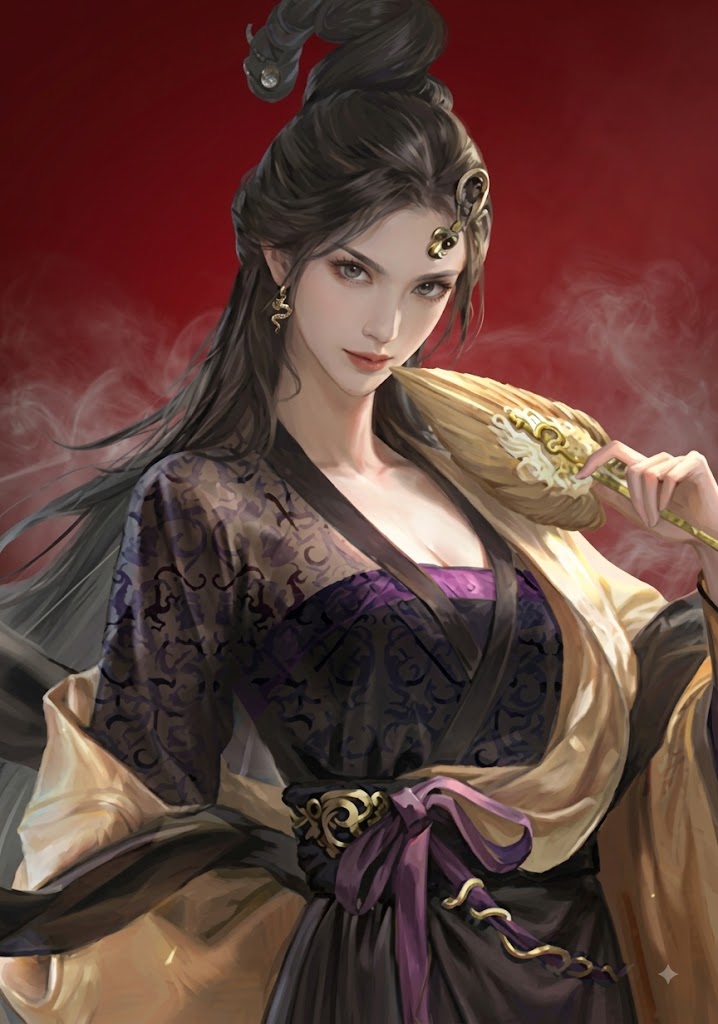
Li Ji (骊姬) was a royal consort of Duke Xian of Jin during the Spring and Autumn period of Chinese history. Originally a princess of the Li Rong tribe, she was captured and taken as a concubine after Duke Xian conquered Li Rong. Blessed with extraordinary beauty, she swiftly secured the supreme favor of the Duke of Jin.
Li Ji’s renown in history is intrinsically tied to the “Li Ji Unrest.” In her ambition to install her biological son, Xiqi, as crown prince, she orchestrated ruthless schemes to eliminate Duke Xian’s elder sons—Shensheng, Chong’er, and Yiwu. Exploiting her allure and fabricating deceitful slanders, she turned Duke Xian against his own sons, ultimately driving Crown Prince Shensheng to commit suicide and forcing Chong’er and Yiwu into exile. Her machinations triggered a protracted political crisis in the State of Jin, plunging the realm into devastating fratricidal strife.
Role in Romance of the Three Kingdoms
This historical figure lived during the Spring and Autumn period and does not appear in Luo Guanzhong’s Romance of the Three Kingdoms.
Li Ji — Historical & Literary Timeline
Before 655 BC
Entry into the Jin Palace
Brought back by Duke Xian of Jin following his conquest of Li Rong, rapidly becoming his most favored consort.
655 BC
Deposition of the Crown Prince
Li Ji falsely accused Crown Prince Shensheng of poisoning sacrificial meat to murder his father, driving Shensheng to suicide.
651 BC
Death
Following Duke Xian’s death, loyalist factions supporting the exiled princes revolted, executing Li Ji alongside her sons Xiqi and Zhuozi.
Key Relationships
- Duke Xian of Jin
- Husband; held absolute authority over the state but was emotionally manipulated by Li Ji, ultimately leading to the destruction of his rightful heirs.
- Shensheng
- Stepson (Crown Prince); the primary victim of Li Ji’s treacherous conspiracies.
- Chong’er (Duke Wen of Jin)
- Stepson; survived Li Ji’s persecution through years of exile and later rose to become one of the Five Hegemons of the Spring and Autumn period.