
Contents
Biography & Historical Record
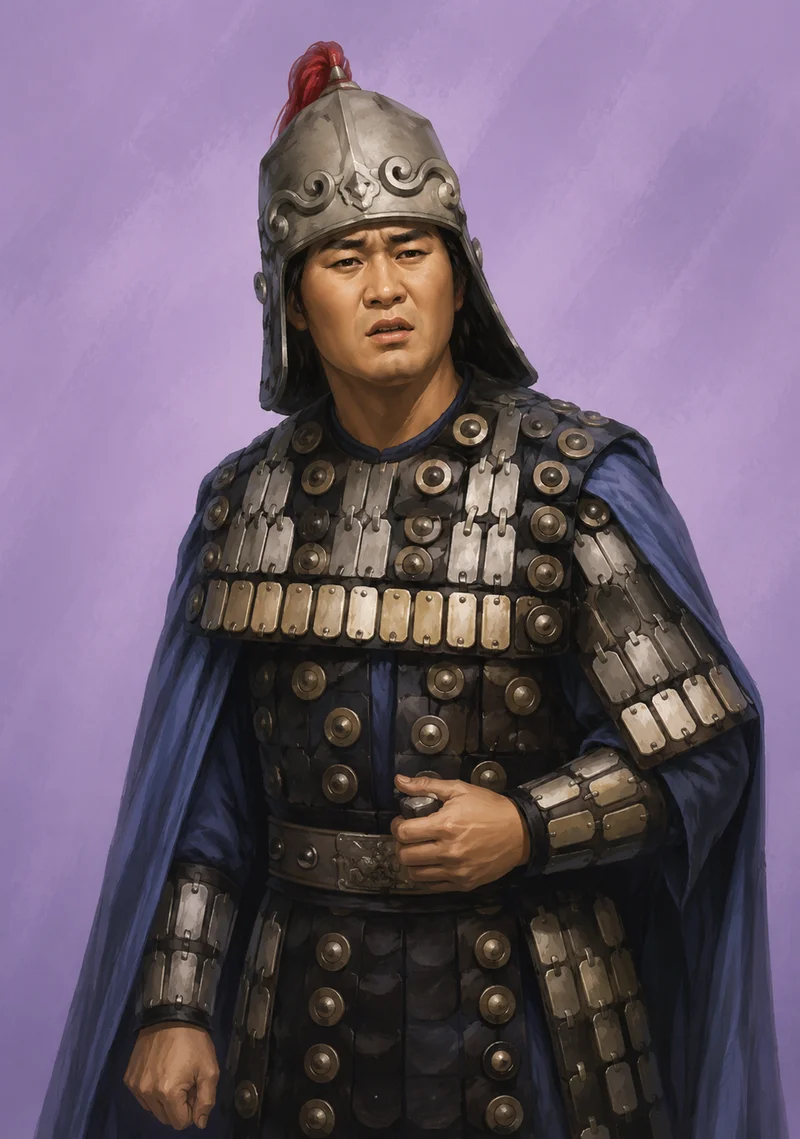
Cui Yu is a fictional military officer created by Luo Guanzhong for his classic 14th-century historical novel Romance of the Three Kingdoms. In strict historical reality, Cui Yu does not appear in Chen Shou’s Records of the Three Kingdoms (Sanguozhi) or any authentic Eastern Han and Three Kingdoms historical records. The historical Battle of Xiaoting (Yiling) in 221–222 AD is documented in detail within the biographies of Lu Xun, Zhu Ran, and Wu Ban; however, Cui Yu was invented by Luo Guanzhong to serve as a dramatic literary foil during the opening phase of Liu Bei’s grand campaign against Eastern Wu. His rash combat, failure to perceive an ambush, and swift death in single combat at the hands of Shu vanguard general Wu Ban illustrate the early momentum of the Shu forces and justify Lu Xun’s subsequent decision to adopt a strictly defensive strategy.
In Chapter 82 of Romance of the Three Kingdoms, Cui Yu is introduced as a subordinate officer serving under Zhu Ran, the Left Commander of Eastern Wu. Following the execution of Guan Yu and the loss of Jing Province, Liu Bei declared himself Emperor of Shu Han and launched a massive 700,000-strong expedition (historically around 40,000 to 50,000) to avenge his sworn brother and reclaim lost territories. Liu Bei appointed Wu Ban and Feng Xi as his primary vanguard generals, leading 30,000 elite troops into Zigui and Wuxia. In response, Sun Quan submitted nominally to Cao Wei, appointed Lu Xun as Grand Commander, and dispatched Zhu Ran as Left Commander with 50,000 troops to establish defensive garrisons along the riverfront.
Overconfident in his own physical strength and eager to claim military renown, Cui Yu volunteered to command the vanguard force under Zhu Ran to confront the advancing Shu army. Shu general Wu Ban devised a deliberate stratagem: he feigned military arrogance and ordered his troops to maintain loose, undisciplined camp defenses along the riverbanks to lure the Wu vanguard into a trap. Observing the sloppy encampments, Cui Yu fell into the snare, misjudging the Shu army as careless and vulnerable. In the dead of night, Cui Yu led his elite force in a surprise raid against Wu Ban’s main camp.
From a high observation tower, Wu commander Zhu Ran observed suspicious shadows and movement within the Shu camps, quickly recognizing that Wu Ban had set a deadly trap. Panicked, Zhu Ran ordered his heralds to beat war drums and wave signal flags to recall Cui Yu immediately. However, Cui Yu, isolated at the front line and blinded by battle fervor, ignored or failed to hear the signal and pressed his assault deep into the Shu position.
The moment Cui Yu’s troops breached the camp perimeter, Wu Ban fired signal cannons and unleashed hidden cavalry ambushes from all four sides. Panic-stricken and encircled, the Wu soldiers trampled one another in a frantic attempt to retreat. Cui Yu personally attempted to fight his way out of the trap, but Wu Ban spurred his warhorse forward and blocked his escape path. The two commanders engaged in intense single combat amidst the chaotic melee. After only a few bouts, Wu Ban’s martial skill overwhelmed Cui Yu, and Wu Ban struck him down beneath his horse’s hooves (in certain literary variations, Cui Yu was captured alive and delivered to Liu Bei’s imperial tent, where he was executed to sacrifice to the army colors). Cui Yu’s defeat shattered the first vanguard of Eastern Wu, granting Shu Han a major opening victory at the start of the Yiling campaign.
Literarily, Cui Yu’s rash demise plays an indispensable narrative role. His impetuous failure underscored the grave danger of engaging Liu Bei’s motivated army in head-on clashes, providing Grand Commander Lu Xun with absolute political and tactical justification to order a total lockdown of all Wu fortresses. By refusing to engage in single combat or pitched battles for several months despite intense provocation, Lu Xun allowed the Shu forces to exhaust themselves in the summer heat, directly enabling the famous fire attack at Yiling in 222 AD.
Role in Romance of the Three Kingdoms
In Luo Guanzhong’s Romance of the Three Kingdoms, Cui Yu appears in Chapter 82 as a subordinate general under Zhu Ran during the Battle of Xiaoting. Relying on his physical valor, he leads a night raid against Shu vanguard general Wu Ban, unaware that Wu Ban has feigned carelessness to lure him into an ambush. Ignoring Zhu Ran’s recall signals, Cui Yu presses into the trap and is encircled. In the resulting melee, Wu Ban engages Cui Yu in single combat and slays him beneath his warhorse, granting Shu Han its first major tactical victory in the campaign.
Cui Yu (崔禹) — Historical & Literary Timeline
221 AD — Deployment at Xiaoting
Assigned as Vanguard Officer Under Zhu Ran
Deploys to the front line at Xiaoting as a subordinate general under Zhu Ran; volunteers to command the vanguard force to block Liu Bei’s advancing army.
221 AD — Night Raid and Fall Into Stratagem
Launching Overconfident Night Assault
Tricked by Wu Ban’s feigned carelessness, Cui Yu leads a night raid against the Shu camp; fails to heed Zhu Ran’s recall signals and presses deep into the enemy lines.
221 AD — Single Combat and Death
Encircled by Ambushes and Slain by Wu Ban
Encircled by Wu Ban’s hidden ambushes; attempts to break out but is confronted by Wu Ban, who slays him in single combat beneath his warhorse after a few bouts.
Key Relationships
- Family:
- ? — Unknown family lineage.
- Comrades / Allies:
- Zhu Ran — Left Commander of Eastern Wu under whom Cui Yu served as subordinate vanguard officer.
- Lu Xun — Grand Commander of Eastern Wu who directed the overall defense against Liu Bei’s campaign.
- Sun Quan — Ruler of Eastern Wu who commissioned the defense of Jing Province.
- Enemies / Opponents:
- Wu Ban — Vanguard general of Shu Han who devised the ambush stratagem and slew Cui Yu in single combat.
- Liu Bei — First Emperor of Shu Han who led the grand expedition against Eastern Wu.
- Feng Xi — Co-vanguard general of Shu Han who advanced alongside Wu Ban at Zigui.
For detailed historical records, archives, and official chronicles, explore Cui Yu on Wikipedia.
In Novel
Cui Yu (崔禹, Thôi Vũ) does not have a securely verified named appearance in the supplied edition under the exact Chinese name 崔禹. No chapter is assigned without an exact textual match.
In History
Summary
- Cui Yu (崔禹, Thôi Vũ) requires exact-source verification before a reliable Three Kingdoms biography can be written.
Historical Record
- The exact-name form 崔禹 is not sufficiently established in the standard Three Kingdoms biographies to support a detailed narrative.
- Status: Needs Audit / Unverified. It should not be merged with the much better documented Cui Yan or other Cui-family figures.