



Contents
Biography & Historical Record
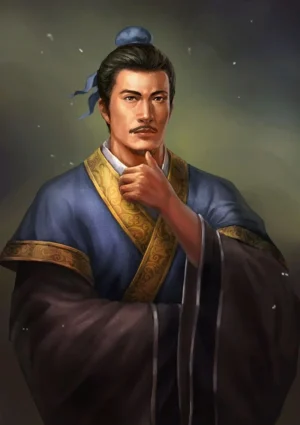
Shi Yi, courtesy name Ziyu, was a legendary Eastern Wu senior statesman, upright scholar-official, and Imperial Secretariat Director (Shangshu Ling) who served as Grand Tutor to the Crown Prince (Taizi Taifu) and Marquis of Duting. Hailing from Yingling County in Beihai Commandery (modern-day Shandong Province), Shi Yi was celebrated across the Three Kingdoms period for his extreme incorruptibility, unyielding legal integrity, and austere, simple lifestyle. Documented in Chen Shou’s official dynastic history Records of the Three Kingdoms (Sanguozhi – Book of Wu, Biography of Shi Yi, Volume 53) and Sima Guang’s Zizhi Tongjian, Shi Yi was historically revered as a rare “model official” who stood apart from imperial factionalism, refusing personal wealth, and dedicating his entire career to judicial reform and the moral governance of the Jiangdong regime.
Born as Shi Dao, he later changed his surname to Shi (meaning “Right” or “Correct”) upon the advice of the renowned Confucian scholar Kong Rong, who believed the name carried higher moral resonance. When chaos consumed the Central Plains in the late Eastern Han era, Shi Yi crossed the Yangtze River and sought refuge in Jiangdong, where he caught the attention of the Wu ruler Sun Quan. Impressed by his administrative wisdom and profound knowledge of legal codes, Sun Quan appointed him to handle secret imperial memorials and sensitive bureaucratic documents, quickly promoting him through the ranks of the Imperial Secretariat.
Shi Yi was famously austere; he possessed no personal luxuries, wore simple rough-spun cloth, ate only humble vegetarian meals, and donated his entire imperial stipend to provide for needy families and sick soldiers. When Sun Quan repeatedly offered to bestow grand noble titles and build an opulent estate in his honor, Shi Yi persistently submitted formal memorials refusing the gifts, arguing that he had not achieved enough to warrant such high state reward. During the reign of Sun Quan, the corrupt official Lü Yi rose to power, establishing a terrifying network of spies and informants to frame loyal veterans and imperial ministers for fabricated crimes. While most courtiers cowered in fear, Shi Yi served as the unwavering guardian of the law, flatly refusing to sign any of Lü Yi’s forged legal indictments. He famously stood before Sun Quan to defend the Grand Minister Gu Yong, exposing the flaws in Lü Yi’s accusations and becoming the primary instrumental force in dismantling Lü Yi’s tyrannical espionage ring.
In his final years, Shi Yi was entrusted with the education of the Crown Prince Sun He, serving as the Grand Tutor to the Crown Prince (Taizi Taifu). He passed away in 243 AD at the age of eighty-one. In his final testament, he explicitly requested that his family inter him in a simple, rough wooden coffin and clothe him in his plainest daily garments, maintaining his unblemished integrity to the very last moment. Sun Quan was deeply moved, publicly mourning the loss of the most honest official in the entire state of Wu.
Famous Quotes & Historical Sayings
In the historical records of Records of the Three Kingdoms (Sanguozhi – Book of Wu), historian Chen Shou and the Wu ruler Sun Quan recorded the ultimate praise for Shi Yi’s moral character: ‘Shi Yi Ziyu is a rare, loyal pillar of the state, living amidst the opulence of the imperial court with a spirit as clear and still as an autumn lake. For decades, he enforced the law with absolute impartiality, seeking no personal gain and harming no one through political factionalism. To possess a virtuous official like Shi Yi is the greatest blessing for the state of Wu!’
Shi Yi (是儀) — Historical & Literary Timeline
Refuge in Jiangdong & Service Under Sun Quan
Fleeing war-torn northern China, Shi Yi crosses the Yangtze to join Sun Quan’s administration. Recognized for his legal erudition, he is appointed to oversee imperial memorials and court secrets.
Opposing the Corrupt Official Lü Yi
Acts as the chief legal counter-weight against the corrupt Lü Yi. Refuses to validate fabricated charges and courageously defends senior officials like Gu Yong in front of Sun Quan, contributing to Lü Yi’s eventual downfall.
Appointed Grand Tutor to the Crown Prince
Appointed Taizi Taifu (Grand Tutor to the Crown Prince) by Sun Quan, tasked with the moral and intellectual education of Crown Prince Sun He.
Passing Away in Old Age & Final Testament
Passes away at age 81. Leaves behind a final testament requesting the most modest funeral rites, solidifying his historical legacy as a paragon of incorruptibility.
For detailed historical records, archives, and official chronicles, explore Shi Yi on Wikipedia.
Key Relationships
Family
- No information
Friends
- Kong Rong (孔融, Khổng Dung): Renowned Confucian scholar and administrator who mentored and befriended Shi Yi during his early life in Beihai Commandery, advising him to change his surname to Shi.
- Gu Yong (顾雍, Cố Ung): Imperial Chancellor of Eastern Wu whom Shi Yi courageously defended at imperial court by refuting fabricated charges and exposing judicial corruption.
- Sun He (孙和, Tôn Hòa): Crown Prince of Eastern Wu who received moral instruction, classic literature education, and ethical guidance under Shi Yi’s service as Grand Tutor to the Crown Prince.
Enemies
- Lü Yi (吕壹, Lữ Nhất): Corrupt judicial supervisor who established an oppressive espionage ring to frame loyal imperial ministers; Shi Yi stood as his primary legal opponent by refusing to sign fabricated indictments and facilitating his downfall around 235 AD.
Other
- Sun Quan (孙权, Tôn Quyền): Founding Emperor of Eastern Wu who discovered Shi Yi’s administrative talent, placed him in charge of confidential imperial memorials, and publicly mourned his death in 243 AD as an incomparable model of integrity.
In Novel
Shi Yi (石仪, Shí Yí) does not have a securely verified named appearance in the supplied edition under the exact Chinese name 石仪. No chapter is assigned without an exact textual match.
In History
Summary
- Shi Yi (石仪, Thị Nghi) is a minor figure associated with the Three Kingdoms historical tradition.
Historical Record
- The surviving sources provide limited exact-name evidence for an independent biography.
- Individual references should therefore be kept separate from similarly named figures unless the source explicitly identifies them as the same person.
- Classification: Historical / Briefly Attested.