
Contents
Biography & Historical Record
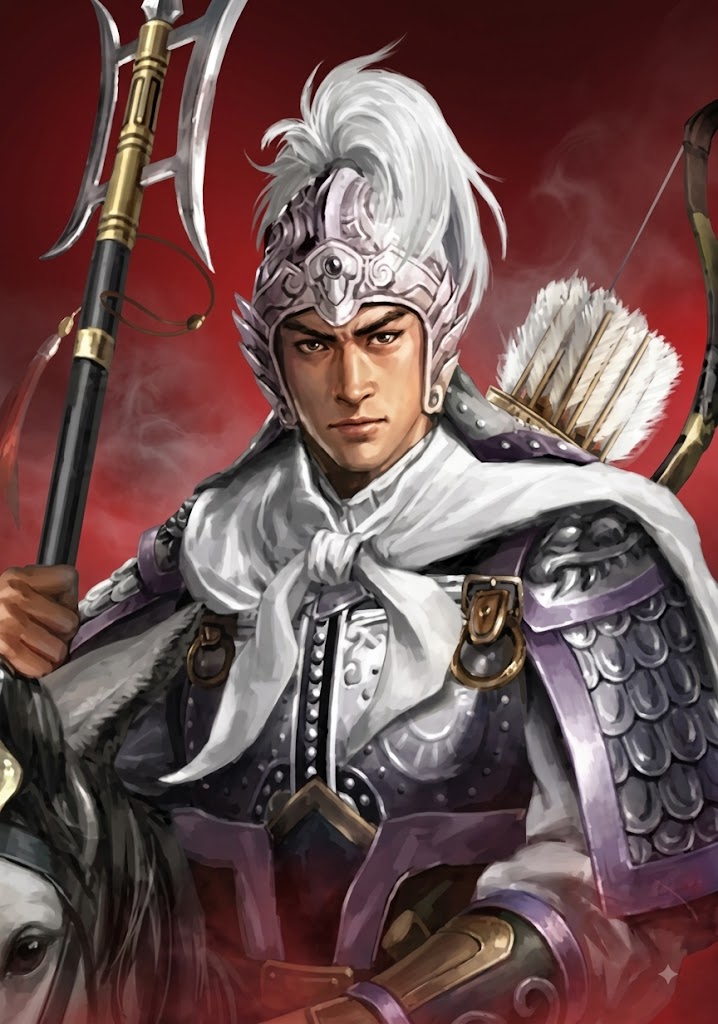
Chen Qingzhi (陈庆之, Trần Khánh Chi), courtesy name Ziyun (子云, Tử Vân), was one of the most legendary and unique military commanders of the Southern and Northern Dynasties era, serving the Southern Liang Dynasty (南梁). Unlike traditional military champions of Chinese history who were famous for their physical prowess, martial skills, and equestrian talent, Chen Qingzhi was historically described as physically weak, unable to draw a standard military bow, and a poor horseman. Despite these physical limitations, his supreme strategic intellect, organizational capabilities, and psychological warfare tactics earned him an unmatched reputation as one of China’s greatest generals.
Chen Qingzhi was born into a humble family in Yixing. In his youth, he served as a personal attendant and companion to Xiao Yan (萧衍, Tiêu Diễn), who would later establish the Liang Dynasty as Emperor Wu. Chen was renowned for his skill at the board game Weiqi (Go), often playing through the night with Xiao Yan, which earned him the future emperor’s deep trust and affection. When Xiao Yan overthrew the Southern Qi Dynasty and founded the Liang Dynasty in 502 AD, Chen Qingzhi was appointed to administrative and secretarial roles.
His military career did not begin until he was in his late thirties. In 525 AD, Chen Qingzhi was given his first active military commission to escort the defecting Northern Wei prince Yuan Fazeng (元法僧, Nguyên Pháp Tăng). Over the next decade, Chen went on to orchestrate some of the most stunning asymmetrical victories in ancient military history. His most famous exploit was the Northern Expedition of 528–529 AD, where he commanded a mere 7,000 elite soldiers—all clad in distinctive white armor and robes—to escort the pretender Yuan Hao (元颢, Nguyên Hạo) to the Northern Wei capital of Luoyang. During this expedition, Chen’s small force defeated enemy armies numbering in the hundreds of thousands, captured 32 cities, and successfully seized Luoyang. This campaign gave rise to the legendary saying: “The famous generals of ancient times avoided encountering the White-Clad Army” (名将自古神兵,千军万马避白袍).
Although the expedition eventually collapsed due to the overwhelming counter-offensive of Northern Wei generalissimo Erzhu Rong (尔朱荣, Nhĩ Chu Vinh) and the political incompetence of Yuan Hao, Chen Qingzhi managed to retreat back to Liang disguised as a Buddhist monk. He was highly praised by Emperor Wu and spent his remaining years governing and defending the southern borders against local uprisings and Northern Wei incursions. He passed away peacefully of natural causes in 539 AD and was honored posthumously as “Wuzi” (武子).
Role in Romance of the Three Kingdoms
Because Chen Qingzhi lived during the Southern and Northern Dynasties (specifically the Southern Liang Dynasty, 502–557 AD), he does not appear in the historical novel Romance of the Three Kingdoms by Luo Guanzhong, which covers events from 184 AD to 280 AD. However, modern historians and literary analysts frequently compare his strategic brilliance and physically delicate nature to the fictionalized portrayal of Zhuge Liang (诸葛亮, Gia Cát Lượng) and Zhou Yu (周瑜, Chu Du). Like Zhuge Liang, Chen Qingzhi commanded vast armies from a chariot rather than from horseback, relying entirely on his superior intellect, meticulous planning, and psychological dominance over his adversaries.
Chen Qingzhi — Historical Timeline
484 AD
Birth in Yixing
Chen Qingzhi is born to a commoner family in Yixing, Wuxing Commandery, during the Southern Qi Dynasty.
502 AD
Rise of Liang Dynasty
Xiao Yan overthrows Southern Qi and establishes the Liang Dynasty. Having been a loyal companion, Chen Qingzhi is appointed as a mid-level court administrator (Zhongshu Sheren).
525 AD
First Military Commission
At the age of 41, Chen is appointed General of the Xuanmeng Army. He successfully escorts the defecting Northern Wei prince Yuan Fazeng and defeats a Northern Wei relief force at Pengcheng.
527 AD
Battle of Wo Yang
Chen Qingzhi, alongside general Cao Zhongzong (曹仲宗, Tào Trọng Tông), sieges Wo Yang. Facing a massive Northern Wei relief force of 150,000, Chen launches a daring night assault, routing the enemy and capturing the city.
528 AD
Initiation of the Northern Expedition
Emperor Wu of Liang commissions Chen Qingzhi to lead an elite force of 7,000 soldiers to escort the defecting Northern Wei prince Yuan Hao to reclaim his throne, marking the start of his legendary march north.
529 AD
Capture of Luoyang & Retreat
Chen’s White-Clad Army captures Suiyang and Xingyang against overwhelming odds, eventually entering the Northern Wei capital of Luoyang. He wins 47 battles and captures 32 cities in 140 days. However, when Northern Wei general Erzhu Rong counters with 300,000 troops, Chen is forced to retreat. A sudden flash flood destroys his army, and Chen escapes back to Liang disguised as a monk.
530 – 536 AD
Southern Governance and Defense
Promoted to North Shizhou Governor, Chen suppresses regional rebellions led by Sengqiang and defends Liang territory from incursions by Northern Wei and local bandits.
539 AD
Death and Posthumous Legacy
Chen Qingzhi dies of illness at the age of 55. Emperor Wu deeply mourns his passing and awards him the posthumous title of Wuzi (武子).
Key Relationships
- Xiao Yan (萧衍, Tiêu Diễn) – Emperor Wu of Liang
- Lord and Friend: Played Weiqi with Chen Qingzhi in his youth, recognized his military genius, and supported his campaigns despite Chen’s commoner background and physical weaknesses.
- Yuan Hao (元颢, Nguyên Hạo)
- Political Puppet/Ally: A prince of Northern Wei whom Chen Qingzhi escorted to Luoyang to claim the northern imperial throne. His subsequent political blunders and complacency led to the failure of the expedition.
- Erzhu Rong (尔朱荣, Nhĩ Chu Vinh)
- Arch-Rival: The powerful military dictator of Northern Wei who ultimately organized the massive counter-offensive that drove Chen Qingzhi out of Luoyang.