
Contents
Biography & Historical Record
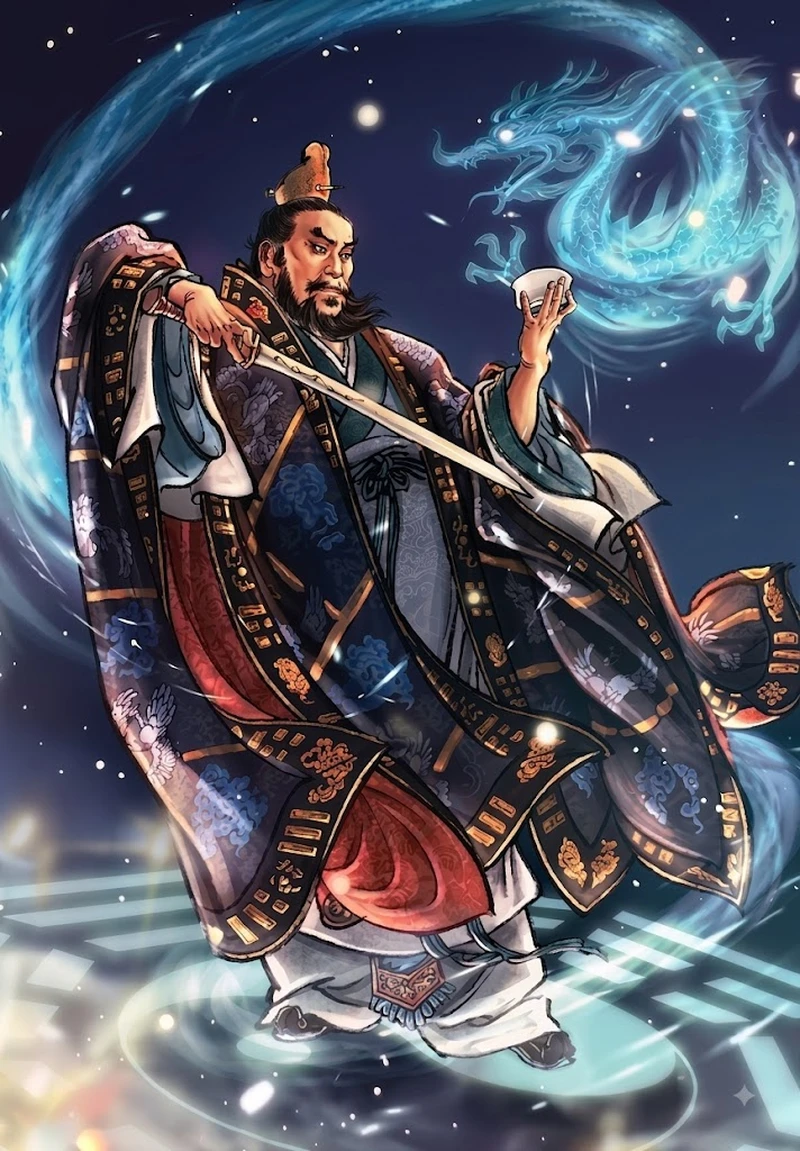
Gongsun Sheng (公孙胜, Công Tôn Thắng) is a legendary figure and one of the core protagonists of the classical Chinese novel Water Margin (Shui Hu Zhuan). A Taoist priest of immense spiritual power, he is known by his Taoist title Yi Qing (一清, Nhất Thanh) and his nickname “Dragon in the Clouds” (Nhập Vân Long) due to his mastery over the elements and his ability to summon wind and rain. Born in Jizhou, he spent much of his youth studying the mystic arts under the tutelage of the immortal Taoist master Luo Zhenren (罗真人, La Chân Nhân) on Mount Erxian.
Unlike many other Liangshan heroes who were forced into banditry by political oppression or criminal records, Gongsun Sheng joined the cause primarily to facilitate justice and follow the celestial destiny of the 108 Stars. He was the one who initially alerted Chao Gai (晁蓋, Tiều Cái) to the existence of the corrupt birthday gifts being sent to the Grand Tutor Cai Jing (蔡京, Thái Kinh), leading to the formation of the “Seven Stars of Righteousness.” As the fourth seat among the 108 heroes, he served as the spiritual and tactical advisor alongside Wu Yong (吳用, Ngô Dụng). His contributions were vital in battles involving supernatural foes, as his Taoist magic was the only counter to sorcerers employed by the Song imperial court.
Role in Water Margin
“I am Gongsun Sheng of Jizhou. I have come to present a great fortune to the Ward Chief. This wealth is not from the earth, nor from the sky, but from the hands of the corrupt, and it is our destiny to claim it for the righteous.”
— Gongsun Sheng to Chao Gai
In the narrative of Water Margin, Gongsun Sheng represents the spiritual anchor of the Liangshan brotherhood. While Wu Yong (吳用, Ngô Dụng) provided human strategies, Gongsun Sheng handled the metaphysical realm. His most famous exploit occurred during the siege of Gaotangzhou. The Liangshan forces were paralyzed by the dark magic of Gao Lian (高廉, Cao Liêm), who summoned phantom beasts and black winds. Dai Zong (戴宗, Đới Tung) and Li Kui (李逵, Lý Khuê) were dispatched to find Gongsun Sheng, who had retired to care for his elderly mother. After obtaining permission from his master, Luo Zhenren (罗真人, La Chân Nhân), Gongsun Sheng returned to the battlefield and used his “Golden Bell” and “Five Thunders” techniques to shatter Gao Lian’s illusions, leading to a decisive victory.
His wisdom was further demonstrated by his eventual departure. Sensing that the Liangshan heroes’ path under the amnesty of the Song Emperor would lead to tragedy, he chose to retire after the campaigns against the rebel leaders Tian Hu (田虎, Điền Hổ) and Wang Qing (王慶, Vương Khánh). By returning to his mother and his master to practice Taoism, he avoided the disastrous campaign against Fang La (方臘, Phương Lạp) that claimed the lives of most of his brothers, making him one of the few heroes to achieve a peaceful and enlightened end.
Gongsun Sheng — Historical & Literary Timeline
The Proposal of the Heist
Gongsun Sheng travels to Dongxi Village to meet Chao Gai (晁蓋, Tiều Cái), proposing the robbery of the 100,000 strings of gold and jewels destined for Cai Jing (蔡京, Thái Kinh).
The Yellow Mud Ridge Heist
As one of the Seven Stars, he assists in drugging Yang Zhi (楊志, Dương Chí) and his soldiers, successfully seizing the birthday gifts.
Ascent to Liangshan
Following the failed arrest by government troops, Gongsun Sheng and the other conspirators retreat to Liangshan Marsh, establishing the foundation of the brotherhood.
The Battle of Gaotangzhou
After being brought back by Li Kui (李逵, Lý Khuê), he defeats the sorcerer Gao Lian (高廉, Cao Liêm) using the “Heavenly Wind and Earthly Fire” techniques.
Final Retirement
Following the victory over Wang Qing (王慶, Vương Khánh), Gongsun Sheng bids farewell to Song Jiang (宋江, Tống Giang) and returns to Jizhou to pursue Taoist immortality and care for his mother.
Key Relationships
- Luo Zhenren (羅真人, La Chân Nhân)
- His spiritual mentor and master, who provided him with the divine scrolls and the wisdom to know when to advance and when to retreat.
- Chao Gai (晁蓋, Tiều Cái)
- The first leader of Liangshan whom Gongsun Sheng respected deeply as a man of honor and righteousness.
- Wu Yong (吳用, Ngô Dụng)
- His intellectual counterpart; together they served as the dual strategists (mystical and secular) of the Liangshan forces.
- Song Jiang (宋江, Tống Giang)
- Though he served under Song Jiang, Gongsun Sheng remained somewhat detached from Song’s political ambitions for imperial amnesty.


