

Contents
Biography & Historical Record
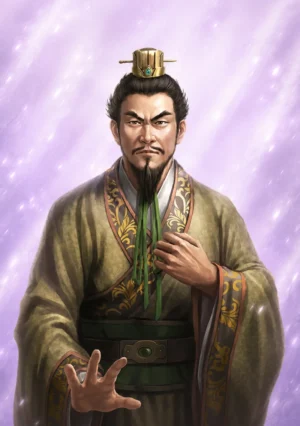
Zhang Ren (died 214 AD) was a renowned military general and fiercely loyal commander who served Liu Zhang, the Governor of Yi Province (Yizhou), during the late Eastern Han dynasty. Hailing from Shu Commandery (present-day Chengdu, Sichuan Province), Zhang Ren was born into a humble gentry family. From his youth, he was celebrated across Yizhou for his exceptional martial valor, sharp tactical intelligence, and unyielding sense of personal integrity and loyalty.
When Liu Zhang invited Liu Bei into Yi Province in 211 AD under the pretext of defending against Zhang Lu of Hanzhong, Zhang Ren, alongside fellow advisors such as Huang Quan and Liu Ba, recognized Liu Bei’s hidden warlord ambitions and strongly opposed the invitation. At the famous banquet in Fu County, Zhang Ren subtly attempted to protect Liu Zhang by performing a sword dance to counter Pang Tong’s plan to have Wei Yan assassinate Liu Zhang. When open warfare erupted between Liu Bei and Liu Zhang in 212 AD, Zhang Ren was appointed as a chief military commander to defend the strategic approaches to Chengdu.
At Luofengpo (Fallen Phoenix Slope), Zhang Ren set a brilliant tactical ambush, mistaking Pang Tong (who was riding Liu Bei’s famous horse Dilu) for Liu Bei himself, and ordered his archers to rain arrows down upon the narrow valley, killing Pang Tong on the spot. Zhang Ren then waged a fiercely contested defense at Luoxian (Luo County) and Luoyang Bridge against Liu Bei’s invading army, repeatedly frustrating the enemy vanguard. Realizing Zhang Ren’s formidable defensive skill, Zhuge Liang devised a complex trap at the Jinzhan River, baiting Zhang Ren out of his fortification and encircling him. Upon his capture, Liu Bei and Zhuge Liang deeply admired Zhang Ren’s martial prowess and offered him high honors if he surrendered. Zhang Ren steadfastly refused, famously declaring, ‘A loyal minister will never serve two masters!’ Recognizing his unbending devotion, Liu Bei sorrowfully ordered his execution, honoring him with a noble burial at Luoyang Bridge.
Role in Romance of the Three Kingdoms
In Luo Guanzhong’s Romance of the Three Kingdoms, Zhang Ren is revered as the ultimate embodiment of martial loyalty and tactical genius within Liu Zhang’s regime. Featured prominently in Chapters 60 through 65, Zhang Ren counters Wei Yan’s sword dance at Fu County, plans the tragic ambush at Luofengpo that claims the life of Phoenix Fledgling (Pang Tong), and heroically defends Luo County against Shu Han’s greatest heroes. His capture requires Zhuge Liang’s personal strategic intervention, and his famous final declaration—refusing to serve two masters—solidifies his legendary status as Yi Province’s greatest champion.
Zhang Ren (張任) — Literary Timeline
Countering the Sword Dance at Fu County
Attends the banquet at Fu County; performs a sword dance to block Wei Yan’s plot to assassinate Liu Zhang under Pang Tong’s secret orders.
Ambush at Luofengpo and Slaying of Pang Tong
Lays a deadly archer ambush at Fallen Phoenix Slope; kills Liu Bei’s chief strategist Pang Tong after mistaking him for Liu Bei riding Dilu.
Defense of Luo County and Capture
Mounts a stubborn defense at Luo County and Luoyang Bridge; lured into a multi-pronged trap by Zhuge Liang at Jinzhan River and captured alive by Zhang Fei.
Refusing Surrender and Martyrdom
Rejects Liu Bei’s plea for submission with his iconic line ‘A loyal minister never serves two masters’; executed with honor and buried at Luoyang Bridge.
For detailed historical records, archives, and official chronicles, explore Zhang Ren on Wikipedia.
Key Relationships
Family
- No information
Friends
- Liu Zhang (刘璋, Lưu Chương): The Governor of Yi Province to whom Zhang Ren remained fiercely loyal until his death in 214 AD.
- Huang Quan (黄权, Hoàng Quyền): A fellow official and advisor who, like Zhang Ren, correctly identified Liu Bei’s ulterior motives in 211 AD.
- Liu Ba (刘巴, Lưu Ba): A senior advisor in Yi Province who shared Zhang Ren’s opposition to inviting Liu Bei into the region.
- Liu Gui (刘璝, Lưu Quỳ), Ling Bao (泠苞, Lãnh Bao), and Zhang Yi (张任, Trương Dực): Fellow military commanders who fought alongside Zhang Ren to defend Yi Province against Liu Bei’s invasion.
- Yan Yan (严颜, Nghiêm Nhan): A veteran general of Yi Province who served the same administration and shared the duty of defending the province’s borders.
Enemies
- Liu Bei (刘备, Lưu Bị): The warlord who invaded Yi Province; he ordered Zhang Ren’s execution in 214 AD after Zhang Ren refused to defect.
- Pang Tong (庞统, Bàng Thống): Liu Bei’s chief strategist whom Zhang Ren killed in an archer ambush at Luofengpo in 213 AD.
- Zhuge Liang (诸葛亮, Gia Cát Lượng): The strategist who orchestrated the tactical trap at the Jinzhan River in 214 AD that led to Zhang Ren’s capture.
- Zhang Fei (张飞, Trương Phi): The Shu Han general who captured Zhang Ren during the final stages of the campaign at the Jinzhan River.
- Zhao Yun (赵云, Triệu Vân): A prominent general under Liu Bei who engaged Zhang Ren in combat during the defense of Luo County.
- Wei Yan (魏延, Ngụy Diên): A general under Liu Bei whose attempt to assassinate Liu Zhang at the Fu County banquet in 211 AD was blocked by Zhang Ren.
Other
- No information
In Novel
Chapter 60
- Zhang Ren (张任, Trương Nhiệm): Zhang Ren serves Liu Zhang in Yizhou and warns against trusting Liu Bei. When Liu Bei arrives in Yi, Zhang Ren becomes one of Liu Zhang’s most capable defenders. He participates in the confrontation surrounding the attempt to protect Liu Zhang from Pang Tong’s stratagem and then prepares the defenses of Chengdu’s western approaches.
Chapter 62
- Zhang Ren (张任, Trương Nhiệm): Zhang Ren leads troops against Liu Bei’s advancing army and becomes one of the main commanders defending Luo County. He uses the terrain around the city to frustrate Liu Bei’s attacks and organizes ambushes against the Shu forces.
Chapter 63
- Zhang Ren (张任, Trương Nhiệm): Zhang Ren sets an ambush at Luofengpo. He deliberately allows the Shu vanguard to pass and then orders his archers to concentrate on the white horse carrying Pang Tong. Pang Tong is struck by a rain of arrows and dies at Luofengpo. Zhang Ren then blocks Wei Yan’s retreat and repeatedly attacks the Shu army.
Chapter 64
- Zhang Ren (张任, Trương Nhiệm): Zhuge Liang takes command of the campaign against Luo County and studies Zhang Ren’s habits. Zhang Ren repeatedly challenges the Shu army and uses a feigned retreat to lure Zhang Fei into an encirclement, but Zhao Yun arrives and rescues Zhang Fei. Zhuge Liang then designs a trap at Jin’yan Bridge. Zhang Ren pursues the apparently retreating Shu force across the bridge, where the bridge is destroyed and Shu troops surround him. He is captured alive. Liu Bei offers him the chance to surrender, but Zhang Ren refuses and remains loyal to Liu Zhang. Zhuge Liang orders his execution, and Liu Bei later has his body buried respectfully because of his loyalty and courage.
In History
Summary
- Zhang Ren (张任, Trương Nhiệm) was a military officer under Liu Zhang and one of the most determined defenders of Yi Province against Liu Bei.
Period I — Service under Liu Zhang
- Zhang Ren came from Shu Commandery and was from a relatively humble family background. He was known from youth for courage and strong personal principles.
- He entered the provincial administration as an Assistant Officer (congshi) under Liu Zhang.
Period II — War against Liu Bei
- In 213, when Liu Bei invaded Yi Province, Liu Zhang sent Zhang Ren and other commanders to resist him. They were defeated at Fu, after which Zhang Ren withdrew with Liu Zhang’s son Liu Xun and helped defend Luo County.
- In the following campaign, Zhang Ren fought Liu Bei’s army again near Yan Bridge and was captured.
Period III — Refusal to Surrender
- Liu Bei recognized Zhang Ren’s courage and loyalty and attempted to persuade him to surrender. Zhang Ren refused to serve a second lord and was executed.
- The historical tradition records that Liu Bei regretted losing such a loyal and capable officer.
Historical Record
- Zhang Ren was historical. His core career and execution are preserved in the historical tradition, while the novel greatly expands his role, most notably by attributing the ambush that killed Pang Tong to him. citeturn0search30turn0search0