





Contents
Biography & Historical Record
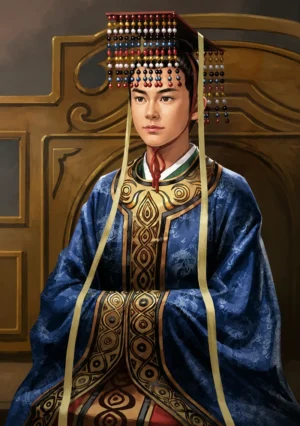
Liu Mao was a Han imperial clan member, military officer, and noble during the late Eastern Han dynasty. He was the third son of Liu Yan, the Governor of Yizhou, the elder brother of Liu Zhang, and the first husband of Empress Mu (Lady Wu). Born in Jingling County, Jiangxia Commandery (modern-day Hubei Province), Liu Mao hailed from a distinguished royal lineage descended from King Gong of Lu of the Han imperial family.
When the Eastern Han court fell into systemic corruption, Liu Yan submitted a memorial to Emperor Ling requesting appointment as Governor of Yizhou to establish an autonomous territorial stronghold. Liu Mao and his younger brother Liu Zhang accompanied their father into the Sichuan Basin to build their regional power, while his two elder brothers, Liu Fan and Liu Dan, remained at the imperial capital in Luoyang as royal court officials. In Yizhou, Liu Yan appointed Liu Mao as Special Administrator and Household General (Biejia Zhonglang Jiang), placing him in charge of the elite Eastern Châu troops (Dongzhou Bing), a vital military division comprised of refugees and migrant soldiers from Henan and Nanyang.
Between 188 AD and 194 AD, owing to the long-standing family friendship between Liu Yan and the father of Wu Yi, Liu Yan learned from a renowned physiognomist that Wu Yi’s sister (Lady Wu) possessed an extraordinarily auspicious physiognomy that foretold she would one day become a Mother of the Realm. Eager to secure this auspicious prophecy for his own bloodline, Liu Yan arranged for Liu Mao to marry Lady Wu. Through this political and strategic alliance, Liu Mao earned the firm backing of the prominent Wu family and the powerful Eastern Zhou officer corps.
In 194 AD, tragedy struck the Liu family. In Chang’an, Liu Mao’s elder brothers Liu Fan and Liu Dan conspired with warlord Ma Teng to assassinate the tyrannical minister Li Jue. The conspiracy failed, and both brothers were executed by Li Jue. Devastated by the tragic loss of his eldest sons and overwhelmed by grief after lightning struck and burned down his gubernatorial residence in Mianzhu, Liu Yan fell gravely ill and passed away in 194 AD. Although Liu Mao was the eldest surviving son present in Yizhou, key provincial officials such as Zhao Wei and local Sichuan gentry conspired to bypass Liu Mao, selecting his younger brother Liu Zhang as Governor because Liu Zhang was perceived as gentle, submissive, and easily manipulated. Deprived of his rightful succession and deeply traumatized by the execution of his brothers, Liu Mao suffered a profound mental breakdown, contracting a severe, debilitating madness (kuangji) that rendered him incapable of participating in political or military affairs.
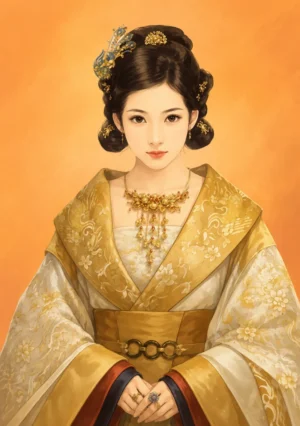
Liu Mao passed away in Chengdu from his severe illness shortly thereafter (circa late 190s to 200 AD) at a relatively young age. His young widow, Lady Wu, remained residing quietly in the gubernatorial palace for two decades until Liu Bei conquered Yizhou in 214 AD. Advised by chief strategist Fa Zheng, Liu Bei married Lady Wu to appease local Sichuan gentry and secure the allegiance of Wu Yi and Wu Ban. Historically, Liu Mao’s untimely illness and death served as a pivotal political catalyst, creating the gentry-backed widowhood of Lady Wu that eventually enabled Liu Bei’s foundational marriage and consolidated the loyalty of the Eastern Zhou military elite behind Shu Han.
Role in Romance of the Three Kingdoms
In Luo Guanzhong’s classic 14th-century historical novel Romance of the Three Kingdoms, Liu Mao does not appear directly nor does he have any spoken dialogue. He is mentioned indirectly in Chapter 65 during the aftermath of Liu Bei’s conquest of Yizhou. When Liu Bei hesitates to take Lady Wu as his wife due to propriety, advisor Fa Zheng persuades him by pointing out that Lady Wu was previously widowed following the death of her first husband, Liu Mao, the son of former Yizhou Governor Liu Yan. Fa Zheng cites historical precedents of royal remarriage to convince Liu Bei to complete the political union, which successfully binds the hearts of the Yizhou populace and military leadership to the new regime.
Liu Mao (劉貌) — Historical & Literary Timeline
Before 188 AD — Historical Record
Migration to Yizhou and Military Appointment
Accompanies his father Liu Yan to Yizhou; appointed Special Administrator and Household General (Biejia Zhonglang Jiang) in command of the Dongzhou troops.
188–194 AD — Historical Record
Marriage to Lady Wu (Empress Mu)
Marries Lady Wu after a physiognomist foretells her supreme nobility, securing a powerful political alliance with the Wu family and Eastern Zhou military officers.
194 AD — Historical Record
Bypassed in Succession and Mental Illness
Traumatized by the execution of his elder brothers Liu Fan and Liu Dan in Chang’an and the death of Liu Yan; bypassed in provincial succession in favor of Liu Zhang and contracts severe madness.
200 AD — Death and Historical Legacy
Passing in Chengdu and Political Aftermath
Passes away in Chengdu due to his severe illness; his widow Lady Wu resides in Chengdu until 214 AD, when Fa Zheng arranges her marriage to Liu Bei in Chapter 65 of Romance of the Three Kingdoms.
Key Relationships
- Family:
- Liu Yan — Father who served as Governor of Yizhou and arranged Liu Mao’s marriage to Lady Wu.
- Empress Mu — Wife (Lady Wu) who was widowed after Liu Mao’s death and later married Liu Bei to become Empress of Shu Han.
- Liu Fan — Eldest brother executed in Chang’an after a failed conspiracy against Li Jue.
- Liu Dan — Second elder brother executed in Chang’an alongside Liu Fan.
- Liu Zhang — Younger brother who was selected by Yizhou officials to succeed Liu Yan as Governor of Yizhou.
- Comrades / Allies:
- Wu Yi — Brother-in-law (brother of Lady Wu) who commanded Eastern Zhou troops and later served as Senior General of Shu Han.
- Wu Ban — Relative of Lady Wu who served as General of the Rear in Shu Han.
- Zhao Wei — Yizhou official who orchestrated the succession of Liu Zhang over Liu Mao following Liu Yan’s death.
- Enemies / Opponents:
- Li Jue — Tyrannical minister in Chang’an who executed Liu Mao’s elder brothers Liu Fan and Liu Dan.
- Ma Teng — Warlord whose failed Chang’an conspiracy led to the execution of Liu Mao’s brothers.
For detailed historical records, archives, and official chronicles, explore Liu Mao on Wikipedia.
In Novel
Chapter 13
In History
Summary
- Liu Mao (刘貌, Lưu Mạo) is the name of a son of Emperor Xian of Han in the imperial genealogical record.
Period I — Imperial Family
- Liu Mao was one of the sons of Emperor Xian and belonged to the Liu imperial family during the final decades of the Eastern Han.
- He was associated with the title Prince of Jibei (济北王) in the imperial family record.
Historical Record
- Liu Mao was historical. He should be distinguished from unrelated late-Han or Three Kingdoms figures with the same Liu surname and similar transliterations.