
Contents
Biography & Historical Record
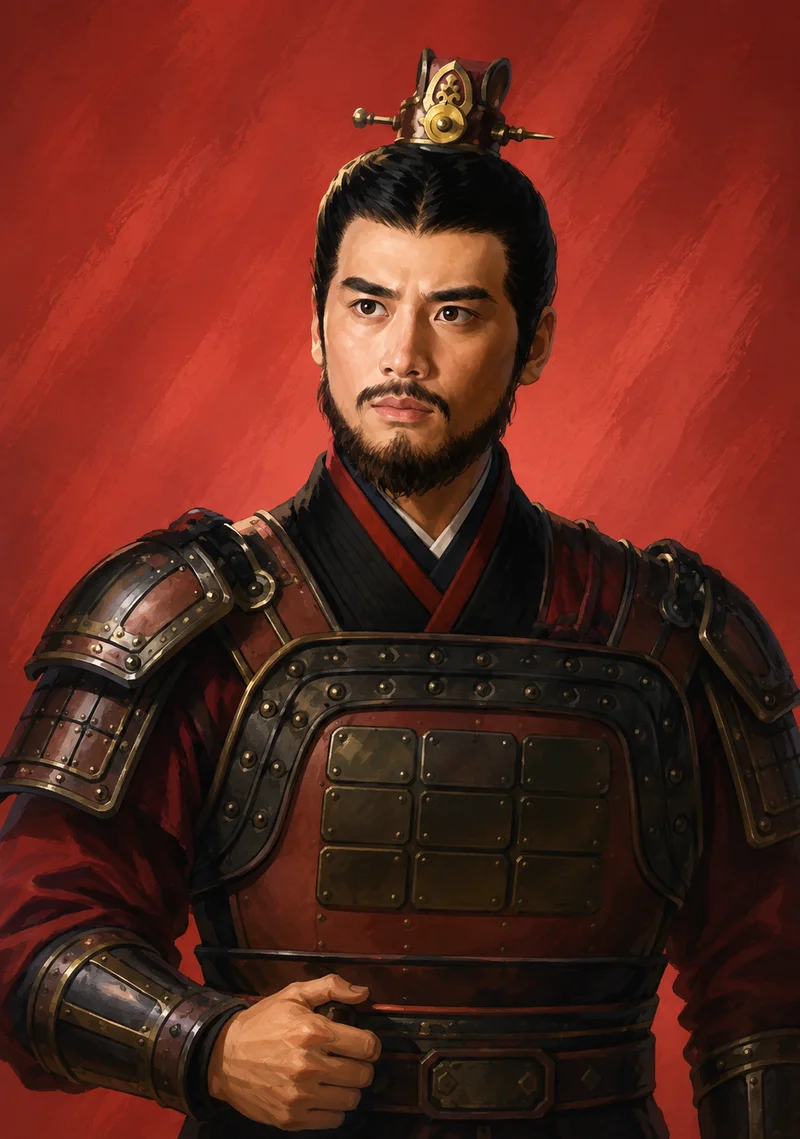
Geng Yan, courtesy name Bochao, was a legendary military commander, brilliant strategist, and founding general of the Eastern Han dynasty who served under Emperor Guangwu (Liu Xiu). Hailing from Mao County in Fufeng Commandery (modern-day Xingping, Shaanxi Province), he was celebrated as one of the elite Twenty-Eight Generals of Yuntai (Yuntai Ershibā Jiàng), holding the exalted fourth position among the venerated founding heroes of the Eastern Han. Documented in Fan Ye’s Book of Later Han (Hou Han Shu – Biography of Geng Yan) and referenced across historical commentaries, Geng Yan was renowned for his undefeated military record, his supreme tactical audacity, and his unwavering loyalty, establishing the glorious aristocratic and loyalist legacy of the Hedong and Fufeng Geng clan that inspired descendants like Geng Ji centuries later.
During the chaos following the collapse of the Xin dynasty, Geng Yan joined Liu Xiu during his perilous campaigns to restore the Han dynasty. Displaying extraordinary martial brilliance and tactical genius, Geng Yan commanded armies across northern and eastern China, routing superior enemy forces, pacifying unruly warlords, and securing critical strategic bases for Emperor Guangwu. In 29 AD, during the grueling campaign to pacify the rebellious warlord Zhang Bu in Shandong, Geng Yan suffered a severe arrow wound to his thigh in the thick of battle. Despite the excruciating pain, Geng Yan continued fighting without showing a trace of weakness, leading a relentless charge that crushed the enemy. When Emperor Guangwu arrived to inspect the troops and learned of his wounds, he personally visited Geng Yan’s tent, expressing immense admiration with a famous decree: ‘In the past, Han Xin established great achievements for the Han at Nanhai, and today General Geng Yan shoulders the grand burdens of the East. Your steadfast will is stronger than solid rock!’
Geng Yan’s military career was defined by sweeping strategic foresight: he was among the key architects who persuaded Emperor Guangwu to execute a systematic, province-by-province pacification of regional warlords rather than scattering forces prematurely. Holding high imperial offices including General Who Establishes Might (Jianwei Da Jiangjun) and Governor of You Province (Yuzhou Mu), Geng Yan was ennobled as the Marquis of Xiaofu. He served the Eastern Han court with absolute integrity and military distinction until passing away peacefully of natural causes in 58 AD at the age of fifty-six. His noble bloodline, unyielding military spirit, and uncompromising loyalty were deeply ingrained in his descendants, echoing generations later when his direct descendant Geng Ji chose martyrdom rather than bow to Cao Cao’s usurpation in Xuchang.
Role in Romance of the Three Kingdoms
In Luo Guanzhong’s novel Romance of the Three Kingdoms, Geng Yan appears as an illustrious ancestral figure whose legendary loyalty and military glory are invoked to illuminate the noble lineage of the Han loyalists. Mentioned in Chapter 69 during the aftermath of the Xuchang Uprising, Geng Yan is solemnly introduced as the great ancestor of Geng Ji, the Minister of the Household who leads the heroic armed counter-coup against Cao Cao. When Geng Ji is brought before Cao Cao on the execution grounds after the uprising fails, the narrative highlights his descent from Geng Yan, the great General of the Han who ranks among the Twenty-Eight Generals of Yuntai. This prestigious ancestral connection explains Geng Ji’s unyielding defiance: a scion of a founding general who spent his life restoring the Han dynasty could never surrender to a usurper like Cao Cao. Geng Yan’s literary presence serves as a powerful historical anchor, connecting the glorious restoration of the Han under Emperor Guangwu to the tragic, defiant final stand of the Han loyalists in the twilight of the Three Kingdoms era.
Geng Yan (耿弇) — Historical & Literary Timeline
Joining Liu Xiu & Unification Campaigns
Pledges allegiance to Liu Xiu (future Emperor Guangwu); formulates strategic military plans for pacifying northern China and restoring the Han dynasty.
Pacifying Shandong & Emperor Guangwu’s Praise
Fights heroically in Shandong with an arrow wound in his thigh; personally praised by Emperor Guangwu, who likens his steadfast willpower to solid rock.
Passing Away & Inclusion in Yuntai Twenty-Eight Generals
Passes away peacefully of natural causes at age fifty-six; later inducted into the prestigious Yuntai Twenty-Eight Generals under Emperor Ming of Han, ranking fourth on the list.
Symbolizing Han Loyalty through Descendant Geng Ji
Invoked in Chapter 69 as the illustrious ancestor of Xuchang uprising leader Geng Ji, providing the historical justification for Geng Ji’s unflinching martyrdom against Cao Cao.
Key Relationships
Family
- Geng Kuang (耿况, Cảnh Huống): Father who served as the Grand Administrator of Shanggu and coordinated vital northern military forces to support the restoration of the Han dynasty.
- Geng Zhong (耿忠, Cảnh Trung): Son who inherited his aristocratic title and carried forward the family lineage in the Eastern Han court.
- Geng Ji (耿纪, Cảnh Kỷ): Direct descendant who drew inspiration from Geng Yan’s founding loyalty to the Han dynasty, leading the 218 AD anti-Cao Cao uprising in Xuchang and choosing martyrdom over surrender.
Friends
- Deng Yu (邓禹, Đặng Vũ): Fellow top strategist and leader among the Twenty-Eight Generals of Yuntai who worked alongside him to establish the foundation of the Eastern Han dynasty.
- Wu Han (吴汉, Ngô Hán): Fellow founding commander among the Twenty-Eight Generals of Yuntai who coordinated major military campaigns across northern and eastern China.
- Jia Fu (贾复, Giả Phục): Fellow elite martial commander of the Twenty-Eight Generals of Yuntai who served in high military roles during the unification wars.
Enemies
- Zhang Bu (张步, Trương Bộ): Warlord controlling the Shandong region whom Geng Yan routed and forced into submission in 29 AD, despite Geng Yan sustaining a severe arrow wound to his thigh during the engagement.
- Wang Lang (王郎, Vương Lang): Regional pretender and warlord in Hebei whose northern coalition Geng Yan helped dismantle during the early pacification campaigns.
Other
- Liu Xiu (刘秀, Lưu Tú): Sovereign and founding Emperor Guangwu of Han, who placed supreme trust in Geng Yan’s tactical genius, appointed him General Who Establishes Might, and famously commended his steadfast will as being stronger than solid rock.
In Novel
Geng Yan (耿弇, Gěng Yǎn) does not have a securely verified named appearance in the supplied edition under the exact Chinese name 耿弇. He is a major historical Eastern Han general, but his historical biography should not be converted into an In Novel timeline without an exact textual occurrence.
In History
Summary
- Geng Yan (耿弇, Cảnh Yểm), courtesy name Boyan (伯昭), was a famous general of Emperor Guangwu of Han and therefore belongs primarily to the Eastern Han restoration period before the Three Kingdoms.
Service under Liu Xiu
- Geng Yan joined Liu Xiu during the wars that established the Eastern Han dynasty.
- He became one of Liu Xiu’s most successful commanders and played a decisive role in campaigns against rival warlords in northern China.
Military Achievements
- He conducted campaigns in Hebei and Shandong and was particularly famous for the conquest of Qi and the defeat of Zhang Bu.
- His military career became an important example of strategic persistence in the histories of the Later Han.
Historical Record
- Classification: Historical. He is a genuine Han historical figure, but he died decades before the conventional Three Kingdoms era.