











Contents
Biography & Historical Record
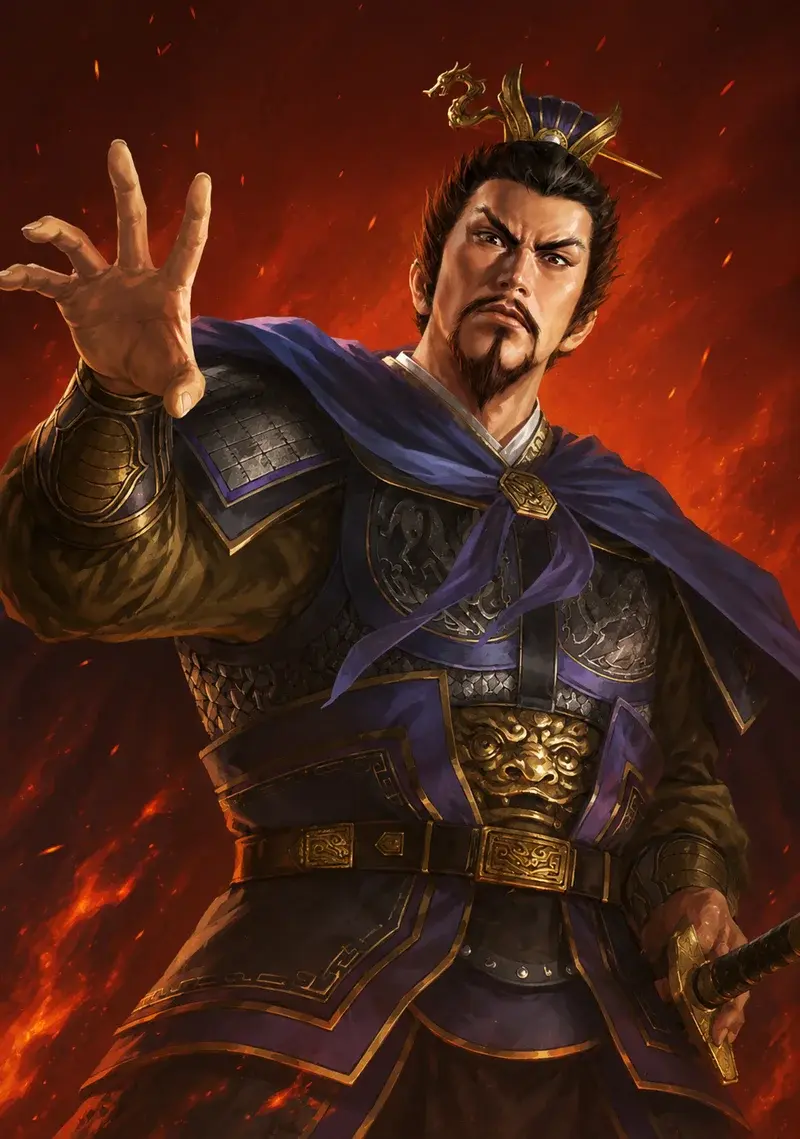
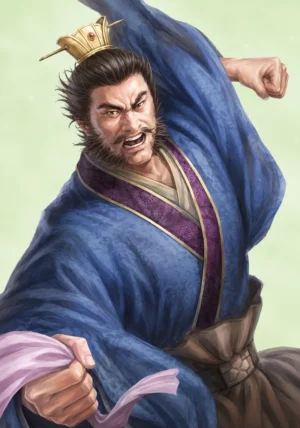
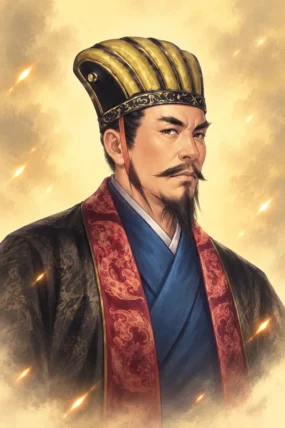
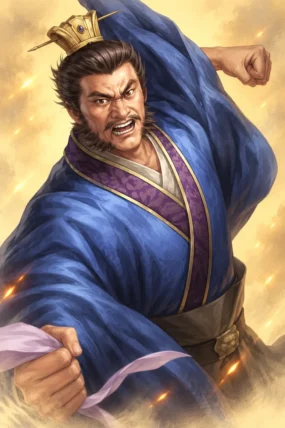
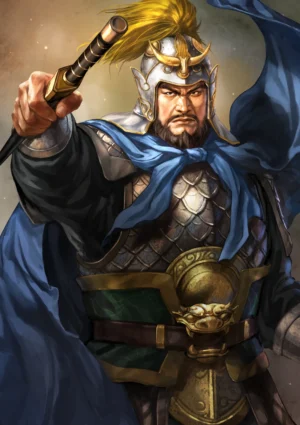
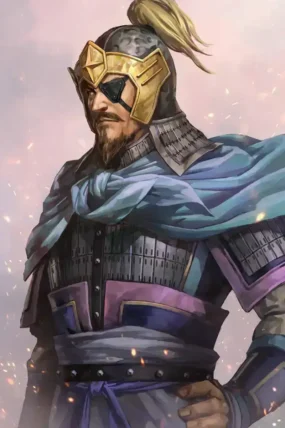
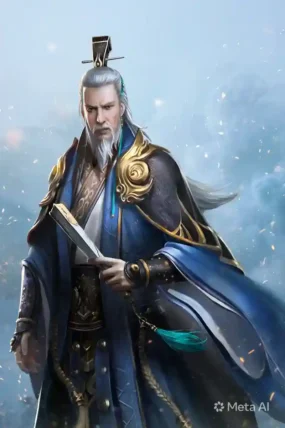
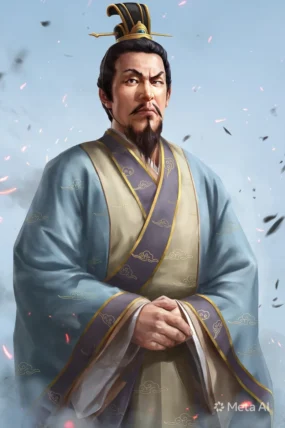
Cao Cao (曹操, Tào Tháo) (155–220 AD), courtesy name Mengde (孟德, Mạnh Đức), was a statesman, warlord, poet, and the foundational ruler of Cao Wei (曹魏, Tào Ngụy) during the late Eastern Han and the Three Kingdoms era. A native of Qiao County, Peiguo Commandery (沛国谯县; huyện Tiêu, quận Bái), he rose from a family linked to the court eunuch Cao Teng (曹腾, Tào Đằng) through his father Cao Song (曹嵩, Tào Tung), yet carved an independent path by military talent, administrative reform, and ruthless political calculation. Traditional appraisal calls him “an able minister in times of peace, a hero of chaos in times of disorder” (治世之能臣,乱世之奸雄).
Ancestry, Early Offices & Yellow Turbans
As a youth Cao Cao was known for boldness and unconventional behavior. He held posts including Cavalry Commandant during the Yellow Turban Rebellion (184 AD), helping intercept rebel columns, and later served as Chancellor of Jinan, where he suppressed illicit local shrines and corrupt officials. These early years formed his habit of rewarding merit over pedigree — a theme that later drew talents such as Xun Yu (荀彧, Tuân Úc), Guo Jia (郭嘉, Quách Gia), Dian Wei (典韦, Điển Vi), and Xu Zhu (许褚, Hứa Chử).
Dong Zhuo, Flight, and the Anti-Dong Coalition (189–191)
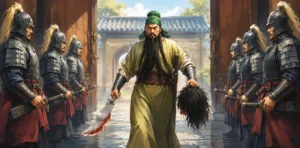
When Dong Zhuo (董卓, Đổng Trác) seized Luoyang after He Jin (何进, Hà Tiến)‘s death, Cao Cao refused collaboration. In the novel he attempts assassination with the Seven-Star Blade borrowed from Wang Yun (王允, Vương Doãn), then flees with magistrate Chen Gong (陈宫, Trần Cung). Historically he escaped Dong Zhuo’s court, raised troops in Chenliu, and joined the eighteen-warlord coalition under Yuan Shao (袁绍, Viên Thiệu). His solo pursuit of Dong Zhuo’s withdrawing army failed; thereafter he concentrated on building a personal base in Yan Province with kinsmen Xiahou Dun (夏侯惇, Hạ Hầu Đôn), Xiahou Yuan (夏侯渊, Hạ Hầu Uyên), Cao Ren (曹仁, Tào Nhân), and Cao Hong (曹洪, Tào Hồng).
Yan Province, Qingzhou Corps, and Tuntian
Through the early 190s Cao Cao fought Yellow Turban remnants and rival claimants in Yan and Yu. He enrolled surrendered rebels into the elite Qingzhou Corps and pioneered tuntian (屯田) military-agricultural colonies that fed his armies when other warlords starved. After his father Cao Song (曹嵩, Tào Tung) was murdered in Xu Province (attributed in the novel to Tao Qian (陶谦, Đào Khiêm)‘s subordinate Zhang Kai), Cao Cao invaded Xu in a campaign of vengeance — one of the most controversial episodes of his career.
Holding the Emperor at Xuchang (196)
In 196 AD Cao Cao welcomed Emperor Xian (刘协, Hán Hiến Đế) to Xuchang, securing unmatched legitimacy under the maxim “control the emperor to command the lords.” With Xun Yu managing civil administration and advisers such as Xun You and Guo Jia shaping strategy, he became the effective master of the Han court while rivals still claimed to serve the dynasty.
Wancheng, Yuan Shu, and the Fall of Lu Bu (197–199)
At Wancheng he was ambushed by Zhang Xiu (张绣, Trương Hủ) after a scandal involving Lady Zou; Dian Wei and eldest son Cao Ang (曹昂, Tào Ngang) died covering his escape. He later crushed Yuan Shu (袁术, Viên Thuật), who had declared himself emperor, and with temporary help from Liu Bei (刘备, Lưu Bị) captured Lu Bu (吕布, Lã Bố) at flooded Xiapi, executing him at White Gate Tower (199).
Guandu and the Unification of the North (200–207)
The decisive struggle with Yuan Shao culminated at Guandu (200). Outnumbered, Cao Cao burned Yuan Shao’s stores at Wuchao after intelligence from defector Xu You, then destroyed Yuan remnants across Hebei and crushed Wuhuan at White Wolf Mountain (207). Northern China was effectively under his control; literary patronage at Ye later produced the Jian’an literary flowering around Cao Pi, Cao Zhi, and the Seven Scholars.
Red Cliffs and the Limits of Conquest (208)
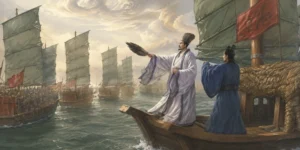
After Liu Biao (刘表, Lưu Biểu)‘s death, Cao Cao took Jingzhou and drove Liu Bei south. At Red Cliffs his fleet was burned by the alliance of Sun Quan (孙权, Tôn Quyền) and Liu Bei — Zhou Yu (周瑜, Chu Du) and Huang Gai in the novel; disease and naval inexperience also factor in historical explanation. He escaped north (Huarong Trail mercy by Guan Yu is novelistic). The defeat froze the three-way balance that defined the Three Kingdoms.
Guanzhong, King of Wei, Hanzhong, and Death (211–220)
He shattered Ma Chao and Han Sui’s Guanzhong coalition, received the Nine Bestowments, and rose from Duke to King of Wei. Bronze Sparrow Terrace at Ye symbolized both cultural glory and imperial ambition. In Hanzhong he first forced Zhang Lu (张鲁, Trương Lỗ)‘s surrender, then lost the region after Xiahou Yuan fell to Huang Zhong (黄忠, Hoàng Trung) at Dingjun; the “chicken-rib” withdrawal became proverbial. In 220 he died in Luoyang. Months later Cao Pi (曹丕, Tào Phi) forced Emperor Xian’s abdication and proclaimed Cao Wei.
Role in Romance of the Three Kingdoms
In Luo Guanzhong’s Romance of the Three Kingdoms, Cao Cao is the central antagonist and the novel’s most complex political mind, spanning Chapters 1–78. Signature scenes include advising He Jin against summoning warlords; the Seven-Star Blade attempt on Dong Zhuo; the flight with Chen Gong and the declaration “I would rather betray the world than let the world betray me”; the Qingzhou Corps and Xu campaign; Wancheng’s night disaster; Guandu and Wuchao; green-plum hero talk with Liu Bei; Red Cliffs’ Short Song Style banquet and fire defeat; Huarong Trail; Tong Pass against Ma Chao; elevation to King of Wei; and death after imprisoning Hua Tuo — leaving Cao Pi to found Wei.
Notable Quotes & Famous Sayings
- “I would rather betray the world than let the world betray me!” — to Chen Gong (陈宫, Trần Cung) after the Lü Boshe (吕伯奢, Lã Bá Xa) incident (novel).
- “An old steed in the stable still longs to run a thousand li; a hero in late years keeps a youthful heart.” — from Turtle Though Long-Lived (龟虽寿).
- “Mountains never tire of height, waters never tire of depth; the Duke of Zhou spat out his food to welcome worthies, and the empire’s hearts turned to him.” — from Short Song Style (短歌行), recited at Red Cliffs in the novel.
Cao Cao (曹操, Tào Tháo) — Historical & Literary Timeline
184 AD — Yellow Turbans
Cavalry Commandant
Fights Yellow Turban columns; early reputation as a capable Han officer.
189–190 AD — Dong Zhuo crisis
Flight & coalition
Refuses Dong Zhuo; raises troops in Chenliu; joins anti-Dong coalition; failed solo pursuit.
192–196 AD — Yan & Xuchang
Qingzhou Corps & Emperor
Builds Yan base, tuntian colonies; welcomes Emperor Xian to Xuchang (196).
197–199 AD — Wancheng to Xiapi
Zhang Xiu & Lu Bu
Wancheng disaster; crushes Yuan Shu; executes Lu Bu at White Gate Tower.
200–207 AD — Guandu & Hebei
Northern supremacy
Burns Wuchao; destroys Yuan clan; defeats Wuhuan at White Wolf Mountain.
208 AD — Chapters 48–50
Red Cliffs
Takes Jingzhou then loses the southern campaign to Sun–Liu fire attack; escapes north.
211–219 AD — West & Hanzhong
King of Wei
Breaks Ma Chao coalition; Duke/King of Wei; wins then loses Hanzhong.
220 AD — Luoyang
Death
Dies of illness; Cao Pi founds Cao Wei the same year.
For detailed historical records, archives, and official chronicles, explore Cao Cao on Wikipedia.
Key Relationships
Family
- Cao Song (曹嵩, Tào Tung) — Father; Grand Commandant; murdered in Xu Province in 193 AD, precipitating Cao Cao’s vengeful campaign.
- Madam Ding (丁氏, Đinh Thị) — Mother; Ding-clan wife of Cao Song, unnamed in Sanguozhi but recorded in clan genealogies. Not Lady Ding (丁夫人), Cao Cao’s first wife.
- Lady Bian (卞氏, Biện Thị) — Principal wife; mother of Cao Pi, Cao Zhang, Cao Zhi, and Cao Xiong.
- Cao Pi (曹丕, Tào Phi) — Succeeding son; King then Emperor Wen of Wei.
- Cao Zhi (曹植, Tào Thực) — Son; premier Jian’an poet, rival of Cao Pi for succession.
- Cao Ang (曹昂, Tào Ngang) — Eldest son; died covering Cao Cao’s escape at Wancheng (197).
- Cao Zhang (曹彰, Tào Chương) — Martial son, Prince of Rencheng.
Friends
- Xiahou Dun (夏侯惇, Hạ Hầu Đôn) — Kinsman and lifelong commander.
- Xiahou Yuan (夏侯渊, Hạ Hầu Uyên) — Kinsman; northwestern general; killed at Dingjun.
- Xun Yu (荀彧, Tuân Úc) — Chief civil strategist; secured Emperor Xian for Cao Cao.
- Xun You (荀攸, Tuân Du) — Military adviser at Guandu and beyond.
- Guo Jia (郭嘉, Quách Gia) — Tactical genius against Yuan Shao and the Wuhuan.
- Dian Wei (典韦, Điển Vi) — Bodyguard slain at Wancheng.
- Xu Zhu (许褚, Hứa Chử) — Tiger Guard captain; successor protector after Dian Wei.
Enemies
- Dong Zhuo (董卓, Đổng Trác) — Tyrant Cao Cao sought to remove in 189–190.
- Yuan Shao (袁绍, Viên Thiệu) — Northern rival defeated at Guandu (200).
- Lu Bu (吕布, Lã Bố) — Captured and executed at Xiapi (199).
- Liu Bei (刘备, Lưu Bị) — Principal long-term rival; Shu Han founder.
- Sun Quan (孙权, Tôn Quyền) — Eastern Wu ruler; Red Cliffs ally of Liu Bei.
- Guan Yu (关羽, Quan Vũ) — Liu Bei’s general; mutual respect, lasting military threat.
Other
- Emperor Xian (刘协, Hán Hiến Đế) — Last Eastern Han emperor, held at Xuchang under Cao Cao’s control.
- Chen Gong (陈宫, Trần Cung) — Early companion who later advised Lu Bu against Cao Cao.
- Wang Yun (王允, Vương Doãn) — Minister who (in the novel) lent the Seven-Star Blade.
Comrades



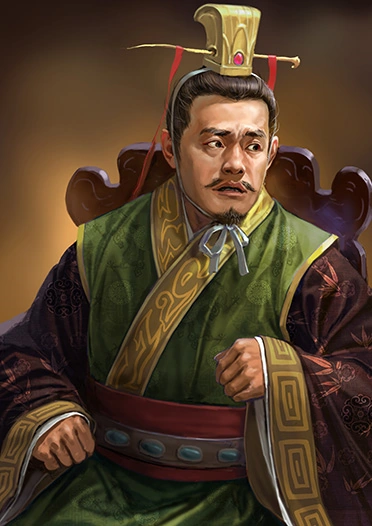


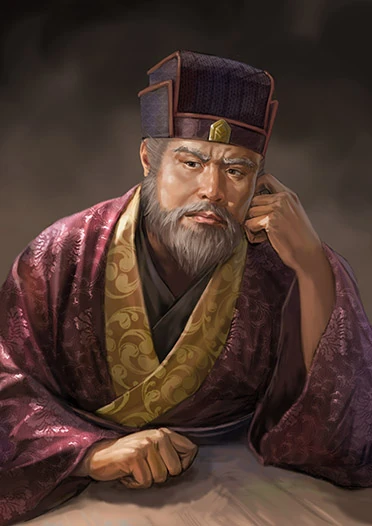
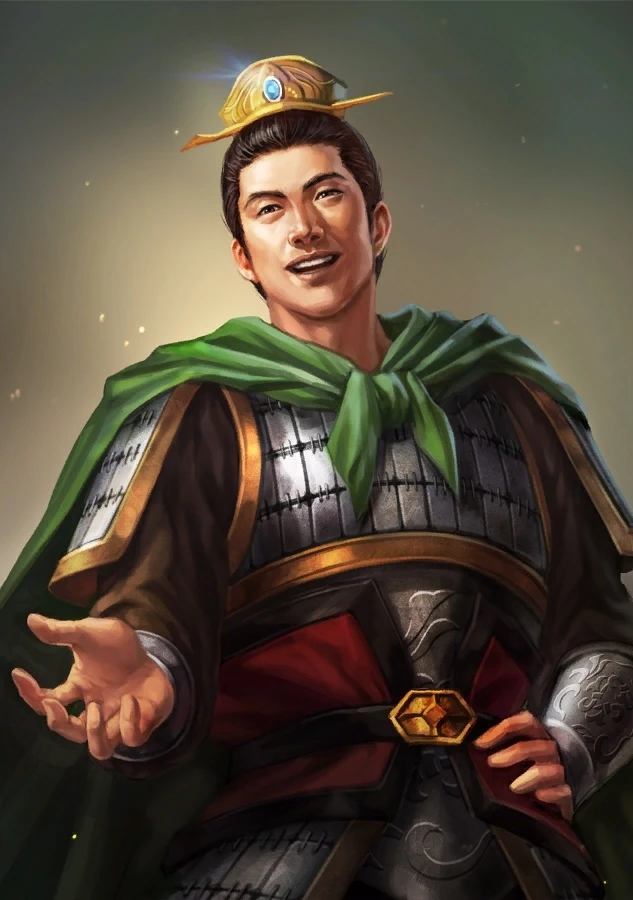

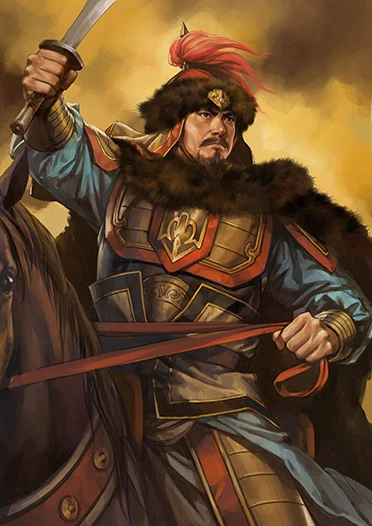
Appearance


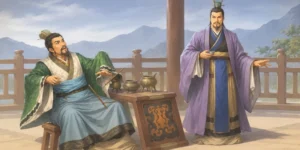
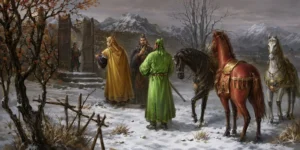
In Novel
Chapter 1
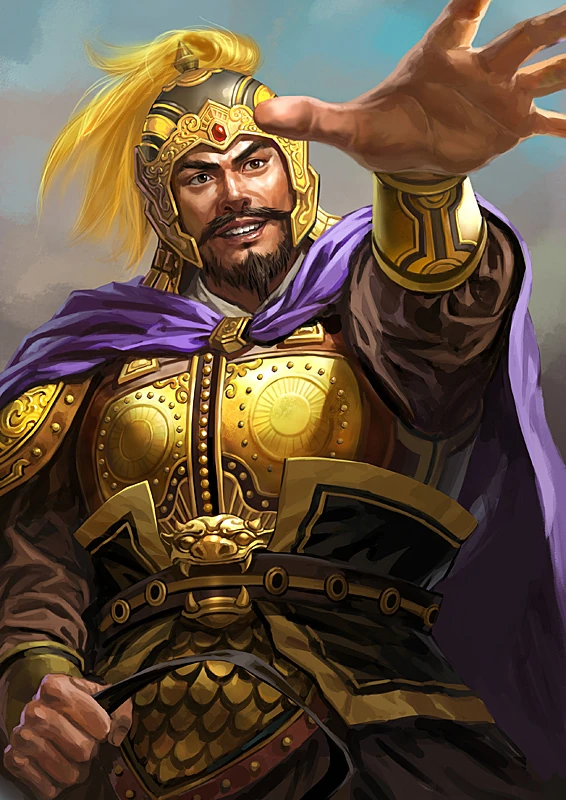
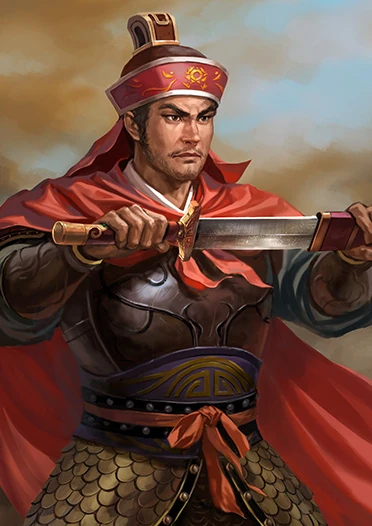
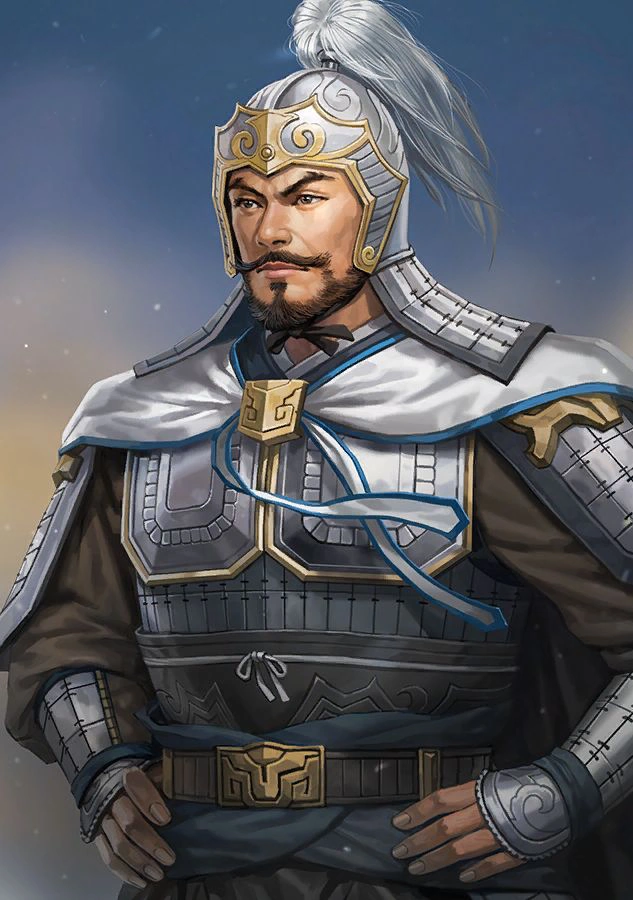
- Cao Cao (曹操, Tào Tháo): Cavalry Commandant, courtesy name Mengde (Mạnh Đức); arrived at Changshe with red banners to intercept and route the fleeing Yellow Turban armies under Zhang Liang and Zhang Bao (张宝, Trương Bảo).
Chapter 78
- Cao Cao (曹操, Tào Tháo): Imprisoned and tortured physician Hua Tuo after suspecting an assassination plot during cranial surgery; passed away of illness in Luoyang in 220 AD at age sixty-six, leaving testamentary instructions for seventy-two decoy tombs.
Appearance
In History
Summary
- Cao Cao (曹操, Tào Tháo), courtesy name Mengde (孟德, Mạnh Đức) (155–220 AD), was a late-Han warlord, statesman, poet, and military reformer who controlled the imperial court and founded the political basis of Cao Wei (曹魏, Tào Ngụy).
Year: 155–184 AD — Origins & Yellow Turbans
- Born in Qiao, Peiguo (沛国谯县). His father Cao Song (曹嵩, Tào Tung) was the adoptive son of the eunuch Cao Teng (曹腾, Tào Đằng). Cao Cao held local and capital posts; in 184 he served as a cavalry officer against the Yellow Turbans and later as Chancellor of Jinan, where he cracked down on corrupt local cults.
Year: 189–192 AD — Dong Zhuo & Chenliu
- After Dong Zhuo (董卓, Đổng Trác) seized Luoyang, Cao Cao fled, raised troops in Chenliu, and joined the anti-Dong coalition (190). His solo pursuit after Dong Zhuo’s withdrawal failed; he then built power in Yan Province with kinsmen Xiahou Dun, Xiahou Yuan, Cao Ren (曹仁, Tào Nhân), and Cao Hong (曹洪, Tào Hồng).
Year: 192–196 AD — Qingzhou Corps & Emperor Xian
- He absorbed Yellow Turban remnant soldiers into the Qingzhou Corps, instituted tuntian (屯田) agricultural colonies, and in 196 welcomed Emperor Xian (刘协, Hán Hiến Đế) to Xuchang — “holding the Son of Heaven to command the lords” (挟天子以令诸侯).
Year: 197–199 AD — Zhang Xiu, Yuan Shu, Lu Bu
- Suffered a night reverse at Wancheng under Zhang Xiu (张绣, Trương Hủ) (losing Dian Wei and Cao Ang). He crushed Yuan Shu (袁术, Viên Thuật) and, with Liu Bei’s temporary alliance, captured and executed Lu Bu (吕布, Lã Bố) at Xiapi (199).
Year: 200–207 AD — Guandu & Hebei
- Defeated Yuan Shao (袁绍, Viên Thiệu) at Guandu (200) after burning grain stores at Wuchao (with defector Xu You’s intelligence). Subsequent campaigns destroyed the Yuan heirs and subdued Wuhuan at White Wolf Mountain (207), unifying the north.
Year: 208–210 AD — Red Cliffs
- Took Jingzhou after Liu Biao’s death, then suffered the allied fire attack of Sun Quan (孙权, Tôn Quyền) and Liu Bei (刘备, Lưu Bị) at Red Cliffs (Chibi). He retained northern Jing and the Yangtze approaches but lost the chance for immediate reunification.
Year: 211–219 AD — Guanzhong, Duke/King of Wei, Hanzhong
- Broke the Guanzhong coalition of Ma Chao (马超, Mã Siêu) and Han Sui (211–213). Enfeoffed Duke then King of Wei; built Ye as political-literary capital. Won then lost Hanzhong to Liu Bei after Xiahou Yuan fell at Dingjun (219).
Year: 220 AD — Death
- Died in Luoyang of illness (chronic headaches in later tradition). His son Cao Pi (曹丕, Tào Phi) forced Emperor Xian’s abdication and founded Cao Wei the same year.
Historical Record
- Primary biography: Sanguozhi Wei Book 1 (武帝纪) with Pei Songzhi’s annotations. Administrative and military notices throughout Wei books; literary reputation attested in Cao Pi’s Dianlun and later anthologies. Distinguish novel villainy (Lü Boshe, Huarong Trail mercy) from the historical record of northern unification, tuntian, and Wei founding.
Appearance
Gallery


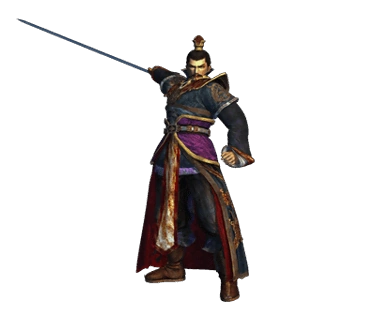
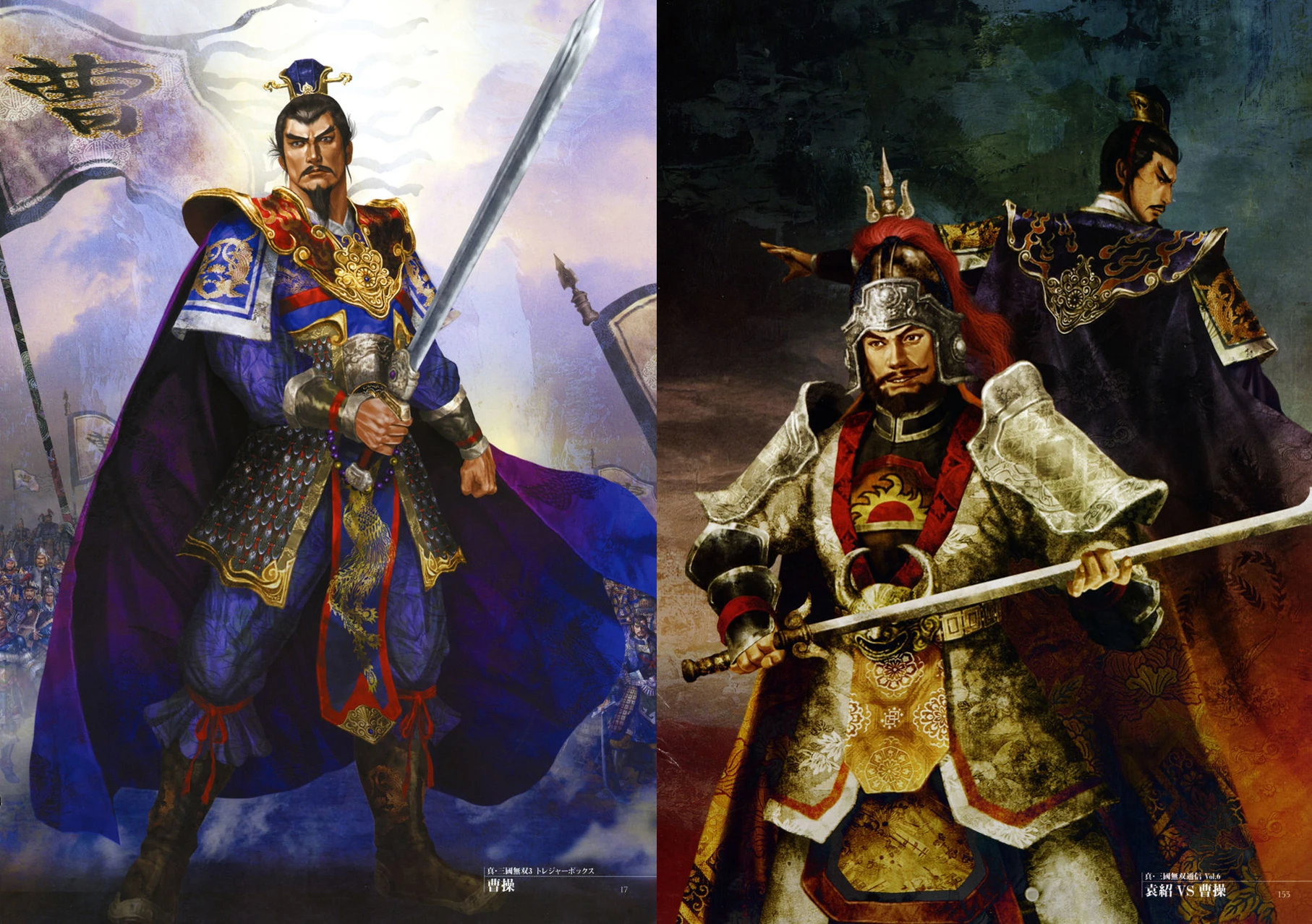


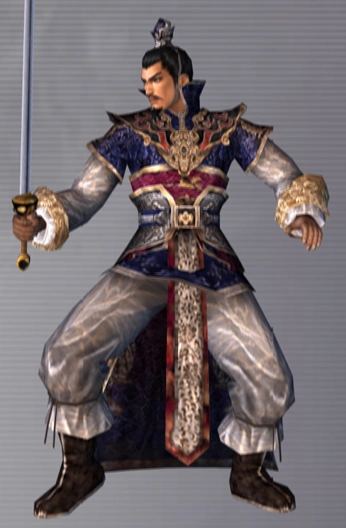

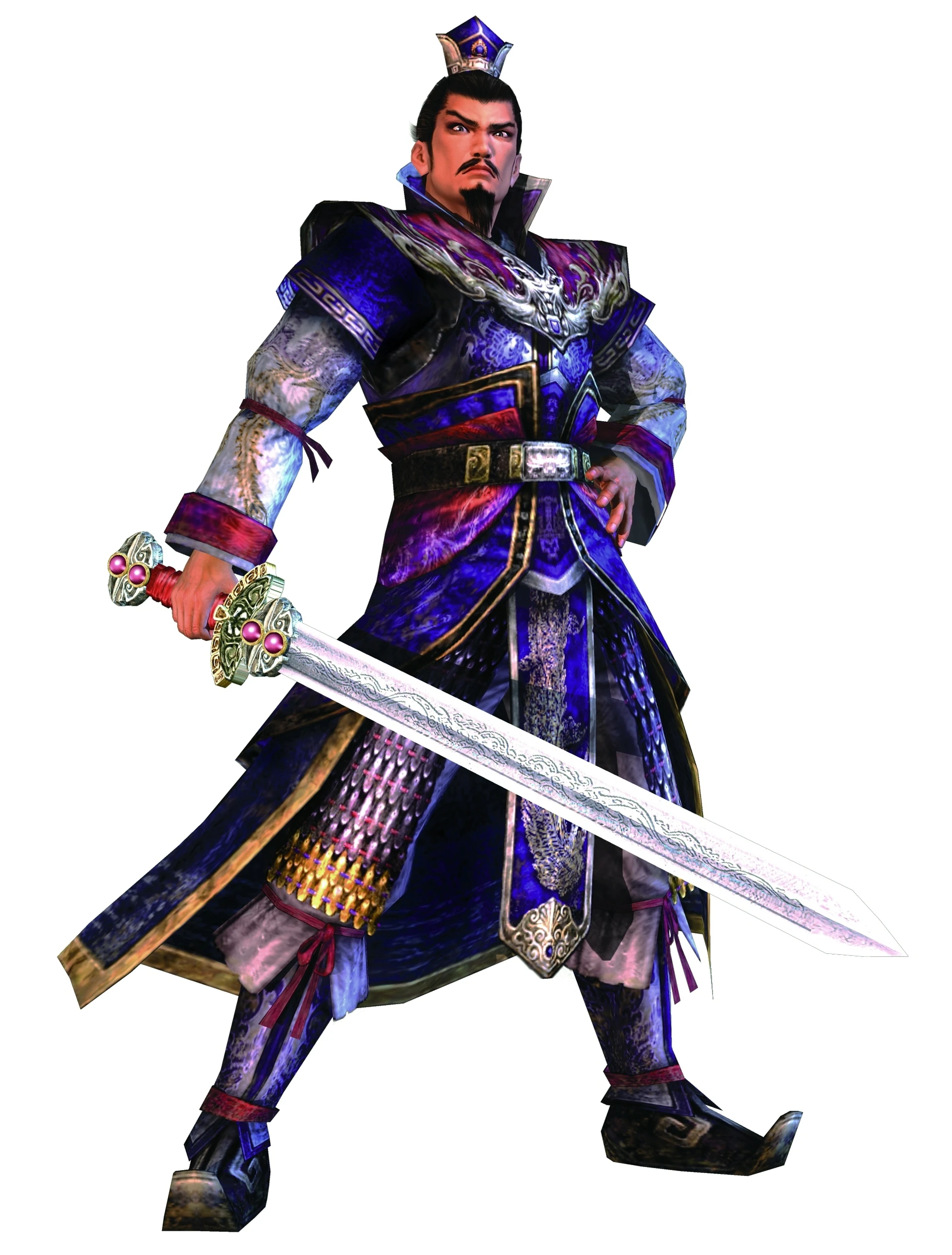

Appearance
Famous Allusion
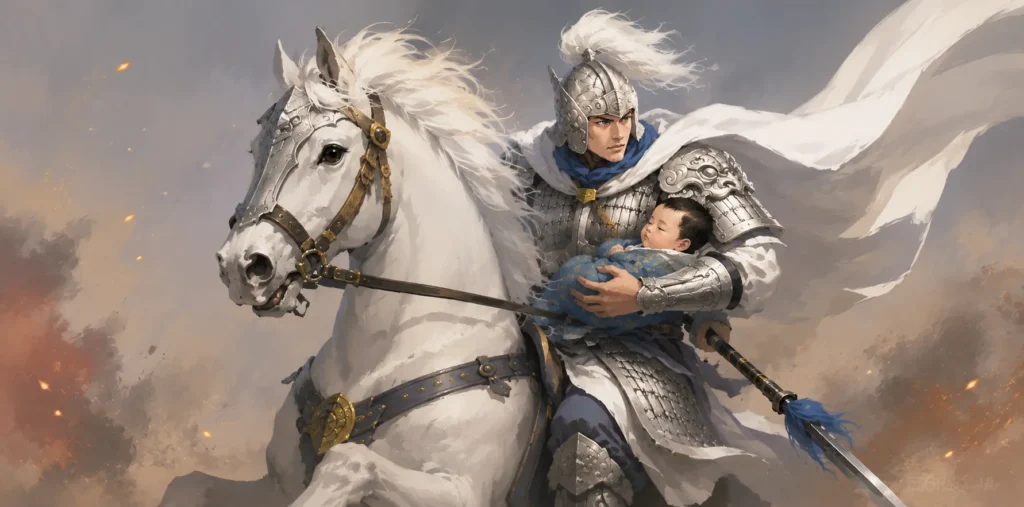
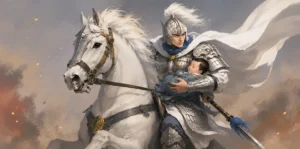
Zhao Yun Rescues A'Dou at Dangyang
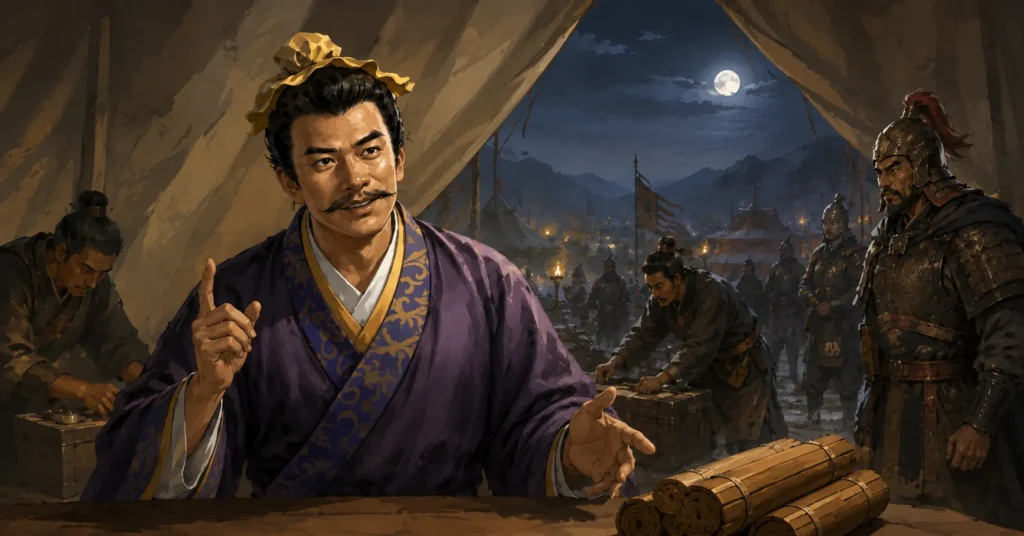
Yang Xiu and The Chicken Rib Dilemma - 杨修鸡肋 (Yáng Xiū jī lèi)
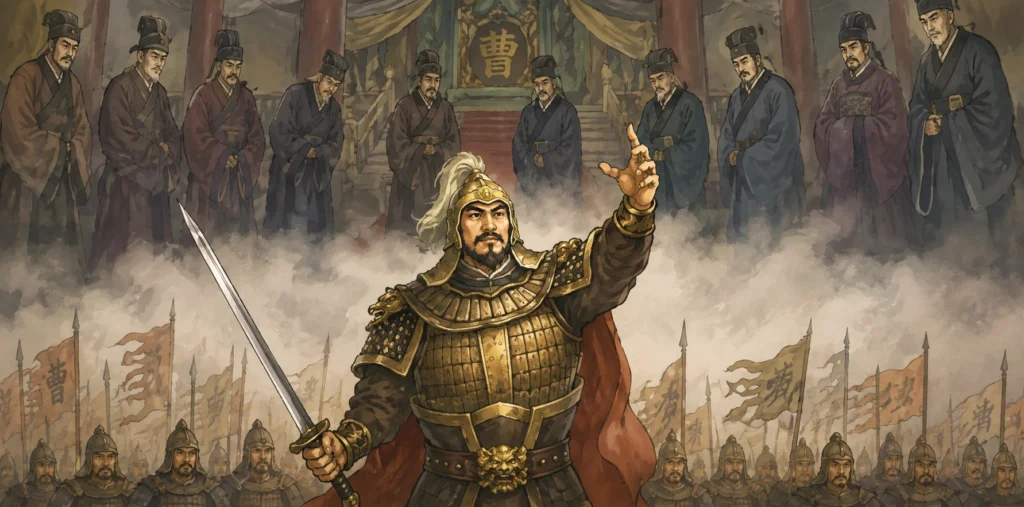
The Ten Eunuchs Behead He Jin - 十常侍斩何进 (Shí cháng shì zhǎn Hé Jìn)
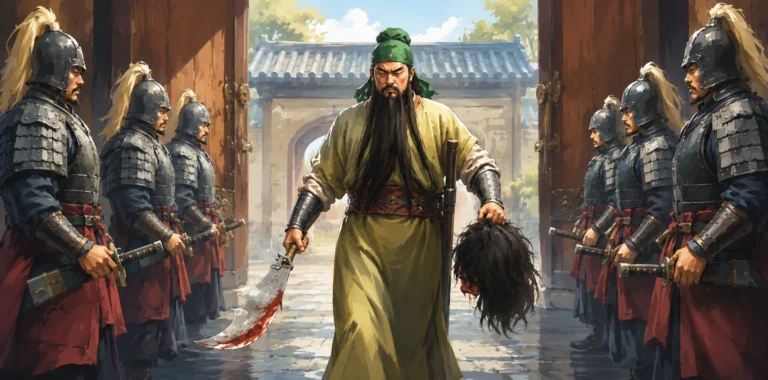
温酒斩华雄, Wēn Jiǔ Zhǎn Huá Xióng, Ôn Tửu Trảm Hoa Hùng
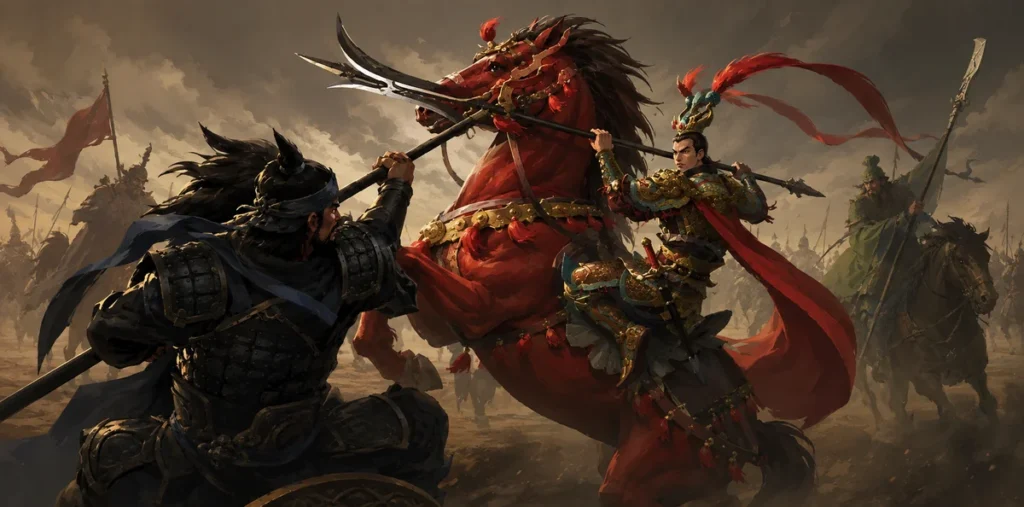
Three Heroes Battle Lu Bu at Hulao Pass - Tam Anh Chiến Lữ Bố
7 comments
[…] musical master, and high-ranking secretarial official serving the warlord and Han Chancellor Cao Cao. Hailing from Yushi County in Chenliu Commandery (modern-day Kaifeng, Henan Province), Ruan Yu was […]
[…] poet, calligrapher, and high-ranking secretarial advisor serving the warlord and Han Chancellor Cao Cao and his heir Cao Pi. Hailing from Ji County in Beihai Commandery (modern-day Changle County, […]
[…] scholar, calligrapher, and high-ranking secretarial advisor serving the warlord and Han Chancellor Cao Cao and his heir Cao Pi. Hailing from Dongping County in Dongping Kingdom (modern-day Dongping County, […]
[…] / Yè Xià Qī Zǐ / Nghiệp Hạ Thất Tử). Alongside the three rulers of the Cao family—Cao Cao (曹操, Tào Tháo), Cao Pi (曹丕 / Tào Phi), and Cao Zhi (曹植 / Tào Thực) (collectively known as the Three […]
Nice post!!!!
bài hay
[…] household to the imperial capital at Ye City, and enter the central administration under Chancellor Cao Cao. While his eldest son Ma Chao remained behind in the northwest to take command of the family’s […]