
Contents
Biography & Historical Record
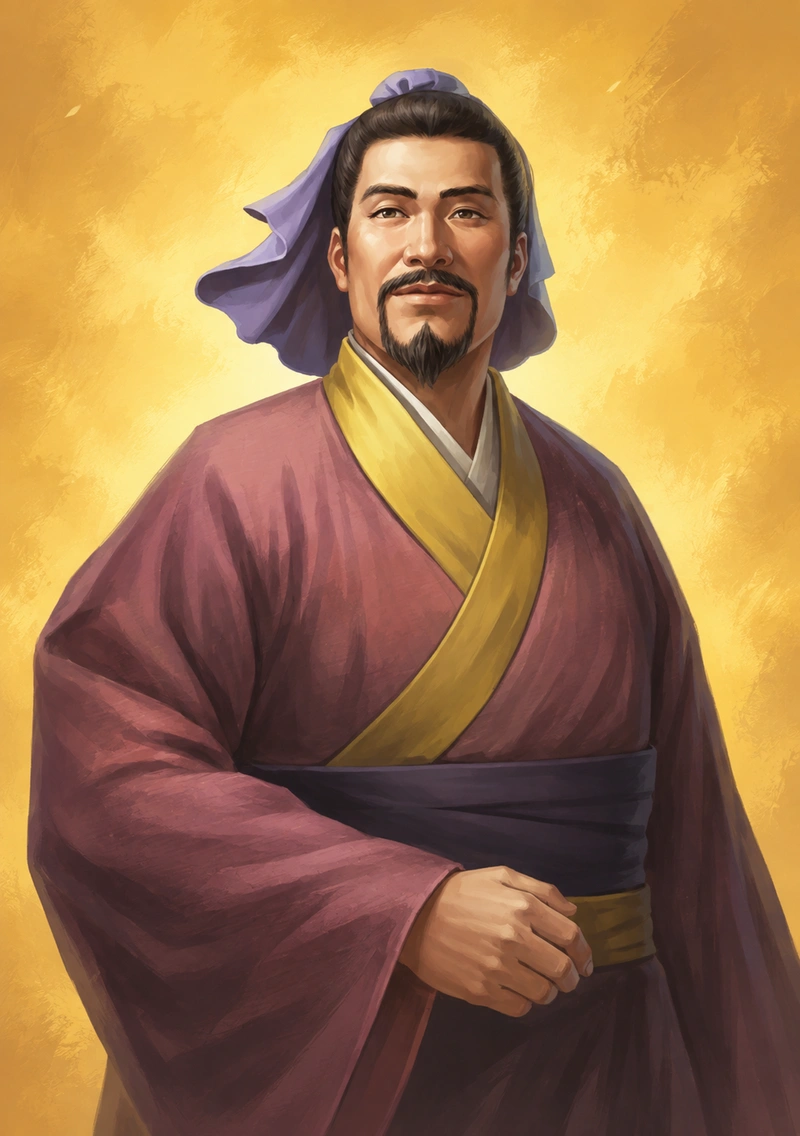
Shi Tao, courtesy name Guangyuan, was a brilliant Han Dynasty and Cao Wei scholar, politician, agricultural administrator, and close youthful companion of Zhuge Liang. Hailing from Yingchuan Commandery (modern-day Yuzhou, Henan Province), Shi Tao was celebrated across northern China for his profound erudition, practical political acumen, and mastery of administrative statecraft. Documented in Chen Shou’s Records of the Three Kingdoms (Sanguozhi – Book of Shu, Biography of Zhuge Liang citing Wei Lue) and Luo Guanzhong’s classic 14th-century historical novel Romance of the Three Kingdoms, Shi Tao is historically and literarily famous as a member of the intimate intellectual circle in Jing Province who studied under thatched roofs alongside Zhuge Liang, Xu Shu, and Meng Gongwei, later serving as an agricultural and prefectural administrator under the Cao Wei dynasty.
During the turbulent closing decades of the Eastern Han dynasty, Shi Tao, alongside his lifelong inseparable companion Xu Shu, fled south from the war-torn Central Plains to seek refuge in Jing Province. Settling in Longzhong, Shi Tao formed a close intellectual brotherhood with Xu Shu, Meng Gongwei, and Zhuge Liang. The group regularly gathered in Zhuge Liang’s thatched cottage to discuss classics, philosophy, and statecraft. During these study sessions, while Shi Tao and his peers diligently memorized every single sentence and chapter of ancient texts to achieve academic perfection, Zhuge Liang would merely glance over the texts to grasp their profound essence. Smiling, Zhuge Liang once told Shi Tao and his friends: ‘If you gentlemen serve as officials, your administrative talent will at best elevate you to the rank of Secretary or Grand Administrator.’ When Shi Tao asked about Zhuge Liang’s own ambitions, Zhuge Liang merely smiled without answering, harboring the grand ambition of steering the fate of the realm.
In 208 AD, as Cao Cao launched his massive southern expedition to conquer Jing Province, Xu Shu’s mother was captured by Cao Cao’s forces, forcing Xu Shu to bid farewell to Liu Bei and join Cao Cao. Following his close friend, Shi Tao also decided to leave Jing Province and enter the service of Cao Wei. Thanks to his exceptional organizational and administrative talents, Shi Tao was appointed as Commandant of Agricultural Colonies (Diannong Xiaowei) and later promoted to Grand Administrator of Junyi Commandery (Junyi Junshou), where he successfully managed local agricultural production, revived farming lands, and maintained civil stability along the northern interior.
Years later, during Zhuge Liang’s Northern Expeditions against Cao Wei (227–234 AD), Zhuge Liang often inquired about the whereabouts of his old youth companions. Upon hearing that Xu Shu had only attained the rank of Right General of the Palace Gentlemen and Shi Tao had only risen to the rank of Commandery Administrator, Zhuge Liang sighed deeply in bitter regret, lamenting: ‘Are there truly so many talents in the Wei state that such men are left unused, or is the northern court simply incapable of recognizing true brilliance?’ Shi Tao lived out his remaining years serving Cao Wei loyally as an upright administrative official, passing away peacefully of illness under the reign of Emperor Ming of Wei (Cao Rui).
Famous Quotes & Historical Sayings
In the historical records of Records of the Three Kingdoms (Sanguozhi – Book of Shu citing Wei Lue) and Romance of the Three Kingdoms, when Zhuge Liang discussed statecraft with Shi Tao and his scholarly peers in Longzhong, he offered a famous prophecy regarding their administrative futures: ‘If you gentlemen serve as government officials, your talents will bring you as far as a Ministry Secretary or a Commandery Administrator.’ Later, upon learning during his Northern Expeditions that Shi Tao and Xu Shu held only middle-ranking posts under Cao Wei, Zhuge Liang sighed in deep regret: ‘Are there truly so many talents in Wei that men of such brilliance are not uniquely valued?’
Shi Tao (石韜) — Historical & Literary Timeline
c. 195–207 AD — Studies in Longzhong
Studying Under Thatched Roofs with Zhuge Liang & Xu Shu
Flees north-central wars to settle in Jing Province; forms an intellectual brotherhood with Xu Shu, Meng Gongwei, and Zhuge Liang, studying statecraft and debating politics in Longzhong.
208 AD — Fleeing South & Entering Cao Wei Service
Leaving Jing Province to Serve Cao Cao
Accompanies Xu Shu northward following Cao Cao’s invasion of Jing Province; enters the administration of Cao Wei and begins a stable bureaucratic career.
c. 210–230s AD — Historical Record
Serving as Commandant of Agricultural Colonies & Commandery Administrator
Appointed Commandant of Agricultural Colonies (Diannong Xiaowei) and later promoted to Grand Administrator of Junyi Commandery, managing regional agriculture and civil administration.
227–234 AD — Zhuge Liang’s Regret During Northern Expeditions
Zhuge Liang Sighs Over Shi Tao’s Middle-Ranking Post
Remains an administrative official in Cao Wei; remembered with deep nostalgia and regret by Zhuge Liang during the Northern Expeditions.
For detailed historical records, archives, and official chronicles, explore Shi Tao on Wikipedia.
Key Relationships
Family
- No information
Friends
- Xu Shu (徐庶, Từ Thứ): Inseparable lifelong companion and fellow scholar from Yingchuan; they fled south to Jing Province together, studied in Longzhong, and later traveled north together in 208 AD to serve Cao Cao’s administration.
- Zhuge Liang (诸葛亮, Gia Cát Lượng): Close youthful companion and intellectual peer in Longzhong who foresaw Shi Tao’s civil administrative career; during his Northern Expeditions years later, Zhuge Liang deeply lamented that Shi Tao was underutilized in Wei.
- Meng Jian (孟建, Mạnh Kiến): Close intellectual companion and fellow scholar in Longzhong (courtesy name Gongwei) who studied the classics and statecraft alongside Shi Tao.
- Cui Zhouping (崔州平, Thôi Châu Bình): Prominent scholar in Jing Province and close friend within the Longzhong intellectual circle.
Enemies
- No information
Other
- Cao Cao (曹操, Tào Tháo): Northern warlord and founder of Cao Wei to whom Shi Tao submitted following the invasion of Jing Province in 208 AD, serving under him as Commandant of Agricultural Colonies.
- Cao Rui (曹叡, Tào Duệ): Emperor Ming of Wei under whose reign Shi Tao served as Grand Administrator of Junyi Commandery before passing away of illness.
Appearance

In Novel
Chapter 37
- Shi Tao (石韬, Thạch Đào): Shi Tao, also known as Shi Guangyuan, is one of Zhuge Liang’s close friends together with Cui Zhouping, Meng Jian and Xu Shu. When Liu Bei visits Longzhong for the second time, he finds Shi Tao and Meng Jian drinking at a roadside inn. Liu Bei recognizes them as learned men and invites them to accompany him to Zhuge Liang’s residence, but they decline, explaining that they prefer a quiet life outside public service.
Appearance
In History
Summary
- Shi Tao (石韬, Thạch Đào) was a scholar associated with the intellectual circle of the late Han and early Three Kingdoms period.
Scholarly Life
- Shi Tao was known as an educated figure and was associated with the scholarly world surrounding Jing Province.
- His name appears in traditions concerning the learned men who interacted with or were considered alongside figures such as Zhuge Liang.
Historical Record
- The surviving record about Shi Tao is limited compared with major statesmen and generals.
- Classification: Historical.