
Contents
Biography & Historical Record
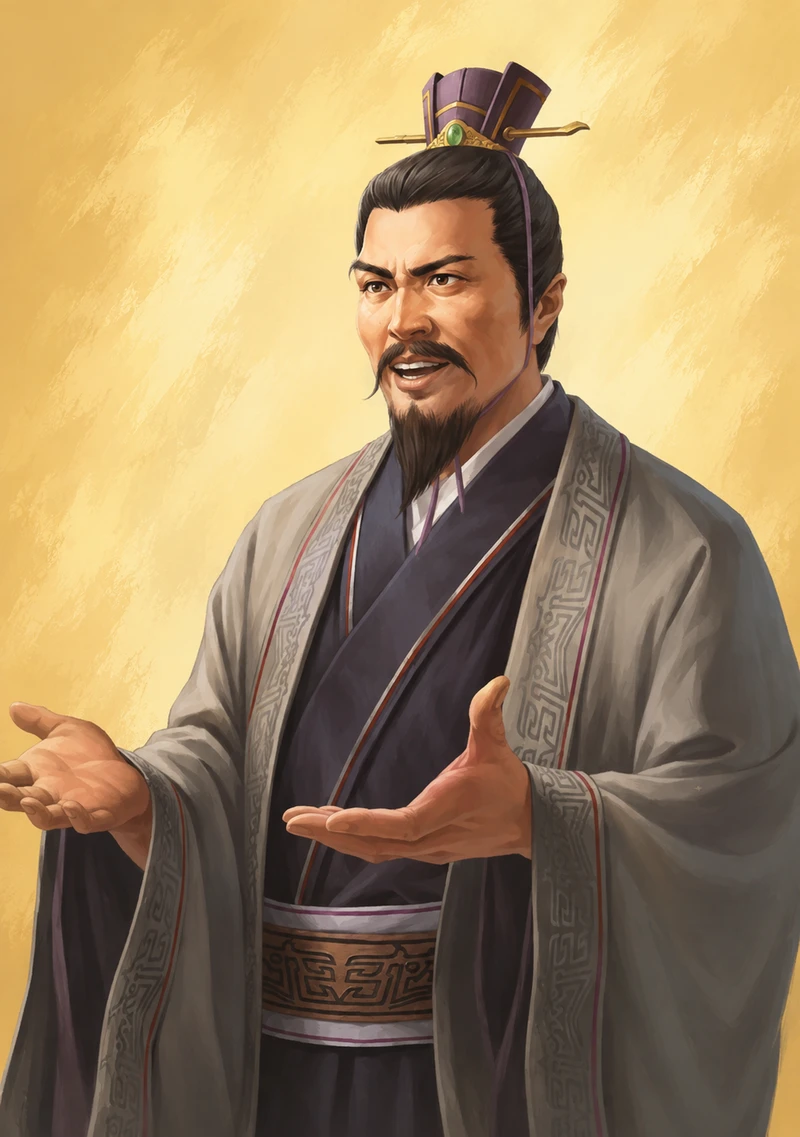
Yin Fan was a legendary operative, political strategist, and high-level secret agent of the Cao Wei state during the Three Kingdoms period. Hailing from Qing Province (modern-day Shandong Province), Yin Fan was described as a remarkably charismatic, eloquent, and intellectually sharp young man who possessed a profound mastery of legal rhetoric and psychological manipulation. Documented in Chen Shou’s official dynastic history Records of the Three Kingdoms (Sanguozhi – Book of Wu, Biographies of Hu Zong and Hao Pu) and Sima Guang’s Zizhi Tongjian, Yin Fan achieved historical immortality as the central figure of one of the most sophisticated, high-stakes espionage operations ever conducted against the Eastern Wu court. Historians and modern researchers believe that his name Yin Fan was a covert codename, literally signifying ‘Hiding within the Vassal State’ (Eastern Wu).
In 228–230 AD, during the reign of Emperor Cao Rui (Emperor Ming of Wei), the central administration in Luoyang sought to dismantle Eastern Wu from within without risking a costly front-line military campaign. Cao Rui personally summoned the 22-year-old Yin Fan to the imperial palace, entrusting him with a top-secret ‘bitter flesh’ infiltration mission. Yin Fan was instructed to stage a dramatic defecting flight from Cao Wei to Eastern Wu under the guise of an exiled, persecuted scholar seeking asylum under Emperor Sun Quan. His primary strategic objective was to infiltrate Sun Quan’s judicial and political apparatus, secure the vital office of Director of the Judicial Treasury (Tingwei Jian), and systematically cultivate discord, fabricate treason charges against loyal Wu ministers, and incite internal rebellion to paralyze Eastern Wu’s military readiness.
Upon his arrival in Eastern Wu in 230 AD (the 2nd year of Huanglong), Yin Fan was initially processed as a routine defecting refugee and given a minor administrative post. Refusing to remain in obscurity, Yin Fan submitted a brilliant, impassioned memorial to Emperor Sun Quan, eloquently comparing his defecting flight to Chen Ping abandoning Xiang Yu to serve Liu Bang, and demanding an imperial audience to present grand grand strategy for unifying the realm. Impressed by the memorial’s bold literary tone, Sun Quan summoned Yin Fan to court. Facing the entire Wu assembly, the charismatic young agent delivered an extraordinary, fluent discourse on statecraft, law, and geopolitics. Awe-struck by his eloquence, Sun Quan personally appointed Yin Fan as Director of the Judicial Treasury (Tingwei Jian), granting him oversight over imperial legal cases and judicial investigations exactly as planned by Cao Wei intelligence.
Once ensconced in power, Yin Fan executed a masterclass in psychological manipulation and elite networking. He hosted lavish philosophical salons, entertaining high-ranking Wu officials, scholars, and young noblemen. The Minister of Justice Hao Pu was so mesmerized by Yin Fan’s intellect that he publicly praised him as possessing the talent of a royal king-maker (Wang Zuo). Pan Shu, the son of the influential senior statesman Pan Jun, formed a sworn brotherhood with Yin Fan and regularly lavished him with gold and luxury goods. Through these connections, Yin Fan built an extensive network of influential patrons across the Eastern Wu capital, positioning himself to manipulate judicial trials and frame key military leaders.
Despite his near-total manipulation of the Eastern Wu elite, two individuals saw through his facade. The first was Hu Zong, Sun Quan’s childhood friend and Chief of the Secretariat. Hu Zong warned Sun Quan that Yin Fan possessed the grandstanding antics of Dongfang Shuo and the sophistry of Mi Heng, but lacked true statecraft, cautioning against entrusting him with imperial authority. The second was the veteran commander Pan Jun. Upon discovering that his son Pan Shu had befriended Yin Fan, Pan Jun flew into a rage, ordered his son to sever all ties, and foresaw: ‘This man speaks with deceitful arrogance; he will surely bring annihilation upon any family associated with him.’
In 231 AD, before Yin Fan could fully execute his planned armed insurrection and internal purge, his covert espionage network was betrayed and exposed to Wu intelligence. Imperial guards stormed his residence and arrested him. Subjected to agonizing, brutal torture in the imperial dungeons to force him to reveal his co-conspirators and Cao Wei’s intelligence network inside Wu, Yin Fan maintained an unshakeable, heroic silence, refusing to utter a single name to protect his fellow agents. Realizing no information could be extracted, an enraged Sun Quan ordered Yin Fan’s immediate public execution. In the tragic aftermath of the scandal, Minister of Justice Hao Pu was forced to commit suicide for harboring a master spy, and several high-ranking officers were demoted or purged. Yin Fan’s sacrificial silence preserved Cao Wei’s intelligence apparatus, securing his legacy as one of the most brilliant and resolute master spies in ancient Chinese history.
Role in Romance of the Three Kingdoms
In Luo Guanzhong’s classic 14th-century historical novel Romance of the Three Kingdoms, Yin Fan’s covert infiltration does not appear directly in the main literary narrative, as the novel focuses primarily on military campaigns and frontline heroism. However, in authentic historical records such as Records of the Three Kingdoms (Sanguozhi – Book of Wu), Yin Fan’s legendary infiltration of Sun Quan’s court, his manipulation of Minister Hao Pu, and his tragic, silent death under torture stand as an immortal testament to the deadly covert intelligence warfare waged between Cao Wei and Eastern Wu.
Yin Fan (隱蕃) — Historical & Literary Timeline
Commissioned by Emperor Cao Rui & Infiltration of Wu
Dispatched by Emperor Cao Rui of Cao Wei on a secret infiltration mission; stages a defecting flight to Eastern Wu and submits a impassioned memorial to Sun Quan comparing himself to Chen Ping.
Appointment as Director of the Judicial Treasury
Delivers an eloquent discourse before the Eastern Wu court; wins Emperor Sun Quan’s admiration and is appointed Director of the Judicial Treasury (Tingwei Jian), gaining oversight over imperial law.
Manipulating Eastern Wu Elite & Warnings by Pan Jun
Cultivates close ties with Minister Hao Pu and Pan Shu; warned against by Hu Zong and Pan Jun, the latter commanding his son to sever ties due to Yin Fan’s deceitful nature.
Exposure, Torture, Heroic Silence, and Execution
Exposed before launching a planned coup; endure extreme torture without revealing fellow Cao Wei agents, protecting his network until his execution by Sun Quan; Minister Hao Pu is forced to commit suicide.
For detailed historical records, archives, and official chronicles, explore Yin Fan on Wikipedia.
Key Relationships
Family
- No information
Friends
- Hao Pu (郝普, Hách Phổ): Eastern Wu Minister of Justice who was deeply captivated by Yin Fan’s intellect and eloquence, treating him as a close confidant and publicly praising him as a king-maker; Hao Pu was subsequently forced to commit suicide in 231 AD following the exposure of Yin Fan’s espionage plot.
- Pan Shu (潘翥, Phan Chử): Son of the senior Wu statesman Pan Jun, who formed a close personal friendship with Yin Fan and lavished him with lavish gifts and gold before his father intervened.
Enemies
- Sun Quan (孙权, Tôn Quyền): Emperor of Eastern Wu who initially trusted Yin Fan and appointed him Director of the Judicial Treasury in 230 AD, but had him arrested, subjected to severe torture, and publicly executed in 231 AD after his covert conspiracy was uncovered.
- Hu Zong (胡综, Hồ Tống): Chief of the Eastern Wu Secretariat who saw through Yin Fan’s pretense, comparing his rhetoric to the grandstanding and sophistry of Dongfang Shuo and Mi Heng, and actively cautioned Sun Quan against trusting him.
- Pan Jun (潘濬, Phan Tuấn): Veteran Eastern Wu general and statesman who recognized Yin Fan’s deceitful nature, accurately foresaw that he would bring ruin upon his associates, and strictly forced his son Pan Shu to sever all relations with him.
Other
- Cao Rui (曹叡, Tào Duệ): Emperor Ming of Wei, who personally selected and dispatched Yin Fan around 228–230 AD on the clandestine infiltration mission to defect to Eastern Wu and undermine Sun Quan’s administration from within.
In Novel
Chapter 115
- Yin Fan (隐蕃, Yǐn Fán): Yin Fan appears in the late Wu political narrative as a conspirator whose activities are connected with the unstable politics of Eastern Wu. His actions contribute to the atmosphere of suspicion and factional struggle surrounding the Wu court during its final generations.
In History
Summary
- Yin Fan (隐蕃, Ẩn Phản) was a political figure in Eastern Wu whose activities were connected with intrigue during the later Three Kingdoms period.
Political Intrigue
- Yin Fan entered the Wu political environment under circumstances that raised questions about his loyalties and intentions.
- He became involved in a political plot and was eventually exposed.
Fall
- His case became an example of the court intrigue and factional suspicion that characterized the later Wu government.
- Classification: Historical.