


Contents
Biography & Historical Record
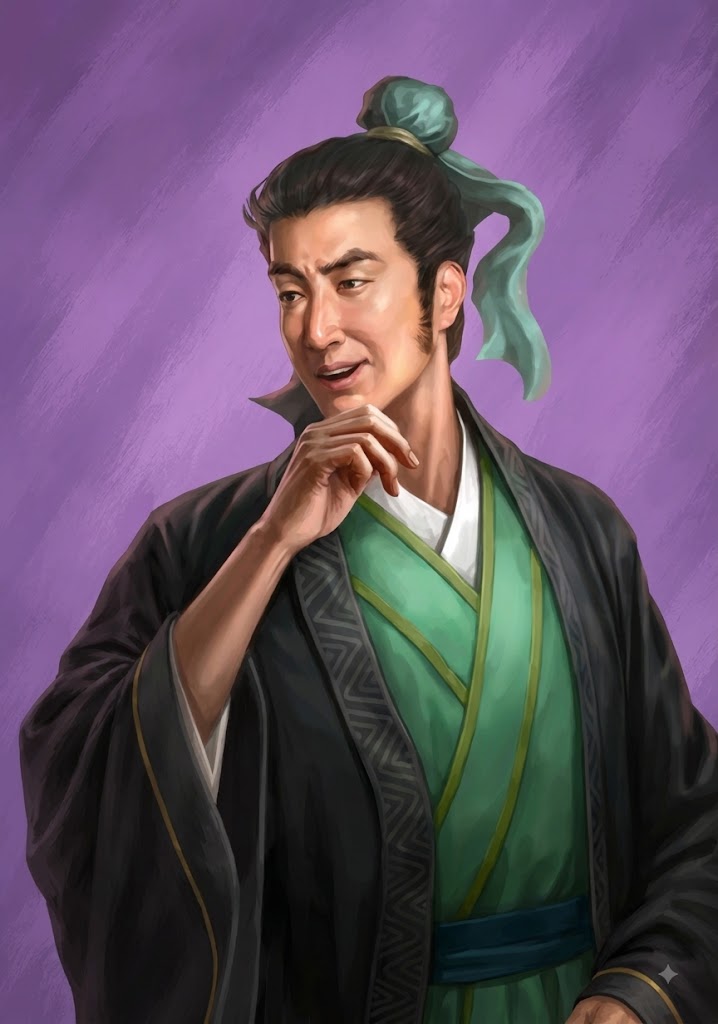
Gu Tan, courtesy name Zimo, was a distinguished scholar-official, imperial tutor, and high-ranking minister of Eastern Wu during the Three Kingdoms period. Hailing from Wu County in Wu Commandery, Gu Tan belonged to the illustrious Gu clan of Wu—one of the four paramount gentry families of the Jiangnan region. He possessed an exceptionally distinguished pedigree: he was the eldest son of Gu Shao, the paternal grandson of the venerable Wu Chancellor Gu Yong, and the maternal grandson of the legendary founding warlord Sun Ce through his mother Lady Sun. Documented in Chen Shou’s official dynastic history Records of the Three Kingdoms (Sanguozhi – Book of Wu, Biography of Gu Yong and Gu Tan) and Sima Guang’s Zizhi Tongjian, Gu Tan was celebrated from his youth for his brilliant erudition, sharp analytical intellect, and incorruptible integrity.
In his early public career, Gu Tan was selected alongside Zhuge Ke, Zhang Xiu, and Chen Biao to serve as a companion and advisor to Crown Prince Sun Deng, forming the famed ‘Four Friends of Wu’ (Wu Zhong Si You). Renowned for his deep understanding of ritual protocols and administrative policy, Gu Tan earned immense respect within the imperial court. Following the death of his grandfather Gu Yong in 243 AD, Gu Tan was elevated to Minister of the Secretariat (Xuantao Shangshu) and later promoted to Minister of Ceremonies (Taichang), overseeing imperial rituals and administrative appointments. During his tenure, Gu Tan maintained strict impartiality, fearlessly criticizing nepotism and official corruption, which won him broad acclaim among upright ministers but earned him the deep enmity of opportunistic court factions.
The tragic climax of Gu Tan’s life occurred amidst the tumultuous succession crisis known as the Two Palaces Factional Struggle (Er Gong Zhi Zheng). Following the premature death of Crown Prince Sun Deng, Emperor Sun Quan appointed Sun He as the new Crown Prince but simultaneously showered extravagant favors upon his younger son, Sun Ba, the Prince of Lu. This created a bitter schism within the Eastern Wu government: the legitimate, orthodox faction led by Grand Commandant Lu Xun and Gu Tan supported Crown Prince Sun He, whereas the rival faction led by Regent Quan Cong and Princess Sun Luban backed Sun Ba. At the Battle of Quepo in 241 AD, Gu Tan’s younger brother Gu Cheng and Zhang Xiu achieved a heroic military victory against invading Cao Wei forces. However, Quan Cong’s son Quan Duan and his faction fraudulently claimed the military credit for themselves. When Gu Tan spoke out boldly at court to expose Quan Cong’s falsehoods and defend the truth, Quan Cong and Princess Sun Luban retaliated by falsely accusing Gu Tan and Gu Cheng of treason and financial corruption. In a state of senile delusion and paranoia, Sun Quan stripped Gu Tan and his brother of all titles and exiled them to the far southern frontier of Jiaozhi Commandery (modern-day northern Vietnam). Heartbroken, indignant, and stripped of his noble honors, Gu Tan passed away in exile in 246 AD at the age of around forty-one.
Role in Romance of the Three Kingdoms
In Chapter 108 of Luo Guanzhong’s classic 14th-century historical novel Romance of the Three Kingdoms, Gu Tan is featured in a poignant narrative covering the chaotic twilight years of Sun Quan’s reign. The novel details the tragic court strife generated by Sun Quan’s favoritism toward Sun Ba, describing how the factional struggle fractured the foundation of Eastern Wu.
Luo Guanzhong highlights Gu Tan as an upright and honorable minister who stands firmly alongside Lu Xun and Zhang Xiu in supporting the legitimate Crown Prince Sun He. The novel recounts how the malicious slanders of Princess Sun Luban and Quan Cong poisoned Sun Quan’s mind against his most loyal servants. When Lu Xun dies of grief and anger following harsh imperial reprimands, Gu Tan and Zhang Xiu fearlessly submit memorials defending righteousness. In response, the corrupted court orders Gu Tan, Gu Cheng, and Zhang Xiu stripped of their official ranks and banished to the remote, disease-ridden wilderness of Jiaozhou. Gu Tan’s tragic exile and death serve in the novel as a stark literary symbol of Eastern Wu’s moral decline and the disastrous consequences of imperial factionalism prior to the kingdom’s ultimate collapse.
Gu Tan (顧譚) — Historical & Literary Timeline
Serving as Crown Prince Sun Deng’s Companion
Appointed alongside Zhuge Ke, Zhang Xiu, and Chen Biao as one of the ‘Four Friends of Wu,’ serving as a trusted scholar-adviser to Crown Prince Sun Deng.
Promotion to Minister of Ceremonies
Following the death of his grandfather Gu Yong, Gu Tan is promoted to Minister of the Secretariat and subsequently Minister of Ceremonies, managing imperial rites and official appointments.
Defending Crown Prince Sun He and Exposing Quan Cong
Stands with Lu Xun to support Crown Prince Sun He against Sun Ba; exposes Quan Cong’s false claims regarding the Battle of Quepo, provoking fierce political retaliation from Quan Cong and Princess Sun Luban.
Banished to Jiaozhi Commandery and Passing Away
Falsely accused by Quan Cong’s faction; stripped of all titles by Sun Quan and exiled to Jiaozhi Commandery, where he passes away in grief in 246 AD.
For detailed historical records, archives, and official chronicles, explore Gu Tan on Wikipedia.
Key Relationships
Family
- Gu Yong (顾雍, Cố Vinh) – Paternal grandfather; served as Chancellor of Eastern Wu and head of the prominent Gu clan.
- Sun Ce (孙策, Tôn Thắc) – Maternal grandfather; founding warlord of Eastern Wu, father of Gu Tan’s mother.
- Gu Shao (顾邵, Cố Thiệu) – Father; held the post of Administrator of Yuzhang Commandery.
- Lady Sun (孙氏, Tôn Thị) – Mother; daughter of Sun Ce, linking Gu Tan to the Sun royal lineage.
- Gu Cheng (顾承, Cố Thừa) – Younger brother; Wu general who fought at the Battle of Quepo and was exiled together with Gu Tan.
Friends
- Sun Deng (孙登, Tôn Đăng) – Late Crown Prince of Wu; Gu Tan served as his trusted companion and advisor as one of the “Four Friends of Wu.”
- Sun He (孙和, Tôn Hà) – Crown Prince supported by Gu Tan during the succession dispute; Gu Tan advocated for his legitimacy.
- Lu Xun (陆逊, Lục Tốn) – Grand Commandant and leader of the orthodox faction; allied with Gu Tan in defending Crown Prince Sun He.
- Zhang Xiu (张休, Trương Hưu) – Fellow member of the “Four Friends of Wu”; shared exile with Gu Tan after the factional struggle.
- Zhuge Ke (诸葛恪, Chúc Các Khắc) – One of the “Four Friends of Wu” and later regent of Eastern Wu; close scholarly associate of Gu Tan.
- Chen Biao (陈彪, Trần Tiêu) – Member of the “Four Friends of Wu” and commander of the imperial guards; worked alongside Gu Tan in court affairs.
Enemies
- Sun Quan (孙权, Tôn Quyền) – Emperor of Eastern Wu; his paranoid favoritism and later accusations led to Gu Tan’s exile and death.
- Sun Ba (孙霸, Tôn Bá) – Prince of Lu; head of the rival faction that contested Crown Prince Sun He’s succession, opposing Gu Tan’s stance.
- Quan Cong (全琮, Toàn Tông) – Senior Wu general; his faction falsely claimed credit for the Battle of Quepo and later slandered Gu Tan, resulting in Gu Tan’s removal.
- Sun Luban (孙鲁班, Tôn Lỗ Ban) – Princess of Wu and daughter of Sun Quan; actively spread false accusations against Gu Tan and his allies.
Other
- No information
In Novel
Gu Tan (顾谭, Cố Đàm) does not have a securely verified named appearance in the supplied edition under the exact Chinese name 顾谭. Although he was an important Wu court official historically, no chapter is assigned without an exact textual match.
History
Summary
- Gu Tan (顾谭, Cố Đàm), courtesy name Zimo, was a senior official of Eastern Wu and a member of the prominent Gu family of Wu commandery.
Political Career
- Gu Tan served under Sun Quan and became an important court official during the succession dispute between Sun He and Sun Ba.
- He supported Crown Prince Sun He and opposed the faction surrounding Sun Ba.
Political Downfall
- The succession struggle became increasingly bitter and eventually resulted in Gu Tan losing political favor.
- He was exiled to Jiaozhou together with other supporters of Sun He.
Death and Legacy
- Gu Tan died in exile.
- His career illustrates the political consequences of the succession crisis that destabilized Sun Quan’s later reign.
- Classification: Historical.