














Contents
Biography & Historical Record
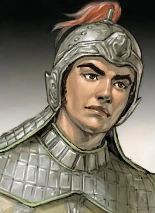
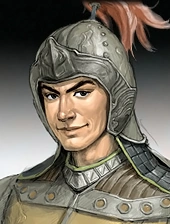
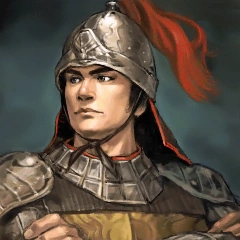
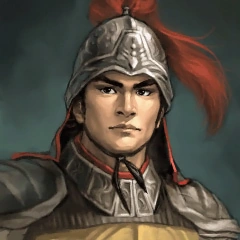
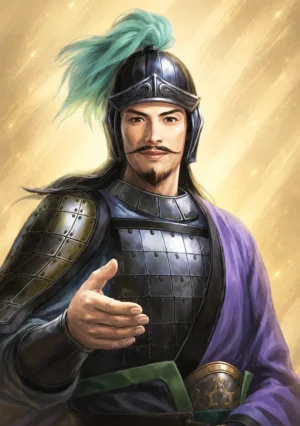
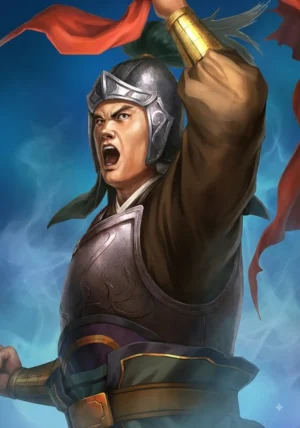
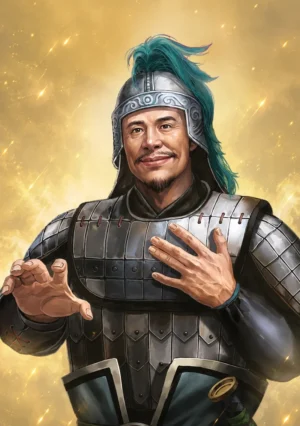
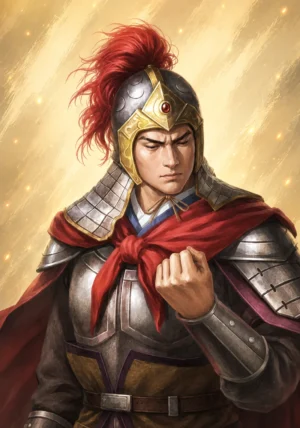
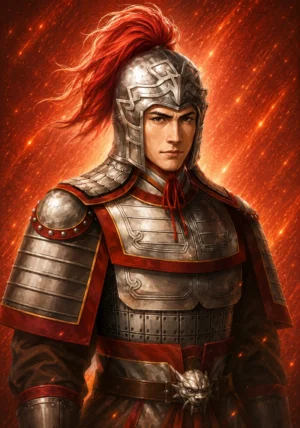
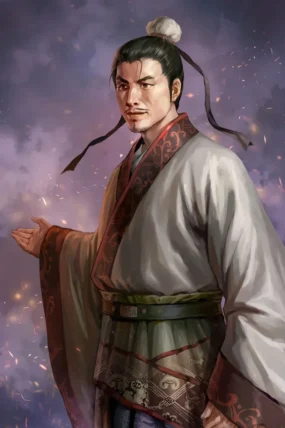
Sun Ce (孙策, Tôn Sách), courtesy name Bofu (伯符, Bá Phù), was the warlord who built the Sun family’s power base in Jiangdong and the elder son of the Tiger of Jiangdong, Sun Jian (孙坚, Tôn Kiên). When Sun Jian fell at Xiangyang in 191 AD, sixteen-year-old Sun Ce placed his family under the protection of Yuan Shu (袁术, Viên Thuật), then in 194 AD traded the Imperial Seal for three thousand troops and crossed the Yangtze on his own conquest.
Between 195 and 196 AD he swept through Jiangdong with lightning campaigns — defeating Liu Yao (刘繇, Lưu Dao), Yan Baihu (严白虎, Nghiêm Bạch Hổ), and Wang Lang (王朗, Vương Lãng) — earning the title Little Conqueror (小霸王, Tiểu Bá Vương). He recruited Zhou Yu (周瑜, Chu Du), Zhang Zhao (张昭, Trương Chiêu), Zhang Hong (张纮, Trương Hoành), and Taishi Ci (太史慈, Thái Sử Từ), married Da Qiao (大乔, Đại Kiều), and by 200 AD controlled the lower Yangtze. While planning a drive on Xuchang, retainers of the executed Xu Gong (许贡, Hứa Cống) ambushed him on a hunt; he died at twenty-six and passed Jiangdong to Sun Quan (孙权, Tôn Quyền).
In the novel, Sun Ce’s death arc adds the execution of the Daoist Yu Ji (于吉, Vu Cát) and ghostly hauntings that reopen his wounds. His deathbed counsel — internal affairs ask Zhang Zhao; external affairs ask Zhou Yu — became Wu’s governing formula for decades.
Role in Romance of the Three Kingdoms
Chapter 7 (Sun Jian Slain at Xiangyang): Seventeen-year-old Sun Ce fights to recover his father’s body, slaying Chen Sheng with an arrow and securing Sun Jian’s remains for burial.
Chapter 15 (The Little Conqueror Crosses the Yangtze): Pledges the Imperial Seal to Yuan Shu for three thousand men; defeats Liu Yao; duels Taishi Ci at Shenting to a stalemate; conquers six Jiangdong commanderies and is hailed as the Little Conqueror.
Chapters 16–17: Crushes Yan Baihu and Wang Lang; joins Cao Cao’s campaign against the self-proclaimed emperor Yuan Shu.
Chapter 29 (The Little Conqueror Executes Yu Ji): Executes the Daoist Yu Ji for deceiving the people; is shot in the face by Xu Gong’s retainers; haunted by Yu Ji’s spirit; dies at twenty-six entrusting Jiangdong to Sun Quan with his famous counsel on Zhang Zhao and Zhou Yu.
Sun Ce (孙策) — Historical & Literary Timeline
Ch. 7 / 191 AD
Sun Jian’s death
Fights at Xiangyang at seventeen; recovers father’s body; enters Yuan Shu’s service.
Ch. 15 / 194 AD
Imperial Seal bargain
Trades the seal for three thousand troops; launches independent Jiangdong expedition.
Ch. 15 / 195 AD
Shenting duel
Defeats Liu Yao; stalemate duel with Taishi Ci; wins his loyalty.
Ch. 16 / 196 AD
Jiangdong unified
Crushes Yan Baihu and Wang Lang; earns title Little Conqueror.
Ch. 17 / 199 AD
Avenging Sun Jian
Allies with Cao Cao against Yuan Shu; crushes Huang Zu, killer of Sun Jian.
Ch. 29 / 200 AD
Assassination & death
Executes Yu Ji; ambushed by Xu Gong’s retainers; dies at twenty-six; Sun Quan succeeds.
For detailed historical records, archives, and official chronicles, explore Sun Ce on Wikipedia.
Key Relationships
Family
- Father Sun Jian (孙坚, Tôn Kiên): Tiger of Jiangdong; death at Xiangyang drove Sun Ce’s conquests.
- Mother Lady Dowager Wu, Lady Guotai (吴国太, Ngô Quốc Thái): Wife of Sun Jian; mother of Sun Ce, Sun Quan, Sun Yi, Sun Kuang, and Lady Sun.
- Brother Sun Quan (孙权, Tôn Quyền): Successor entrusted with Jiangdong at Sun Ce’s death.
- Wife Da Qiao (大乔, Đại Kiều): One of the Two Qiaos of Jiangdong.
- Relatives Sun Yi (孙翊, Tôn Dực), Sun Kuang (孙匡, Tôn Khoang), Sun Shangxiang (孙尚香, Tôn Thượng Hương): Younger siblings.
Friends
- Zhou Yu (周瑜, Chu Du): Sworn brother and chief strategist; deathbed counsel: ask Zhou Yu on external affairs.
- Zhang Zhao (张昭, Trương Chiêu): Chief civil minister; deathbed counsel: ask Zhang Zhao on internal affairs.
- Zhang Hong (张纮, Trương Hoành): Scholar-advisor in Jiangdong governance.
- Taishi Ci (太史慈, Thái Sử Từ): Rival turned loyal general after the Shenting duel.
Enemies
- Yuan Shu (袁术, Viên Thuật): Former lord; Sun Ce broke away after trading the Imperial Seal.
- Liu Yao (刘繇, Lưu Dao): Defeated during the opening Jiangdong campaign.
- Yan Baihu (严白虎, Nghiêm Bạch Hổ) and Wang Lang (王朗, Vương Lãng): Regional warlords crushed in 196 AD.
- Huang Zu (黄祖, Hoàng Tổ): Slayer of Sun Jian; defeated by Sun Ce in 199 AD.
- Xu Gong (许贡, Hứa Cống): Executed administrator whose retainers assassinated Sun Ce.
- Yu Ji (于吉, Vu Cát): Daoist executed in the novel; his ghost haunts Sun Ce’s final days.
Other
- Cao Cao (曹操, Tào Tháo): Brief ally against Yuan Shu (Ch. 17); Cao Cao later feared Sun Ce’s rise.
Appearance

In Novel
Chapter 5
- Sun Ce (孙策, Tôn Sách): Accompanies his father Sun Jian (孙坚, Tôn Kiên) in Yuan Shu’s (袁术, Viên Thuật) service during the anti-Dong Zhuo coalition; present as Sun Jian pushes toward Luoyang.
Chapter 7
- Sun Ce (孙策, Tôn Sách): Eldest son of Sun Jian, courtesy Bofu (伯符, Bá Phù); fights at the Battle of Xiangyang at seventeen, slaying Chen Sheng (陈生, Trần Thăng) with an arrow and securing his father’s remains for burial.
Chapter 8
- Sun Ce (孙策, Tôn Sách): Buries Sun Jian at Qu’e; exchanges the Imperial Seal with Yuan Shu for troops and independence to conquer the south.
Chapter 10
- Sun Ce (孙策, Tôn Sách): Serves under Yuan Shu at Shouchun; grows frustrated by empty promises and plots his own Jiangdong expedition with Zhou Yu (周瑜, Chu Du).
Chapter 15
- Sun Ce (孙策, Tôn Sách): Pledges the Imperial Jade Seal to Yuan Shu for three thousand troops; crosses the Yangtze; defeats Liu Yao (刘繇, Lưu Dao); duels Taishi Ci (太史慈, Thái Sử Từ) at Shenting; conquers six Jiangdong commanderies and is hailed as the Little Conqueror (小霸王).
Chapter 16
- Sun Ce (孙策, Tôn Sách): Crushes regional warlords Yan Baihu (严白虎, Nghiêm Bạch Hổ) and Wang Lang (王朗, Vương Lãng) to unify Jiangdong under Sun rule.
Chapter 17
- Sun Ce (孙策, Tôn Sách): Joins Cao Cao (曹操, Tào Tháo) in the imperial campaign against the self-proclaimed emperor Yuan Shu (袁术, Viên Thuật).
Chapter 21
- Sun Ce (孙策, Tôn Sách): Sends tribute to Cao Cao while consolidating Jiangdong; Cao Cao recognizes his growing threat and seeks to contain him.
Chapter 27
- Sun Ce (孙策, Tôn Sách): Plans an expedition against Huang Zu (黄祖, Hoàng Tổ) to avenge Sun Jian; receives Cao Cao’s letter naming him General Who Exterminates Rebels.
Chapter 28
- Sun Ce (孙策, Tôn Sách): Defeats Huang Zu at Sha County; prepares a northern drive toward Xuchang before his assassination plot unfolds.
Chapter 29
- Sun Ce (孙策, Tôn Sách): Executes the Daoist Yu Ji (于吉, Vu Cát) for misleading the populace; ambushed and shot in the face by retainers of Xu Gong (许贡, Hứa Cống); haunted by Yu Ji’s apparitions; dies at twenty-six entrusting Jiangdong to Sun Quan (孙权, Tôn Quyền) with counsel to consult Zhang Zhao and Zhou Yu.
Appearance
In History
Summary
- Sun Ce (孙策, Tôn Sách), courtesy name Bofu, was the founder of the Sun family’s territorial base in Jiangdong and elder son of Sun Jian (孙坚, Tôn Kiên). His rapid conquests between 195 and 200 AD created the foundation inherited by Sun Quan and Eastern Wu.
Year: 191 AD
- Sun Ce (孙策, Tôn Sách) accompanied Sun Jian’s campaigns; after Sun Jian’s death at Xiangyang, he placed the family under Yuan Shu’s protection.
Year: 195 AD
- Sun Ce (孙策, Tôn Sách) began his major Jiangdong campaigns with a small force, defeating Liu Yao and expanding across the lower Yangtze.
Year: 196–199 AD
- Sun Ce (孙策, Tôn Sách) consolidated Wu, Kuaiji, and surrounding commanderies; defeated Huang Zu and broke with Yuan Shu.
Year: 200 AD
- Sun Ce (孙策, Tôn Sách) was assassinated by retainers associated with Xu Gong while preparing further expansion; his domain passed to Sun Quan (孙权, Tôn Quyền).
Historical Record
- Biography in Sanguozhi, vol. 46 (孙策传). Pei Songzhi’s annotations preserve accounts of his speed, charisma, and the Shenting encounter with Taishi Ci; the novel adds Yu Ji’s execution and supernatural hauntings.
Appearance
Gallery