
Contents
Biography & Historical Record
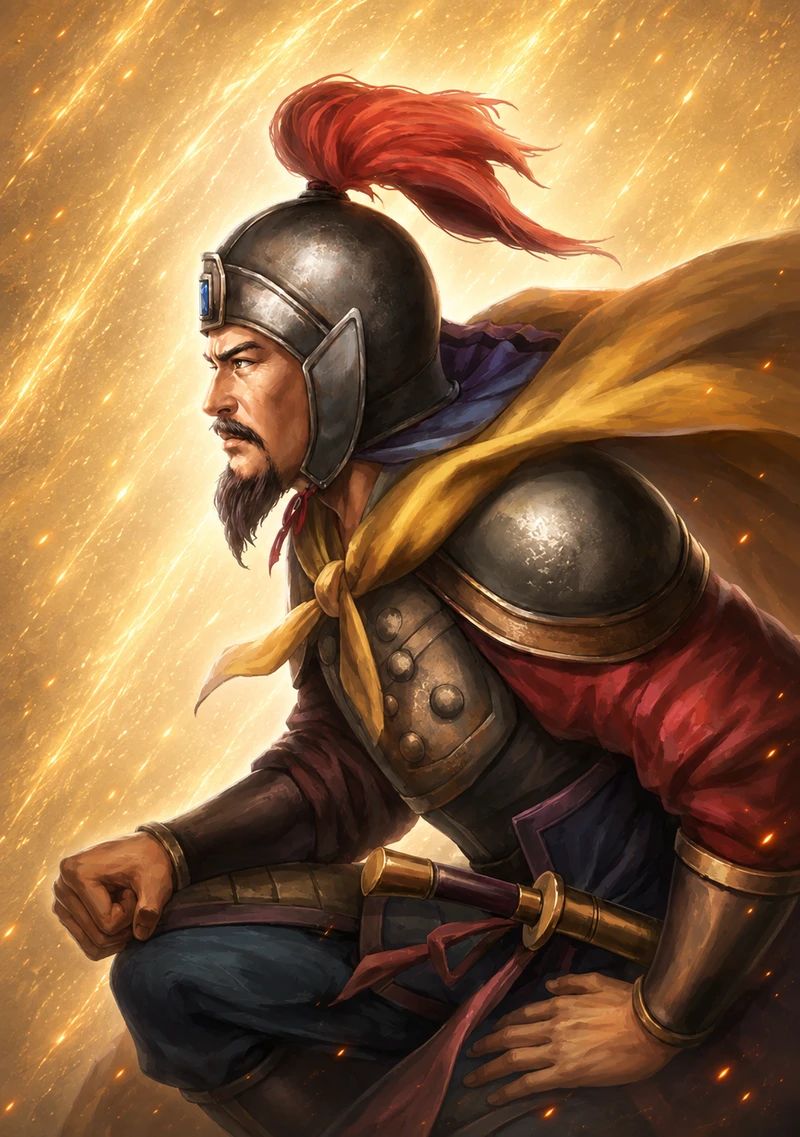
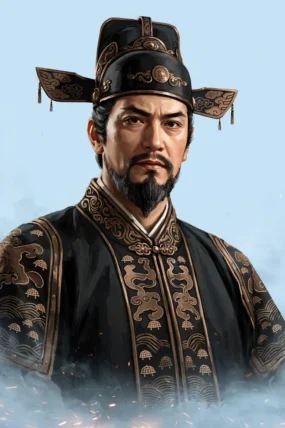
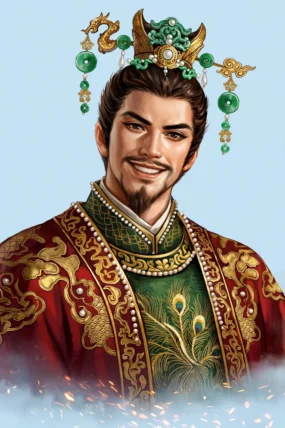
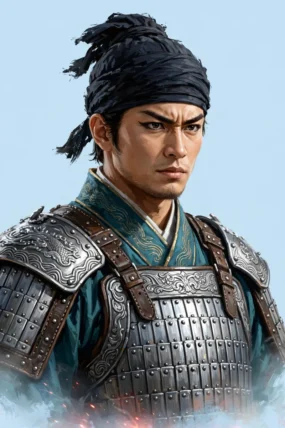
Shi Bao, courtesy name Zhongrong, was a paramount military strategist, grand commander, and founding pillar statesman of the Cao Wei state and the subsequent Western Jin dynasty during the late Three Kingdoms period. Hailing from Nanpi in Bohai Commandery (modern Nanpi County, Hebei), Shi Bao rose from humble origins as an iron merchant and low-ranking stable supervisor through extraordinary personal charisma, strategic brilliance, and resolute military leadership to attain the highest supreme offices of the realm, culminating as Grand Commandant (Taiwei), Commander-in-Chief of Qingzhou and Xuzhou, and Duke of Lecheng. Documented extensively in Fang Xuanling’s official dynastic history Book of Jin (Jin Shu – Biography of Shi Bao), Chen Shou’s Records of the Three Kingdoms (Sanguozhi – Book of Wei, Biographies of Sima Yi, Sima Shi, and Sima Zhao), and Sima Guang’s Zizhi Tongjian, Shi Bao served as one of the most indispensable military pillars of the Sima clan, decisively pacifying the Three Rebellions in Huainan and safeguarding the southern and eastern frontiers against Eastern Wu for decades.
In his early youth, Shi Bao struggled in poverty, engaging in trade and serving as a pavilion official in the capital of Luoyang. His extraordinary intellect and imposing physical presence were recognized by the famed physiognomist and scholar Sima Zhi, as well as the prominent statesman Deng Ai. When Grand Commander Sima Yi took control of the Wei military administration, he recognized Shi Bao’s exceptional talent, recruiting him onto his personal staff as a military counselor and rapidly promoting him to Grand Administrator of Zhongshan and Inspector of Qingzhou. Shi Bao governed with profound administrative acumen and military discipline, reorganizing frontier defenses, drilling crack cavalry regiments, and constructing extensive irrigation canals to support state agriculture.
Shi Bao’s martial prowess was displayed prominently during the suppression of the Huainan uprisings that threatened the Sima regency. In 255, when Guanqiu Jian and Wen Qin rose in armed insurrection at Shouchun, Shi Bao served as a vanguard general under Regent Sima Shi. Collaborating with Wang Ji, Shi Bao executed rapid flanking strikes, cutting off Wen Qin’s supply lines and shattering the insurgent lines. In 257, during Zhuge Dan’s massive rebellion backed by Eastern Wu, Regent Sima Zhao appointed Shi Bao as Area Commander of the Northern Route. Shi Bao repelled repeated amphibious sorties launched by Wu grand general Zhu Yi, incinerating enemy supply transports at Mount Guci and routing Sun Chen’s relief army, ensuring the absolute encirclement and eventual capture of Shouchun.
Following the founding of the Western Jin dynasty in 265, Emperor Wu (Sima Yan) showered Shi Bao with imperial honors, elevating him to Grand General Who Pacifies the East (Zhengdong Dajiangjun) and later Grand Commandant (Taiwei), ennobling him as Duke of Lecheng. Stationed at the southern military hub of Xuchang and Shouchun, Shi Bao maintained impenetrable border fortresses that deterred Eastern Wu from mounting northern incursions. When malicious courtiers spread rumors that Shi Bao was massing private troops to establish an independent realm, Shi Bao demonstrated supreme unyielding loyalty: he instantly surrendered his military tallies, dismissed his personal guard, and rode unescorted in a simple carriage to the capital to submit to imperial investigation. Convinced of his absolute fidelity, Emperor Wu dismissed all charges, publicly honored him before the court, and confirmed him as the realm’s senior grand commander. Shi Bao passed away of illness in Luoyang in 272; Emperor Wu wept bitterly at his passing, conferring upon him the prestigious posthumous title Duke Wu.
Role in Romance of the Three Kingdoms
In Chapters 110, 111, 112, 119, and 120 of Luo Guanzhong’s classic 14th-century historical novel Romance of the Three Kingdoms, Shi Bao is portrayed as an indomitable grand general and loyal strategic cornerstone of the Sima clan, whose decisive battlefield leadership during the Huainan campaigns and steadfast frontier defense pave the way for the founding of the Western Jin dynasty.
In Chapter 110, Shi Bao makes his dramatic entrance during the suppression of Guanqiu Jian and Wen Qin’s rebellion. Serving as a trusted commander under Sima Shi, Shi Bao is assigned to lead the left wing against the insurgent fortress of Xiangcheng. When Wen Qin launches a fierce counterattack, Shi Bao maintains unshakable formation discipline, coordinating with Deng Ai’s cavalry to trap and shatter the rebel assault, forcing Wen Qin to flee into Eastern Wu.
In Chapters 111 and 112, as Zhuge Dan raises the banner of revolt at Shouchun and aligns with Eastern Wu, Sima Zhao entrusts Shi Bao with commanding the forward strike columns. When Eastern Wu’s commander Zhu Yi leads fifty thousand troops to relieve the besieged citadel, Shi Bao ambushes Zhu Yi’s army at the base of Mount Guci. Shi Bao personally leads his shock cavalry into the enemy center, routing the Wu vanguard and setting fire to their entire baggage train. Zhu Yi’s humiliating defeat enrages Wu regent Sun Chen, leading to Zhu Yi’s execution and destroying Wu’s capacity to break the siege. Following the capture of Shouchun, Sima Zhao publicly praises Shi Bao as the chief architect of the campaign’s victory.
In Chapter 119 and Chapter 120, following the abdication of Emperor Cao Huan and the establishment of the Western Jin dynasty under Sima Yan, Shi Bao is invested as Grand Commandant and placed in supreme command of the southern frontiers. Luo Guanzhong depicts Shi Bao as a formidable military titan whose watchful presence at Shouchun paralyzes Eastern Wu’s offensive ambitions, setting the operational foundation that enables Jin to launch its grand final unification campaign across the Yangtze River.
Shi Bao (石苞) — Historical & Literary Timeline
Rise from Obscurity & Patronage by Sima Yi
Recognized for his towering strategic talent by Sima Zhi and Deng Ai; recruited onto Sima Yi’s staff and promoted to Grand Administrator and Inspector of Qingzhou.
Defeating Guanqiu Jian and Wen Qin at Shouchun
Serves under Sima Shi in the suppression of the second Huainan rebellion; cuts off insurgent supply lines and routs Wen Qin’s shock forces.
Incinerating Wu Supply Trains & Crushing Zhu Yi
Commands the northern division under Sima Zhao; ambushes Eastern Wu’s relief army at Mount Guci, destroys Zhu Yi’s provisions, and seals the fall of Shouchun.
Elevated to Duke of Lecheng & Passing Away
Appointed Grand Commandant (Taiwei) and ennobled as Duke of Lecheng under Emperor Wu of Jin; guards the southern frontiers until his peaceful passing in Luoyang in 272.
Key Relationships
Family
- Shi Qiao (石乔, Thạch Kiều): Eldest son. Senior statesman of the Western Jin dynasty who inherited his father’s noble prestige and served as Minister of the Household (Guangluxun).
- Shi Chong (石崇, Thạch Sùng): Youngest son (sixth son). Legendary wealthy grandee, master poet, and Governor of Jing Province in Western Jin who hosted the famous “Twenty-Four Friends of Jingu” literary salon.
- Shi Chu (石统, Thạch Thống / Thạch Sơ): Son. Western Jin imperial officer and Marquis who commanded regional garrisons and continued the family administrative lineage.
Friends
- Sima Yi (司马懿, Tư Mã Ý): Grand Commander and regent of Cao Wei. Discovered Shi Bao during his humble youth as a stablemaster, recognized his extraordinary strategic brilliance, and elevated him into imperial civil and military service.
- Sima Shi (司马师, Tư Mã Sư): Regent of Cao Wei. Entrusted Shi Bao with key military divisions to intercept and crush Guanqiu Jian and Wen Qin’s rebellion in Huainan (255 AD).
- Sima Zhao (司马昭, Tư Mã Chiêu): Regent of Cao Wei (King of Jin). Promoted Shi Bao to Senior General Who Guards the East (Zhendong Da Jiangjun) and Area Commander of Huainan to suppress Zhuge Dan’s rebellion (257–258 AD).
- Sima Yan (司马炎, Tư Mã Viêm): Founding Emperor of Western Jin (Emperor Wu). Ennobled Shi Bao as Duke of Lecheng and elevated him to Grand Commandant (Taiwei), honoring him as a founding pillar of the Jin dynasty.
- Deng Ai (邓艾, Đặng Ngải): Grand General of Cao Wei. Close comrade who bonded with Shi Bao during their early impoverished youth in the imperial capital and rose alongside him to become supreme military pillars.
- Wang Ji (王基, Vương Cơ): Senior Grand General of Cao Wei. Coordinated frontline siege lines and troop maneuvers alongside Shi Bao during the suppression of the Shouchun rebellion (257–258 AD).
Enemies
- Zhuge Dan (诸葛诞, Gia Cát Đản): Grand General of Cao Wei who raised the massive Shouchun Rebellion (257 AD); besieged, defeated, and executed by the imperial armies under Sima Zhao and Shi Bao (258 AD).
- Guanqiu Jian (毌丘俭, Quán Khâu Kiệm): Senior Wei general who launched the second Huainan rebellion in 255 AD; defeated and crushed by the combined counteroffensive of Sima Shi and Shi Bao.
- Wen Qin (文钦, Văn Khâm): Rebel general in Huainan who allied with Guanqiu Jian (255 AD) and later Eastern Wu (257 AD); repelled and cornered by Shi Bao’s vanguard forces.
- Zhu Yi (朱异, Chu Dị): Grand General of Eastern Wu. Commanded a 30,000-man relief army to reinforce Shouchun in 257 AD; suffered catastrophic defeats against Shi Bao’s ambushes at Mount Guci and Dushi, losing his entire baggage train.
- Sun Chen (孙綝, Tôn Lâm): Despotic regent of Eastern Wu. Dispatched large-scale southern armies to invade Huainan (257 AD), only to be repeatedly repelled and checked by Shi Bao’s frontier defenses.
Others
- No information
In Novel
Chapter 109
- Shi Bao (石苞, Thạch Bào): Shi Bao is a Wei commander involved in the military operations against Wu. He serves under the Wei command structure during the late Three Kingdoms period and participates in campaigns designed to pressure Wu’s northern frontier.
Chapter 116
- Shi Bao (石苞, Thạch Bào): Shi Bao remains an important Wei military commander as the confrontation with Wu continues. His role is connected with the preparations and operations preceding the final conquest of Wu.
History
Summary
- Shi Bao (石苞, Thạch Bào) was a prominent general and official of Cao Wei and the early Western Jin dynasty.
Military Career
- Shi Bao served Wei as a military commander and later became one of the senior figures in the Jin regime.
- He held important commands and was known for his military ability and administrative experience.
Later Career
- Shi Bao became a powerful regional commander after the establishment of Jin.
- He was eventually removed from power amid political suspicion at the Jin court.
Classification
- Historical.
