

Contents
Biography and Legacy of Li Mi
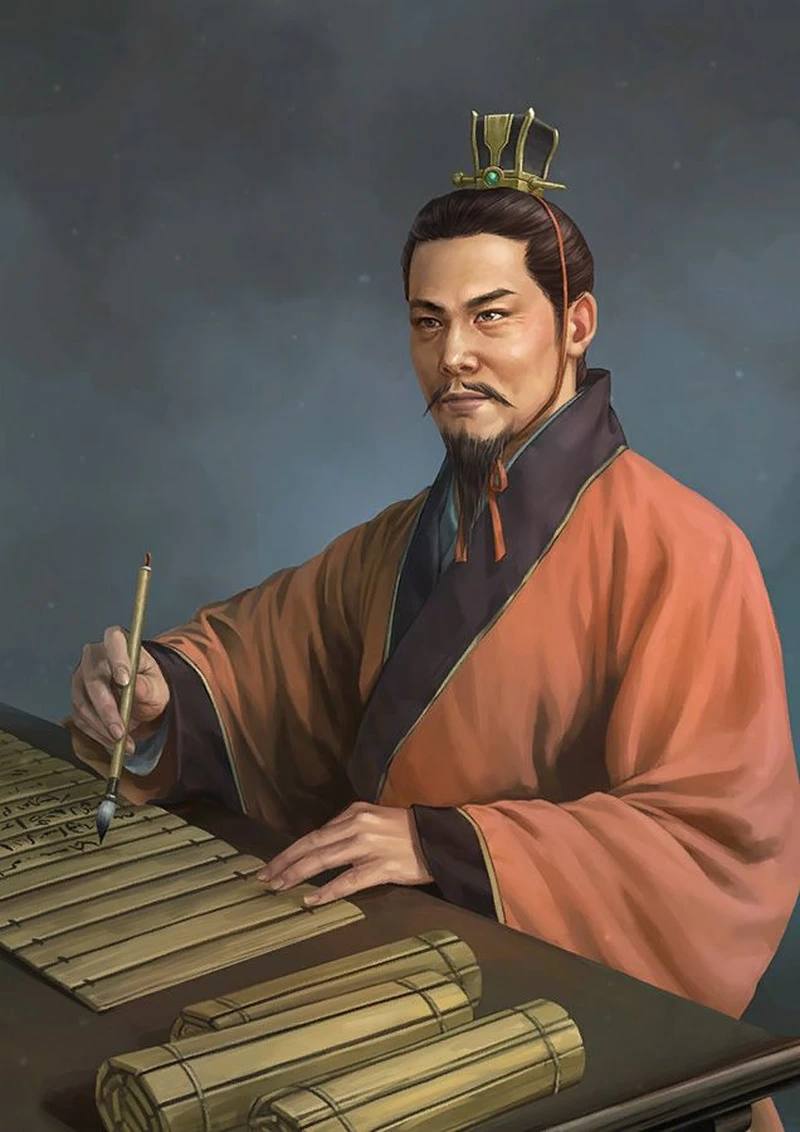
Li Mi (224–287 AD), courtesy name Lingbo, was a distinguished scholar, writer, and official who lived through the transformative transition from the late Three Kingdoms era to the Western Jin dynasty. Orphaned in infancy and raised solely by his grandmother, Lady Liu, he overcame frail health through devoted care and studied classics under master Confucian scholar Qiao Zhou. During the reign of Liu Shan, he served the state of Shu Han as Gentleman of the Palace (Langzhong) and distinguished himself as an eloquent diplomatic envoy to Eastern Wu.
Following the conquest of Shu Han in 263 AD, Emperor Wu of Jin (Sima Yan) sought to recruit prominent local scholars to legitimize his new dynasty. Torn between imperial duty and caring for his critically ill grandmother, Li Mi submitted the renowned Chen Qing Biao (Petition Expressing My Feelings). In this touching literary masterpiece, he pleaded to fulfill his filial obligations first. Profoundly moved by his sincerity, the emperor granted him leave and provided royal stipends to support Lady Liu until her peaceful passing.
Upon fulfilling his mourning rites, he entered the Western Jin administration, serving competently as Prefect of Wenzhou and Military Administrator of Hananzhong. Although later forced into retirement by corrupt factional rivals, the steadfast integrity and literary brilliance of Li Mi remain celebrated across East Asian history as the ultimate standard of filial devotion.
Role in Romance of the Three Kingdoms
“My grandmother, Lady Liu, is like a dying breath, on the verge of extinguishing at any moment. Without my grandmother, I would not have survived to this day; without me, she has no one to rely on for her final years…”
— Chen Qing Biao, Chapter 120 aftermath.
In Luo Guanzhong’s historical novel Romance of the Three Kingdoms, the scholar’s refusal to immediately accept Jin’s summons underscores the loyalty and moral virtue that define the fallen Shu Han legacy.
Historical & Literary Timeline
Birth & Early Tragedy
Born in Wuyang, Qianwei. Raised entirely by his paternal grandmother, Lady Liu, following his father’s early death and mother’s forced remarriage.
Education under Qiao Zhou
Masters classical Confucian texts and the Zuo Zhuan at the academy of the renowned scholar Qiao Zhou in Chengdu.
Service to Shu Han
Appointed Langzhong and represents Shu as an accomplished diplomatic envoy to Eastern Wu.
Fall of Shu & Retirement
Retires to private life to care for his aging grandmother following the fall of Shu Han.
The Chen Qing Biao
Submits his immortal petition to Emperor Wu of Jin, successfully requesting leave to tend to his dying grandmother.
Service under Western Jin
Enters imperial service after Lady Liu’s death, governing Wenzhou and Hananzhong with high acclaim.
Death in Retirement
Following his dismissal provoked by court rivals, he passes away peacefully at home at the age of 63.
Key Relationships
Family
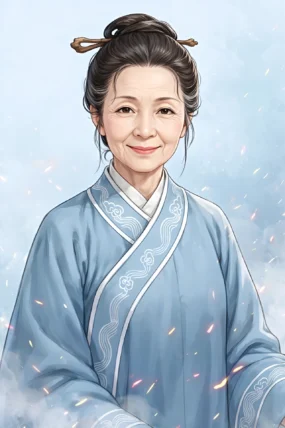
- Lady Liu: Paternal grandmother who nurtured the frail orphan; repaid with lifelong filial devotion immortalized in literature.
- Li Qi: Father who died during his son’s infancy.
- Lady He: Mother, forced into remarriage by relatives during his childhood.
- Li Chao: Grandfather, celebrated Chief Clerk in early Shu Han administration.
- Li Xuan, Li Xi & Li Qi: Sons who carried forward the family tradition as respected Jin scholars.
Allies & Associates
- Qiao Zhou: Revered Confucian mentor who shaped his intellectual mastery in Bashu.
- Sima Yan (Emperor Wu of Jin): Sovereign who was deeply moved by his filial petition and granted him imperial support.
- Liu Shan: Shu Han sovereign whom he faithfully served during his early official career.
- Fan Xian & Chen Shou: Respected academy peers and fellow historical scholars.
Rivals
- Corrupt Jin Courtiers: Sycophantic aristocrats in Luoyang who orchestrated his demotion following his critical poetry.
In Novel
Li Mi (李密, Lý Mật) does not have a securely verified named appearance under the exact Chinese name 李密 in the supplied novel text. No chapter is assigned without exact textual evidence.
In History
Identity
- Li Mi (李密, Lý Mật) was a historical figure whose name appears in the records surrounding the transition from Eastern Han to the Three Kingdoms era.
Historical Record
- The surviving sources provide limited information about his individual career. He should be distinguished from later figures of the same name, especially the Sui-Tang rebel Li Mi of the seventh century.
Historical Significance
- Because the available record is fragmentary, only information securely attached to the Three Kingdoms-era Li Mi should be included in his biography.