
Contents
Li Zhong: The Tiger-Slaying General
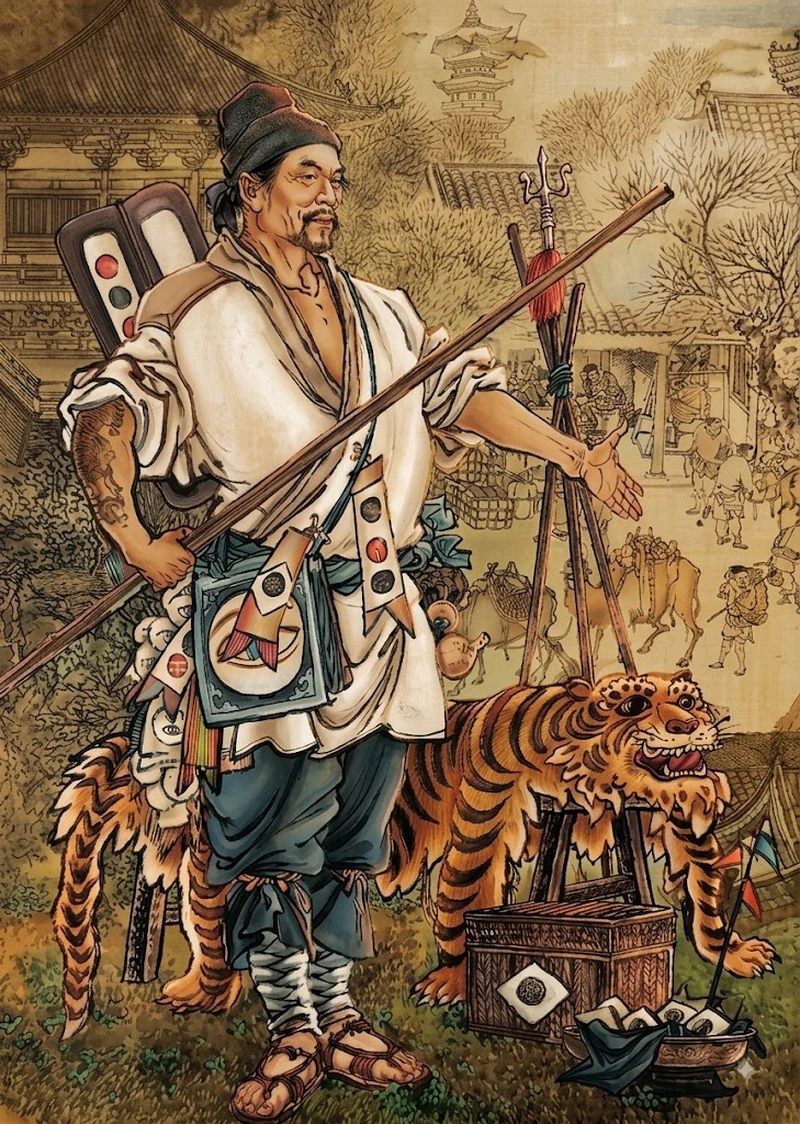
Li Zhong (李忠), nicknamed the “Tiger-Slaying General,” is a notable fictional outlaw featured in the classic Chinese epic Water Margin. Set against the turbulent backdrop of the Northern Song Dynasty, his narrative portrays a humble street performer who rises to become a bandit chieftain among the 108 Stars of Destiny.
Before turning to banditry, he earned a living wandering from town to town, performing martial arts routines and selling medicinal plasters in crowded marketplaces. Although his martial prowess was modest compared to elite warriors like Lin Chong or Wu Song, he possessed pragmatic street smarts, resourcefulness, and keen survival instincts. He served as an early mentor to the young brute Zhou Tong, guiding him in combat fundamentals and establishing an outlaw stronghold upon Mount Peach Blossom.
Literary Role and Folk Archetype
Within the narrative structure of the novel, the character of Li Zhong serves as a vital bridge between ordinary commoners and the grand military brotherhood. While legendary figures like Lu Zhishen occasionally clashed with his frugal and cautious demeanor, his presence highlights the multifaceted social classes that formed the rebel coalition on Mount Liang. As the 86th hero, he ranked among the 72 Earthly Fiends, commanding scouting units and defensive infantries with resolute dedication.
Li Zhong — Historical & Literary Timeline
Encounter with Lu Zhishen
While performing in Weizhou, he reunites with Lu Zhishen. Despite friction over financial generosity, their mutual respect establishes a long-lasting connection.
Chieftain of Mount Peach Blossom
He rules Mount Peach Blossom alongside Zhou Tong until government pressure and regional conflicts persuade them to integrate into the Liangshan brotherhood.
Fall at Shezhou
During the grueling imperial campaign against the rebel leader Fang La, he dies bravely in battle at Shezhou alongside fellow Liangshan chieftains.
Key Alliances and Comrades
- Zhou Tong (周通): His devoted junior brother-in-arms and second-in-command at Mount Peach Blossom.
- Lu Zhishen (鲁智深): A formidable companion whose philosophical differences and boisterous virtue tested their fragile friendship.


