


Contents
The Legend and Legacy of Wu Song
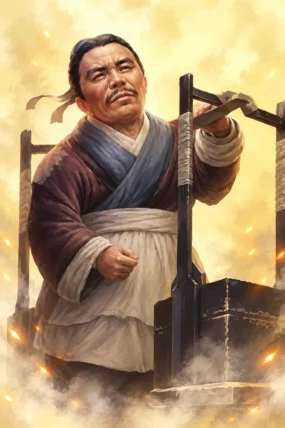
Wu Song is one of the most celebrated figures in the classic Chinese novel Water Margin. Set against the tumultuous backdrop of the Northern Song Dynasty, his narrative captures the enduring struggle between corrupt societal structures and righteous personal justice. Renowned for his towering stature and extraordinary martial prowess, the formidable warrior remains an enduring archetype in traditional folklore.
His most renowned feat occurred on Jingyang Ridge, where he single-handedly killed a ferocious man-eating tiger with his bare hands while heavily intoxicated. This achievement earned him immediate fame and a post as a local magistrate constable. However, domestic tragedy soon followed. When his elder brother Wu Dalang was poisoned by sister-in-law Pan Jinlian and her wealthy lover Ximen Qing, Wu Song carried out methodical vengeance against the murderers before turning himself in to imperial custody.
“If I cannot avenge this grievance and offer retribution for my brother, I am unworthy of walking between heaven and earth!”
From Righteous Constable to Liangshan Outlaw
Repeatedly framed and betrayed by corrupt officials during his exile, the warrior eventually took refuge among the outlaws of Mount Liang. Adopting the disguise of an itinerant Buddhist monk—complete with long unkempt hair and heavy prayer beads—he became one of Liangshan’s most formidable infantry vanguard leaders.
Historical & Literary Timeline
The Tiger Slayer of Jingyang
After downing eighteen bowls of potent wine, the wandering martial artist defeats a deadly predator terrorizing the mountain pass, earning a constable commission in Yanggu County.
Blood at Lion Pavilion
Following the treacherous murder of his brother, he conducts an unyielding investigation, executes both culprits to restore family honor, and embraces life as an outlaw.
Retirement at Six Harmonies Pagoda
After losing his left arm during the brutal campaign against Fang La, Wu Song refused imperial titles and retired quietly as a Buddhist recluse, living to age eighty.
Key Comrades and Influences
- Song Jiang: The supreme chieftain of Liangshan whose shared ideals of brotherhood bonded them despite their later philosophical disagreements over amnesty.
- Lu Zhishen: The formidable monk whose righteous anger and straightforward morality closely mirrored his own, making them lifelong battlefield companions.


