



Contents
Biography & Historical Record
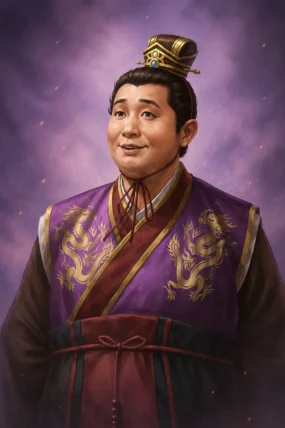
Liu Qian (刘谦, 劉謙, Lưu Khiêm; c. 240s–after 263 AD) was a royal imperial grandson of the Shu Han dynasty during the late Three Kingdoms era. Born into the imperial household of Chengdu, he was a grandson of Emperor Houzhu Liu Shan (刘禅) and a close kinsman of heroic Prince of Beidi Liu Chen (刘谌) and Crown Prince Liu Xuan (刘璇).
Following Deng Ai’s breakthrough through Yinping and the subsequent surrender of Chengdu in the winter of 263 AD, Liu Qian accompanied the surviving royal princes and officials on their journey to the Wei/Jin capital of Luoyang. Granted nominal marquisate status by the Jin imperial court in accordance with their reconciliation policies toward former Shu royalty, Liu Qian continued the sacrificial lineage of the First Ruler Liu Bei through the Western Jin period.
Role in Romance of the Three Kingdoms
Heirs of the Han House: Liu Qian represents the enduring legacy of the Shu imperial bloodline that carried on the historic heritage of Liu Bei and Zhuge Liang into the unified Jin era.
Liu Qian (刘谦) — Historical Timeline
Imperial Birth in Chengdu
Born into the royal Liu dynasty within the Shu palace.
Fall of Shu
Surrenders alongside Emperor Liu Shan; relocates to Luoyang under Jin supervision.
Life in Luoyang
Maintains the ancestral sacrifices of the Shu Han imperial house in the Jin capital.
Key Relationships
Family
- Ancestor Liu Bei (刘备, Lưu Bị): Grandfather; First Sovereign of Shu Han who swore brotherhood in the Peach Garden.
- Father Liu Shan (刘禅, Lưu Thiện): Father; Second Sovereign of Shu Han (Emperor Xiaohuai) who ruled Chengdu for 40 years.
- Brother Liu Chen (刘谌, Lưu Thầm): Brother; Prince of Beihai who martyred himself and his family in the ancestral temple rather than surrender in 263 AD.
- Brother Liu Xuan (刘璿, Lưu Toàn): Brother; Crown Prince of Shu Han killed during the chaos of Zhong Hui’s rebellion.
Friends
- Liu Shan (刘禅, Lưu Thiện): Father; accompanied him into peaceful relocation to Luoyang following Deng Ai’s conquest.
Enemies
- Deng Ai (邓艾, Đặng Ngải): Wei general whose daring march across the treacherous Yinping mountains forced the capitulation of Chengdu.
- Zhong Hui (钟会, Chung Hội): Wei commander whose failed rebellion in Chengdu triggered violent rioting that took the lives of several Shu princes.
Other
- Sima Zhao (司马昭, Tư Mã Chiêu): Regent of Wei who enfeoffed the surviving Shu imperial family with ducal titles in Luoyang.
In Novel
Chapter 118 (The Surrender of Chengdu & The Fate of the Shu Princes)
- Liu Qian (刘虔, Lưu Kiền): Younger son of Liu Shan (刘禅, Lưu Thiện) and younger brother of heroic martyr Liu Chen (刘谌, Lưu Thầm); accompanied his imperial father into capitulation before Deng Ai, enduring the heartbreak of seeing the Shu Han ancestral shrines extinguished.
Chapter 119 (Sima Zhao Entertains Liu Shan in Luoyang)
- Liu Qian (刘虔, Lưu Kiền): Resided in Luoyang as a Jin marquis, witnessing Sima Zhao’s famous feast where Liu Shan uttered ‘I find joy here and think not of Shu,’ silently enduring the fall of his dynasty.
In History
Summary
- Liu Qian (刘虔, Lưu Kiền) (c. 240s–after 280 AD) was an imperial prince of Shu Han, the sixth son of Emperor Huai (Liu Shan); ennobled as Prince of Shangdang in 259 AD.
Year: 259 AD
- Formally invested as Prince of Shangdang (上党王) by imperial decree in Chengdu, participating in state ceremonial sacrifices during the late Shu Han era.
Year: 264 AD
- Following the surrender of Shu to Wei, Liu Qian accompanied Liu Shan and his brothers on the long journey to the Wei capital Luoyang; ennobled as a Commandant of the Household and Marquis under the Western Jin.
Historical Record
- Sanguozhi (三国志), Volume 34 (Biographies of the Sons of Liu Shan): Records his birth, princely ennoblement, and relocation to the north.
- Book of Jin (晋书), Volume 3: Notes the stipends and marquisates granted to the surviving imperial sons of Shu.