

Contents
Biography & Historical Record
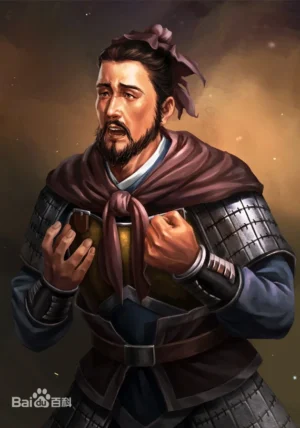
Wang Xiu (died c. 216 AD), courtesy name Shuzhi, was a loyal civil administrator and statesman who served Gongsun Zan, Yuan Tan, and later Cao Cao during the late Eastern Han dynasty. Hailing from Yingling, Beihai Commandery, he lost his mother at the young age of seven, a tragedy that instilled in him a lifelong reputation for filial piety and righteous virtue. When Gongsun Zan appointed Kong Rong as Administrator of Beihai, Wang Xiu served as Magistrate of Gao密 and gained immense respect for enforcing strict laws, suppressing local tyrant clans, and protecting civilians.
During the civil war between Yuan Shao’s sons, Wang Xiu served Yuan Tan as Advisor and Magistrate of Qinghe. Despite Yuan Tan’s rash temperament and frequent losses against his brother Yuan Shang, Wang Xiu remained steadfastly loyal, repeatedly offering honest and courageous counsel. When Yuan Tan was under heavy siege by Cao Cao at Nanpi in 205 AD and killed in battle, Wang Xiu risked his life by dismounting and weeping bitterly over Yuan Tan’s corpse, petitioning Cao Cao for permission to bury his former master. Deeply moved by Wang Xiu’s unshakeable loyalty, Cao Cao pardoned him, recruited him into his administration, and appointed him Minister of Agriculture and Minister of Finance. As a senior administrator in Cao Cao’s government, Wang Xiu was renowned for his incorruptibility, fairness, and defense of honest officials, continuing to serve until his peaceful death around 216 AD.
Role in Romance of the Three Kingdoms
In Luo Guanzhong’s historical novel Romance of the Three Kingdoms, Wang Xiu appears in Chapter 32 and Chapter 33 as a deeply loyal and principled advisor serving Yuan Tan. When Yuan Tan clashes with his brother Yuan Shang following Yuan Shao’s death, Wang Xiu repeatedly counsels Yuan Tan to maintain brotherly unity and avoid relying on Cao Cao’s treacherous assistance. After Yuan Tan ignores his warnings and is defeated and killed by Cao Cao’s army at the Siege of Nanpi, Wang Xiu openly weeps over Yuan Tan’s body in front of Cao Cao’s victorious troops. Impressed by his brave fidelity, Cao Cao spares his life and invites him into his advisory council, where Wang Xiu continues to give honest administrative service.
Wang Xiu (王修) — Historical & Literary Timeline
Service under Kong Rong
Serves as a capable local magistrate in Beihai under Kong Rong, suppressing lawless local clans and maintaining civic order during the Yellow Turban chaos.
Counseling Yuan Tan
Counsels Yuan Tan against warring with his brother Yuan Shang and warns him against making a dangerous alliance with Cao Cao.
Mourning Yuan Tan and Recruitment by Cao Cao
Weeps openly over Yuan Tan’s corpse after the Siege of Nanpi; Cao Cao admires his unyielding loyalty, pardons him, and recruits him as a senior minister.
Death
Passes away peacefully of natural causes while holding the post of Minister of Agriculture under Cao Cao’s administration.
For detailed historical records, archives, and official chronicles, explore Wang Xiu on Wikipedia.
Key Relationships
Family
- Wang Zhong (王忠, Vương Trung) — Son of Wang Xiu who followed in his father’s footsteps as a scholar and official serving the state of Cao Wei.
Friends
- Kong Rong (孔融, Khổng Dung) — Administrator of Beihai who recognized Wang Xiu’s talent early in his career, employing him as a magistrate and fostering his reputation for righteous governance.
Enemies
- Yuan Shang (袁尚, Viên Thượng) — The younger brother of Yuan Tan; his bitter internal power struggle against his brother weakened the Yuan clan and ignored Wang Xiu’s repeated pleas for familial unity.
Other
- Yuan Tan (袁谭, Viên Đàm) — The warlord whom Wang Xiu served as an advisor; Wang Xiu remained steadfastly loyal to him despite his poor political decisions and famously mourned his death at the Siege of Nanpi in 205 AD.
- Cao Cao (曹操, Tào Tháo) — The ruler who, after being moved by Wang Xiu’s display of loyalty toward the fallen Yuan Tan, pardoned him and appointed him to high administrative offices, including Minister of Agriculture and Minister of Finance.
In Novel
Chapter 11
- Wang Xiu (王修, Vương Tu): Wang Xiu serves under Yuan Shao and is a loyal official who attempts to preserve order during the growing instability of Yuan Shao’s household.
Chapter 12
- Wang Xiu (王修, Vương Tu): Wang Xiu continues to serve Yuan Shao as the struggle with Cao Cao intensifies.
Chapter 13
- Wang Xiu (王修, Vương Tu): Wang Xiu remains connected to the Yuan Shao administration and its efforts to maintain control over the northern territories.
Chapter 14
- Wang Xiu (王修, Vương Tu): Wang Xiu continues his service to Yuan Shao while the northern political situation changes rapidly.
Chapter 15
- Wang Xiu (王修, Vương Tu): Wang Xiu remains in the northern political network during the transition toward the later confrontation between Yuan Shao and Cao Cao.
Chapter 32
- Wang Xiu (王修, Vương Tu): Wang Xiu appears again in the northern succession crisis after Yuan Shao’s death. He is associated with the struggle surrounding Yuan Tan and Yuan Shang and the collapse of Yuan family unity, which allows Cao Cao to exploit the brothers’ conflict.
Chapter 33
- Wang Xiu (王修, Vương Tu): Wang Xiu continues to be associated with the Yuan brothers’ final struggle against Cao Cao. The political fragmentation of the Yuan family has become irreversible, and Wang Xiu’s appearance belongs to this final phase of the northern campaigns.
In History
Summary
- Wang Xiu (王修, Vương Tu), courtesy name Shuzhi (叔治), was a respected administrator and adviser who served in the northern political sphere before entering Cao Cao’s government.
- He is remembered for loyalty, administrative competence, and his conduct toward his former lord Yuan Tan.
Early Career
- Wang Xiu came from Beihai and became known as an able local official. He served under Yuan Shao and later Yuan Tan during the struggle for control of northern China.
- His conduct during the collapse of the Yuan family became an important part of his historical reputation.
Year: 205 AD — Yuan Tan’s Defeat
- When Yuan Tan was defeated and killed by Cao Cao, Wang Xiu attempted to assist him. His willingness to remain loyal to his former lord despite the political situation was noted by the historical tradition.
- After Yuan Tan’s death, Wang Xiu entered Cao Cao’s service rather than continuing an impossible resistance.
Service under Cao Cao
- Cao Cao recognized Wang Xiu’s administrative ability and employed him in government. He became an example of how Cao Cao incorporated capable officials from defeated regimes.
- Wang Xiu was particularly respected for his personal integrity and willingness to accept responsibility.
Historical Record
- Wang Xiu was a historical figure. His biography is preserved in Wei Book 11 of the Records of the Three Kingdoms.
- The historical narrative presents him primarily as a principled administrator rather than as a battlefield hero.