
Contents
Biography & Historical Record
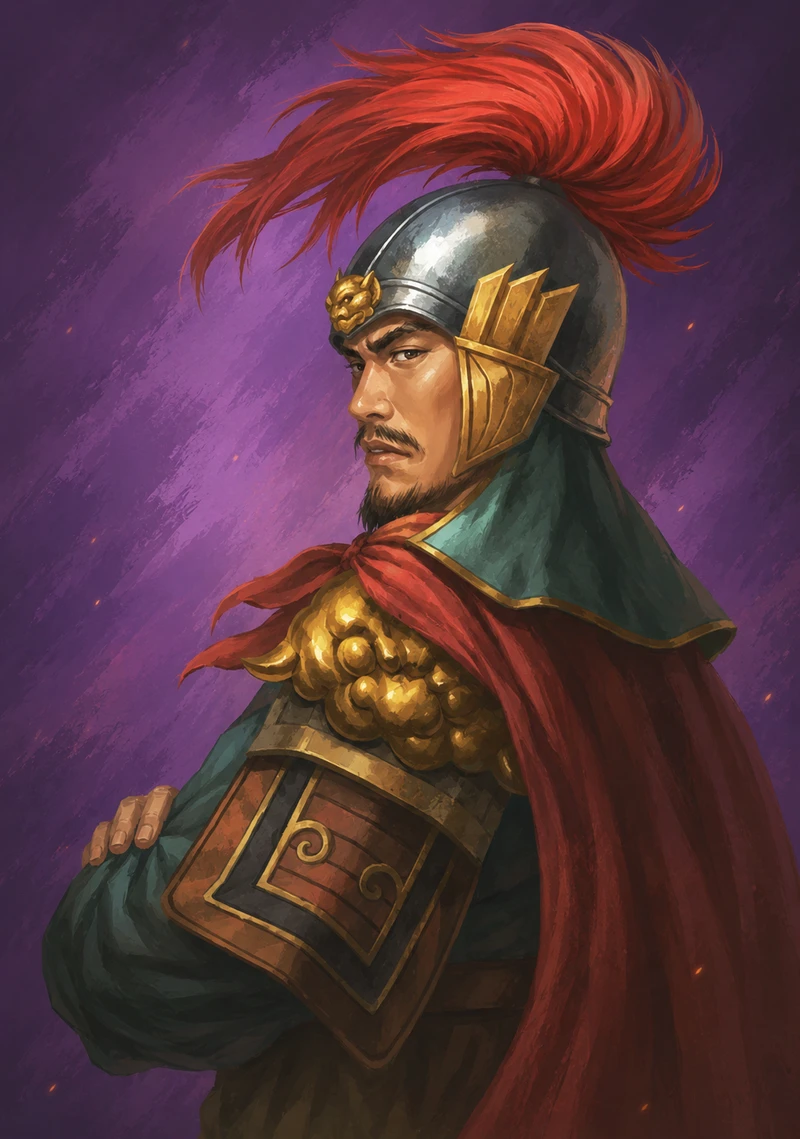
Cao Xun was a high-ranking military commander, imperial guard general, and noble of the Cao Wei state during the Three Kingdoms period. He was the third son of the legendary Cao Wei Grand Marshal Cao Zhen and the younger brother of the powerful regent Cao Shuang. Documented in Chen Shou’s official dynastic history Records of the Three Kingdoms (Sanguozhi – Book of Wei, Volume 9, Biography of Cao Zhen and his sons) and Sima Guang’s Zizhi Tongjian, Cao Xun held immense military authority and political prestige during the regency of his eldest brother Cao Shuang, but shared in the catastrophic destruction of his entire clan during the Gao Ping Ling Coup.
Following the death of their father Cao Zhen and the subsequent passing of Emperor Cao Rui, Cao Shuang rose to supreme power as co-regent alongside Sima Yi, eventually sidelining Sima Yi and monopolizing absolute control over the imperial court. Capitalizing on his family’s towering influence, Cao Xun was appointed as the General of the Martial Guards (Wuwei Jiangjun) and ennobled as a district marquis. Entrusted with the supreme command over the elite infantry units of the capital’s imperial guards (cấm vệ quân), Cao Xun, alongside his brother Cao Xi who commanded the cavalry units, formed an impregnable military backing for the Cao family’s monopoly on power in Luoyang.
Crying out in unchecked arrogance and relying heavily on their family’s supreme authority, Cao Xun and Cao Shuang lived lives of extravagant luxury and behaved with extreme high-handedness toward court officials. They frequently disregarded imperial protocols, appropriated public lands and private properties for personal wealth, and openly dismissed the political warnings issued by cautious ministers such as their brother Cao Xi, who repeatedly cautioned them that Sima Yi was merely feigning illness to plot their destruction. Cao Xun remained blindly confident in his military control over the capital’s guard units, scoffing at the notion that any rival could successfully challenge their regime.
In February 249 AD, Cao Xun accompanied young Emperor Cao Fang, Cao Shuang, and all his brothers out of Luoyang to visit the ancestral tombs at Gao Ping Ling. Seizing this golden opportunity, Sima Yi launched the Gao Ping Ling Coup, seizing control of the armories, closing the city gates, and locking down Luoyang. Trapped outside the capital and facing total military isolation, Cao Xun panicked and proved entirely incapable of offering any strategic solution. Although the grand administrator Huan Fan urged Cao Shuang to escort the Emperor to Xuchang and rally provincial armies, Cao Shuang collapsed under pressure and surrendered. Trusting Sima Yi’s false guarantees of mild demotion, Cao Xun laid down his arms and returned to Luoyang, where Sima Yi immediately betrayed his oath. Placed under arrest and charged with high treason, Cao Xun was executed alongside Cao Shuang, Cao Xi, and their entire clan under the brutal penalty of extermination of three generations (zhu-san-zu), completely wiping out Cao Zhen’s direct male lineage.
Role in Romance of the Three Kingdoms
In Chapters 106 and 107 of Luo Guanzhong’s classic 14th-century historical novel Romance of the Three Kingdoms, Cao Xun’s character is depicted during the dramatic events leading up to the Gao Ping Ling Coup. The novel highlights his arrogance, opulent lifestyle, and blind complacency alongside his brothers under Cao Shuang’s regime. His helpless panic when trapped outside Luoyang during Sima Yi’s sudden coup serves as a literary illustration of the downfall of corrupt regents who lose their military vigilance.
Cao Xun (曹訓) — Historical & Literary Timeline
Appointment as General of the Martial Guards
Assumes command of the elite imperial infantry guards in Luoyang under his brother Cao Shuang’s regency, enjoying immense political and military privilege.
Trapped Outside Luoyang & Extermination of the Clan
Accompanies Cao Shuang to Gao Ping Ling; trapped outside the capital by Sima Yi’s coup; surrenders alongside his brothers and is executed under the punishment of clan extermination.
Key Relationships
Family
- Cao Zhen (曹真, Tào Chân): Father; the prestigious Grand Marshal of Cao Wei whose illustrious military career and high status elevated Cao Xun and his brothers to prominent military commands within the imperial court.
- Cao Shuang (曹爽, Tào Sảng): Eldest brother and regent of Cao Wei; appointed Cao Xun as General of the Martial Guards to command the capital’s elite infantry, but their shared arrogance and complacency led to their surrender and execution following the Gaoping Tombs Coup in 249 AD.
- Cao Xi (曹羲, Tào Hi): Elder brother and commander of the imperial cavalry guards; repeatedly cautioned Cao Xun and Cao Shuang against overconfidence and warned them of Sima Yi’s hidden intentions, though his advice was ignored before they were all executed together in 249 AD.
- Cao Yan (曹彦, Tào Ngạn): Younger brother and imperial guard officer who shared in the family’s brief dominance and was executed alongside Cao Xun when their direct clan was exterminated in 249 AD.
Friends
- Huan Fan (桓范, Hoàn Phạm): Minister of Finance and trusted political ally; fled Luoyang during the Gaoping Tombs Coup in 249 AD to urge Cao Xun, Cao Shuang, and their faction to escort the emperor to Xuchang and mobilize provincial armies, though his counsel was ultimately rejected.
Enemies
- Sima Yi (司马懿, Tư Mã Ý): Supreme political and military rival; orchestrated the Gaoping Tombs Coup in 249 AD, locked down the capital’s armories while Cao Xun was away, broke his initial oath of clemency after their surrender, and sentenced Cao Xun and his entire clan to death for treason.
Other
- Cao Fang (曹芳, Tào Phương): Third Emperor of Cao Wei; Cao Xun and his brothers escorted the young monarch to the Gaoping Tombs in February 249 AD, leaving the imperial capital defenseless and allowing Sima Yi to seize control of the state.
In Novel
Chapter 106
- Cao Xun (曹训, Tào Huấn): Cao Xun is Cao Shuang’s younger brother and holds the office of Wuwei General. When Sima Yi seizes control of Luoyang and arrests the Cao Shuang faction, Cao Xun is captured with the other members of the family. Sima Yi orders him executed along with Cao Shuang and Cao Xi. The character reference identifies Cao Xun as appearing in Chapter 106 and being executed by Sima Yi. citeturn0search0
In History
Summary
- Cao Xun (曹训, Tào Huấn) was the third son of Cao Zhen and a younger brother of Cao Shuang.
Political Position
- After Cao Zhen’s death, Cao Xun received a marquis title and benefited from the family’s high position in Wei.
- His political importance increased during Cao Shuang’s regency alongside his brothers Cao Xi and Cao Yan.
Gaoping Tombs Coup
- In 249, Cao Xun accompanied Cao Shuang and Cao Xi when they left Luoyang with Emperor Cao Fang.
- Sima Yi used their absence to seize control of the capital.
Execution
- After Cao Shuang surrendered, Cao Xun and the other members of the Cao Shuang faction were executed and their families were destroyed.
- Classification: Historical.