
Contents
Biography & Historical Record
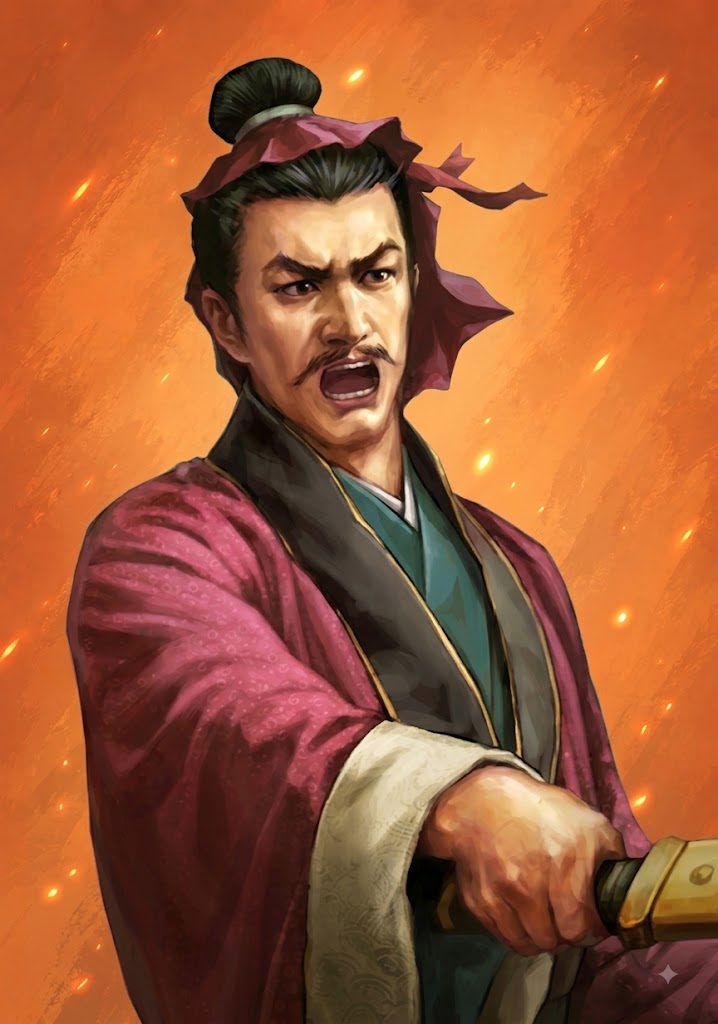
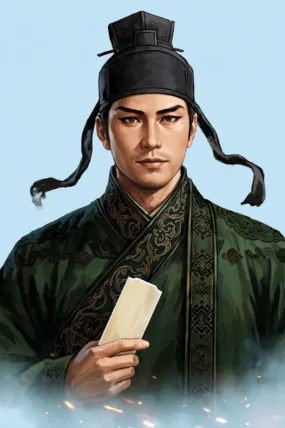
Huan Fan, courtesy name Yuanze, was an exceptionally brilliant senior statesman, master military strategist, and chief economic administrator of the Cao Wei state during the Three Kingdoms period. Hailing from Longkang in Pei Commandery, Huan Fan was widely celebrated across the realm for his profound intellect, vast erudition, and sharp strategic foresight, earning him the famous contemporary nickname ‘Zhi Nang’ (Bag of Wisdom / Wisdom Pouch). Documented in Chen Shou’s official dynastic history Records of the Three Kingdoms (Sanguozhi – Book of Wei, Biography of Cao Shuang) and Sima Guang’s Zizhi Tongjian, Huan Fan served as the Minister of Finance (Grand Agronomist / Da Si Nong), holding absolute authority over the imperial granaries, national treasury, and agricultural supply lines of the Cao Wei empire.
During the regency of Cao Shuang and his brothers (Cao Xi, Cao Xun, and Cao Yan), who held supreme military power following the death of Emperor Cao Rui, Huan Fan served as their premier elder strategist and political adviser. Recognizing the dangerous political feud brewing between the arrogant, inexperienced Cao brothers and the cunning, veteran Grand Commander Sima Yi, Huan Fan repeatedly offered urgent warnings. He cautioned Cao Shuang never to allow all three brothers to leave the capital of Luoyang simultaneously, urging them to divide their military authority over the city guards so that one brother always maintained operational control over the imperial palace to prevent a sudden coup d’état. However, Cao Shuang and his brothers, blinded by complacency and luxury, brushed off his prudent warnings with disdain.
On February 5, 249 AD, Sima Yi executed his legendary surprise coup while Cao Shuang, his brothers, and the young Emperor Cao Fang were away visiting the Gaoping Tombs to pay homage to the late emperor. Sima Yi seized control of the capital, closed the imperial gates, occupied the arsenals, and issued an imperial decree in the name of Empress Dowager Guo declaring Cao Shuang a traitor. When news reached Luoyang, Huan Fan acted with extraordinary cunning: he tricked the gate commander Lu Zhi by forging an imperial decree, broke through the city gates, and fled south to join Cao Shuang at the Gaoping Tombs, taking with him the official seal of the Minister of Finance. When Sima Yi learned that Huan Fan had escaped, he gasped in terror, declaring to his advisers: ‘The Bag of Wisdom of the Wei state has gone to join them!’
Upon arriving at Cao Shuang’s war camp, Huan Fan presented a masterstroke strategy that could have completely annihilated Sima Yi’s rebellion. He urged Cao Shuang to immediately escort Emperor Cao Fang to the southern capital of Xuchang, issue a nationwide mobilization decree calling upon all provincial governors to march against the traitor Sima Yi, and utilize the vast national grain reserves under Huan Fan’s official authority to sustain a long campaign. Huan Fan guaranteed that with the legitimate Emperor, the imperial seal, the grain supply, and the provincial armies, Sima Yi would be crushed within weeks. However, Cao Shuang proved utterly cowardly and indecisive. Tricked by Sima Yi’s false promises of retaining his wealth and title if he relinquished military power, Cao Shuang threw his sword to the ground and surrendered. In utter fury and despair, Huan Fan wept openly before the troops, shouting his immortal critique: ‘Your father Cao Zhen was a legendary hero, but he spawned three brothers who are as stupid as cattle and pigs! Today, your cowardice has brought total destruction upon our entire clan!’
Following Cao Shuang’s surrender, Sima Yi immediately broke his oath. Huan Fan was arrested alongside Cao Shuang, brought back to Luoyang, and charged with high treason. Sima Yi ordered the horrific execution of Huan Fan alongside Cao Shuang, his brothers, and their extended families, wiping out three familial generations (chu di tam toc). Despite the tragic massacre, Huan Fan’s bloodline survived through hidden descendants, leading to the famous Huan clan of the Eastern Jin Dynasty, including the Grand Marshal Huan Wen and the warlord Huan Xuan.
Role in Romance of the Three Kingdoms
In Chapter 107 of Luo Guanzhong’s classic 14th-century historical novel Romance of the Three Kingdoms, Huan Fan is portrayed as the ultimate tragic genius of Cao Wei. Known far and wide as the ‘Bag of Wisdom,’ his sharp mind and impeccable loyalty to the Cao imperial house contrast sharply with the incompetence and spinelessness of Cao Shuang.
The novel vividly dramatizes the intense events of Chapter 107 during the Gaoping Tombs Incident. When Sima Yi feigns illness to deceive Cao Shuang and suddenly seizes Luoyang, Huan Fan’s brilliant escape from the capital is depicted as a masterclass in deception: he shows the gate commander an old decree, bluffs his way out, and rides at breakneck speed to Cao Shuang’s camp. Sima Yi’s profound fear upon hearing of Huan Fan’s flight highlights his status as the single greatest intellectual threat to the Sima faction.
The dramatic climax occurs inside Cao Shuang’s tent, where Huan Fan passionately lays out his three-point master strategy: relocating Emperor Cao Fang to Xuchang, mobilizing the empire’s regional armies, and opening the national granaries under his control. As Cao Shuang hesitates, weeping for his personal fortune, Huan Fan cries out in anguish, delivering his iconic curse that Cao Shuang and his brothers are as foolish as swine and oxen. The novel concludes his arc with his tragic execution in Luoyang, immortalizing Huan Fan as a brilliant master strategist whose flawless plans were rendered useless by the fatal cowardice of his lord.
Huan Fan (桓範) — Historical & Literary Timeline
Serving as Minister of Finance & Warning Cao Shuang
Appointed Minister of Finance (Grand Agronomist), managing the empire’s treasury and granaries; repeatedly cautions Cao Shuang to divide military power over Luoyang to prevent a coup by Sima Yi.
Deceiving Gate Guards & Fleeing to Join Cao Shuang
Tricks the capital gate commander during Sima Yi’s coup, escaping Luoyang with the official Minister of Finance seal to join Emperor Cao Fang and Cao Shuang at the Gaoping Tombs.
Advising Flight to Xuchang & Denouncing Cao Shuang
Urges Cao Shuang to take the Emperor to Xuchang and mobilize provincial armies backed by national granaries; when Cao Shuang surrenders in cowardice, Huan Fan bitterly denounces him as foolish as cattle and pigs.
Arrested and Executed by Sima Yi
Returned to Luoyang following Cao Shuang’s surrender; falsely accused of treason by Sima Yi and executed alongside his entire clan across three generations.
For detailed historical records, archives, and official chronicles, explore Huan Fan on Wikipedia.
Key Relationships
Family
- Huan Hai (桓海, Hoàn Hải) – Son of Huan Fan; his lineage survived in hiding after the purge of the Huan clan.
- Huan Yi (桓毅, Hoàn Nghị) – Grandson, renowned statesman and musician of the Eastern Jin Dynasty.
- Huan Wen (桓温, Hoàn Ôn) – Great‑great‑grandson, Grand Marshal of Eastern Jin and preeminent warlord.
- Huan Xuan (桓玄, Hoàn Huyền) – Great‑great‑great‑grandson, warlord who briefly usurped the Jin throne and founded the Chu state.
Friends
- Cao Shuang (曹爽, Tào Thượng) – Regent of Cao Wei; Huan Fan served as his chief strategist and political adviser.
- Cao Xi (曹羲, Tào Hy) – Younger brother of Cao Shuang, military commander; collaborated with Huan Fan during the regency.
- Cao Xun (曹逊, Tào Tốn) – Brother of Cao Shuang, officer in the imperial guards; allied with Huan Fan.
- Cao Yan (曹焰, Tào Diễm) – Brother of Cao Shuang, also serving in the imperial guards; worked alongside Huan Fan.
- Cao Fang (曹芳, Tào Phương) – Third Wei emperor; Huan Fan attempted to rescue and relocate him during the Gaoping Tombs incident.
- Sima Zhi (司马祗, Tư Mã Chi) – Honest judicial officer who respected Huan Fan’s integrity and regarded him as an upright official.
Enemies
- Sima Yi (司马懿, Tư Mã Dịch) – Grand Commander who staged the Gaoping Tombs coup; directly responsible for Huan Fan’s arrest and execution in 249 AD.
- Sima Shi (司马师, Tư Mã Thư) – Son of Sima Yi; assisted in the seizure of Luoyang and the purge of Cao Shuang’s faction.
- Sima Zhao (司马昭, Tư Mã Chiêu) – Another son of Sima Yi; participated in the purge and the extermination of Huan Fan’s clan.
- Jiang Ji (姜纪, Tương Kỷ) – Senior Wei minister who collaborated with Sima Yi during the coup and authored false letters that misled Cao Shuang.
Other
- Empress Dowager Guo (郭太后, Quách Thái hậu) – Issued the imperial decree in Sima Yi’s name that declared Cao Shuang a traitor, indirectly sealing Huan Fan’s fate.
In Novel
Chapter 106
- Huan Fan (桓范, Hoàn Phàn): Huan Fan is Cao Shuang’s trusted adviser and is known as his “wise strategist.” When Sima Yi launches his coup in Luoyang, Huan Fan escapes the city carrying the military seal and reaches Cao Shuang’s camp. He urges Cao Shuang to take Emperor Cao Fang to Xuchang, summon the Wei armies and fight Sima Yi under the emperor’s authority. Cao Shuang refuses to follow the plan and chooses surrender instead.
Chapter 107
- Huan Fan (桓范, Hoàn Phàn): After Cao Shuang surrenders, Huan Fan’s warnings prove correct. Sima Yi nevertheless arrests him and has him executed with the Cao Shuang faction. His death ends the resistance of the last major adviser who had urged Cao Shuang to fight.
History
Summary
- Huan Fan (桓范, Hoàn Phàn), courtesy name Yuanze, was a Cao Wei official and military commander.
Political Career
- Huan Fan held important office at the Wei court and was regarded as a capable administrator and adviser.
- He was nicknamed for his extensive knowledge of state administration and finance.
Cao Shuang’s Coup
- In 249, when Sima Yi seized control of the Wei government from Cao Shuang, Huan Fan escaped from the capital and joined Cao Shuang.
- He urged Cao Shuang to resist and pointed out the resources available to them outside the capital.
Death
- Cao Shuang ultimately surrendered despite Huan Fan’s advice.
- After Sima Yi’s faction prevailed, Huan Fan was executed along with Cao Shuang’s group.
- Classification: Historical.