
Contents
Biography & Historical Record
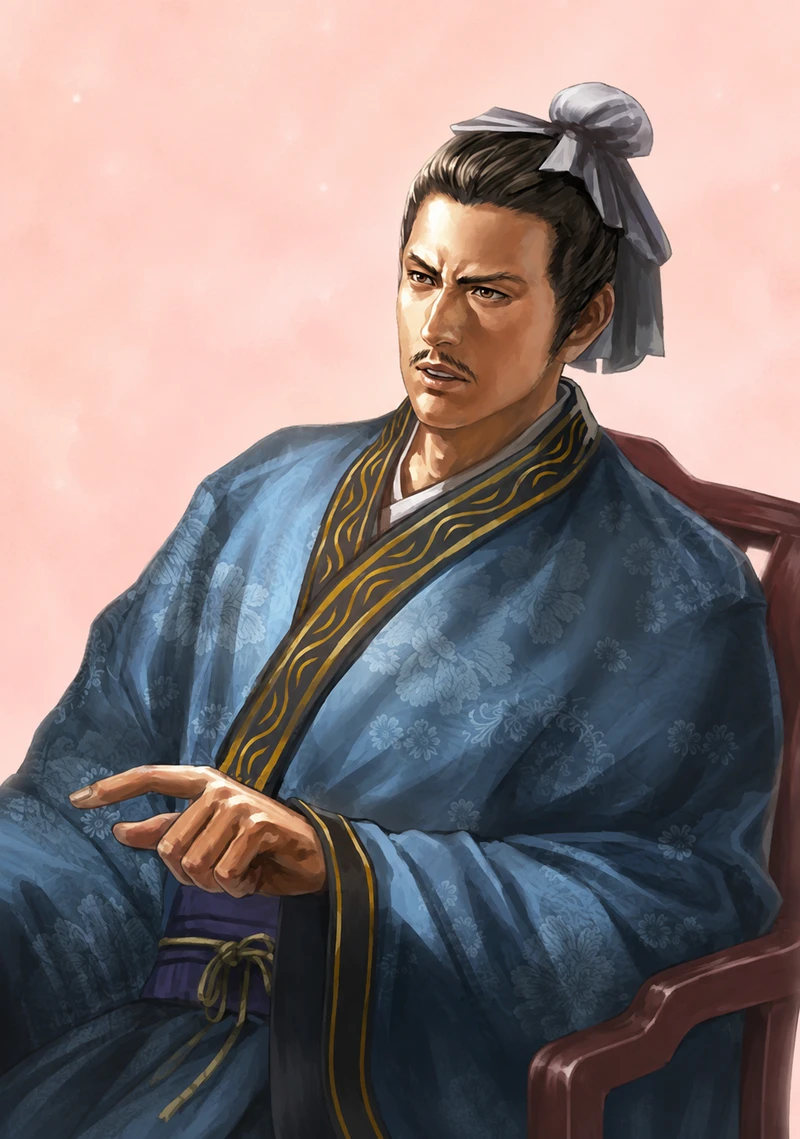
Chen Zhi (陳祗, courtesy name Fengzong) was a high-ranking minister and key political figure of the late Shu Han state during the Three Kingdoms period. Hailing from Pingyu County in Runan Commandery, he was the grand-nephew of the prominent elder statesman Fei Jing and maternal nephew of General-in-Chief Fei Yi. Having lost his parents at a young age, Chen Zhi was brought up in the household of Fei Yi, receiving a rigorous education in Confucian classics, statecraft, divination, mathematics, and various technical arts.
Known for his sharp intellect, imposing presence, and multifaceted talents, Chen Zhi quickly rose through the administrative ranks of Shu Han. Following the death of Dong Yun in 246 AD and the passing of Lu Yi in 251 AD, Chen Zhi was promoted to the pivotal dual post of Prefect of the Masters of Writing (尚書令) and Palace Attendant (侍中), later being granted the title of General of the Household Who Guards the Army (鎮軍將軍). Unlike his predecessor Dong Yun—who kept the palace eunuchs strictly separated from state affairs—Chen Zhi aligned himself closely with the eunuch Huang Hao. Together, Chen Zhi and Huang Hao gained the deep affection and trust of Emperor Liu Shan, gradually shifting the balance of court power away from the military leadership led by Jiang Wei.
Chen Zhi’s administration was marked by an active accommodation of the emperor’s desires and a supportive stance toward foreign military campaigns, which contrasted with Fei Yi’s previous policy of strict restraint. Although Chen Zhi managed court logistics competently, his alliance with Huang Hao laid the institutional foundation for the eunuch faction’s eventual monopoly over state governance after Chen Zhi’s demise. Chen Zhi died of natural causes in 258 AD. Liu Shan wept bitterly over his passing, issued an imperial eulogy praising his service, and posthumously enfeoffed him as Marquis Zhong (忠侯, meaning “Loyal Marquis”).
Role in Romance of the Three Kingdoms
In Luo Guanzhong’s historical novel Romance of the Three Kingdoms, Chen Zhi appears in the later chapters detailing the decline of Shu Han. He is depicted as a sycophantic official who collaborates directly with the corrupt eunuch Huang Hao to manipulate Emperor Liu Shan, indulge the emperor’s hedonism, and deliberately undermine the Northern Expeditions conducted by Grand General Jiang Wei.
“Chen Zhi and Huang Hao conspired together within the forbidden palace, flattering the sovereign and monopolizing authority. The honest ministers were silenced, and the governance of the state decayed day by day.”
— Romance of the Three Kingdoms
Chen Zhi — Historical & Literary Timeline
Upbringing in the Fei Household
Orphaned in childhood, Chen Zhi is taken in and fostered by his maternal relative Fei Yi. He earns a reputation for extensive learning, mastering literature, mechanics, calendar calculations, and esoteric arts.
Elevation to Imperial Attendant
Following Dong Yun’s death, Fei Yi recommends Chen Zhi to fill administrative vacancies. He serves diligently as Palace Attendant (侍中) and catches Emperor Liu Shan’s favor.
Appointment as Prefect of Masters of Writing
Upon the death of Lu Yi, Chen Zhi is elevated to Prefect of the Masters of Writing (尚書令), effectively becoming the civilian head of imperial administration in Chengdu.
Alliance with Huang Hao & Court Dominance
Following Fei Yi’s assassination, Chen Zhi forms a tight political coalition with Huang Hao. The pair dominates court decisions, overshadowing Jiang Wei’s influence and receiving lavish imperial rewards.
Death and Posthumous Honors
Chen Zhi falls ill and dies. Liu Shan grieves deeply, bestowing the posthumous name Marquis Zhong (忠侯). With Chen Zhi gone, Huang Hao rises completely unchecked to monopolize sovereign authority.
Key Relationships
Family
- Lady Fei (费氏, Phí Thị): Mother. Sister of General-in-Chief Fei Yi.
- Fei Yi (费祎, Phí Y): Maternal uncle and adoptive guardian. Chief Regent and Grand Marshal of Shu Han who took the orphaned Chen Zhi into his household and provided him with comprehensive education in classics and statecraft.
- Fei Jing (费敬, Phí Kính): Maternal granduncle. Senior Han official and elder statesman.
- Chen Xiu (陈休, Trần Hưu): Eldest son. Inherited Chen Zhi’s noble title of Marquis Zhong in Shu Han.
- Chen Can (陈粲, Trần Sán): Second son. Scholar-official who was ennobled as a Marquis of Guannei in Shu Han.
Friends
- Liu Shan (刘禅, Lưu Thiện): Second Emperor of Shu Han (Houzhu). Placed absolute trust and personal affection in Chen Zhi, elevating him to Prefect of the Masters of Writing (Shangshu Ling), Palace Attendant (Shizhong), and General Who Guards the Army; Liu Shan wept bitterly at his death in 258 AD, posthumously conferring the title Marquis Zhong (Chong Hou).
- Huang Hao (黄皓, Hoàng Hạo): Palace eunuch and close political partner. Collaborated with Chen Zhi from 253 to 258 AD to dominate the imperial court and manipulate sovereign decisions, sidelining military commanders.
- Qiao Zhou (谯周, Kiều Chu): Master Confucian scholar and Palace Attendant who served alongside Chen Zhi in the central court administration.
Enemies
- Jiang Wei (姜维, Khương Duy): Grand General of Shu Han. Supreme military commander whose Northern Expeditions were politically opposed and constrained by the court clique of Chen Zhi and Huang Hao, creating deep civil-military fractures in Chengdu.
- Dong Yun (董允, Đổng Doãn): Deceased Palace Attendant and moral pillar who strictly suppressed palace eunuchs; following Dong Yun’s death, Chen Zhi dismantled Dong Yun’s anti-eunuch policies to empower Huang Hao.
- Cao Wei Armies (曹魏政权, Chính quyền Tào Ngụy): Northern enemy state whose military containment was undermined by the internal factional corruption following Chen Zhi’s alliance with Huang Hao.
Others
- No information
In Novel
Chen Zhi (陈祗, Trần Chi) does not have a securely verified chapter-by-chapter appearance in the supplied novel text sufficient for a reliable In Novel timeline. He is an important historical Shu official of Liu Shan’s reign, but that historical biography should not be silently transferred into the novel.
In History
Early Career
- Chen Zhi (陈祗, Trần Chi), courtesy name Fengzong, was a prominent official of late Shu Han. He rose at court under Liu Chan (刘禅, Lưu Thiện).
Rise at Court
- Chen Zhi became closely associated with the palace administration and eventually occupied the position of Palace Attendant. His influence grew as he gained the emperor’s confidence.
Relationship with Huang Hao
- Chen Zhi was politically close to the eunuch Huang Hao (黄皓, Hoàng Hạo). His influence helped Huang Hao remain powerful at court, although Chen Zhi himself was also an important administrative figure.
258 AD
- Chen Zhi died in 258. After his death, Huang Hao’s influence increased further, contributing to the political environment that later weakened Shu Han’s court.