

Contents
Biography & Historical Record
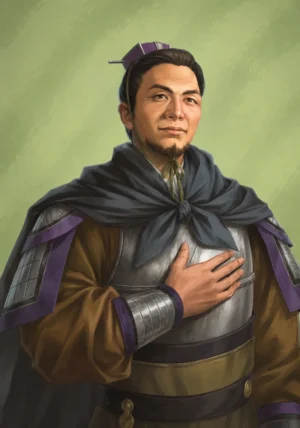
Duan Jiong, courtesy name Jiming, born in 115 AD and died in 179 AD, was a legendary military general, supreme strategist, and high-ranking court minister of the Eastern Han dynasty who attained the exalted position of Grand Commandant (Taiwei). Hailing from Guzang County in Wuwei Commandery, Liang Province (modern-day Wuwei, Gansu Province), Duan Jiong came from a family with a distinguished martial tradition. Renowned alongside Huangfu Gui (courtesy name Weiming) and Zhang Huan (courtesy name Ranming) as one of the Three Mings of Liang Province (Liangzhou San Ming), he stood as one of the three military pillars protecting the northwestern frontier of the Han empire. Unlike his clan junior Duan Wei, who was later celebrated for his patience, agricultural rehabilitation, and strict defensive posture, Duan Jiong was a ruthless, iron-fisted commander who advocated an uncompromising strategy of total extermination against hostile border tribes.
From his youth, Duan Jiong possessed an outgoing disposition, mastered martial arts, excelled in archery and horsemanship, and studied military strategy. Recommended as a Filial and Incorrupt candidate, he initially held minor administrative posts before dedicating himself to military service along the troubled northwestern frontier. Duan Jiong’s most monumental historical achievement was his decade-long military campaign against the Eastern and Western Qiang rebellions. Rejecting the pacification and appeasement policies favored by Huangfu Gui and Zhang Huan, Duan Jiong firmly maintained that the nomadic Qiang tribes were inherently treacherous and that enduring peace could only be achieved through absolute military destruction. Commanding hundreds of fierce engagements across modern Gansu and Shaanxi provinces, Duan Jiong enforced relentless swift mobility and iron discipline, sharing hardships equally with his soldiers. In epic confrontations at Lingyun Mountain and the Fengshui River, he repeatedly shattered Qiang tribal armies and executed tens of thousands of enemy fighters. By 169 AD, Duan Jiong had completely eradicated the Eastern and Western Qiang insurgencies, permanently resolving a deadly 60-year border threat that had devastated the Eastern Han empire. For his peerless military achievements, he was enfeoffed as the Marquis of Xinfeng County and celebrated as one of the most brilliant field commanders in Han history.
Following his triumph on the battlefield, Duan Jiong was recalled to the imperial capital at Luoyang, rising rapidly through the highest echelons of the civil administration. He successively served as Minister Guards (Weiwei) and Minister Servant (Taipu), culminating in his appointment as Grand Commandant (Taiwei) in 170 AD and again in 176 AD—taking supreme command of the Han empire’s armed forces. However, despite his genius on the battlefield, Duan Jiong lacked political acumen amidst court factionalism. To secure his ministerial position against factional opposition, he formed an alliance with powerful court eunuchs led by Wang Fu, assisting them in suppressing upright Confucian scholars and officials. In 179 AD, during the reign of Emperor Ling, Wang Fu’s eunuch faction collapsed under court prosecution. As a key ally, Duan Jiong was immediately implicated, stripped of his Grand Commandant office and noble marquisate, and cast into the palace prison. To escape execution and public humiliation, Duan Jiong drank poison in prison, dying at the age of 65. His family was temporarily exiled and their estate confiscated. Nevertheless, his immense prestige and deep roots in Wuwei provided the ancestral foundation that enabled his nephew Duan Wei to command respect among Liang Province troops and establish an independent stronghold at Huayin during the Three Kingdoms era.
Role in Romance of the Three Kingdoms
In Luo Guanzhong’s classic 14th-century historical novel Romance of the Three Kingdoms, Duan Jiong stands as a foundational military precursor whose historical legacy underscores the martial glory and tragic court factionalism of the late Eastern Han dynasty. Appearing in genealogical commentaries and court background lore in Chapter 1 and Chapter 2, Duan Jiong’s status as one of the Three Mings of Liang Province highlights the heroic frontier campaigns that preserved the Han empire prior to the Yellow Turban Rebellion. His political alliance with court eunuchs and his subsequent tragic death in prison illustrate the moral decay in Luoyang that shattered central authority, setting the historic backdrop for the rise of Liang Province warlords such as Dong Zhuo and his nephew Duan Wei.
Renowned as one of the Three Mings of Liang Province, Duan Jiong’s fierce pacification of the Qiang rebellions and his elevation to Grand Commandant represent the apex of Han frontier military power, while his tragic end in prison reflects the destructive court intrigue that preceded the collapse of the Eastern Han dynasty.
Duan Jiong (段颎) — Literary & Historical Timeline
150s AD
Frontier Command and Campaigns Against the Qiang
Enters military service on the northwestern frontier; commands imperial forces in relentless engagements against Qiang tribal insurgents across Gansu and Shaanxi.
169 AD
Pacification of Qiang Rebellions and Enfeoffment
Decisively suppresses the Eastern and Western Qiang rebellions at Lingyun Mountain and Fengshui River; enfeoffed as Marquis of Xinfeng County for ending a 60-year frontier threat.
170 AD
Elevation to Grand Commandant in Luoyang
Recalled to Luoyang and appointed Grand Commandant (Taiwei); alliances with court eunuch Wang Fu to consolidate ministerial influence.
179 AD
Eunuch Faction Collapse and Suicide in Prison
Implicated in the downfall of Wang Fu’s eunuch faction; stripped of office, imprisoned, and commits suicide by drinking poison at age 65.
Key Relationships
- Family:
- Duan Wei — General Who Pacifies the East and Marquis of Wenxiang, nephew of Duan Jiong.
- Comrades / Allies:
- Huangfu Gui — Famous Liang Province general co-honored with Duan Jiong as one of the Three Mings of Liang Province.
- Zhang Huan — Esteemed military commander co-honored as one of the Three Mings of Liang Province.
- Wang Fu — Powerful court eunuch with whom Duan Jiong formed a political alliance in Luoyang.
- Emperor Ling of Han — Eastern Han emperor during whose reign Duan Jiong served as Grand Commandant.
- Enemies / Opponents:
- Dian Wu — Qiang tribal chieftain defeated and executed by Duan Jiong during the Qiang campaigns.
- Upright Confucian Scholars — Court reform faction and scholars opposed to Duan Jiong’s alliance with eunuchs.
For detailed historical records, archives, and official chronicles, explore Duan Jiong on Wikipedia.
In Novel
Duan Jiong (段颎, Duàn Jiǒng) does not have a securely verified named appearance in the supplied edition under the exact Chinese name 段颎. Although he was a major historical Han general, his historical campaigns are not sufficient to create an In Novel entry.
In History
Summary
- Duan Jiong (段颎, Đoạn Cảnh) was one of the most prominent Han generals on the northwestern frontier.
Period I — Frontier Campaigns
- Duan Jiong built his reputation through campaigns against Qiang groups and other frontier enemies of the Eastern Han.
- His operations helped restore Han military control over areas of the western frontier during the reign of Emperor Huan.
Period II — Imperial Service
- His military successes brought him high office and prestige at court.
- Later political factionalism and court intrigue damaged his position, illustrating the increasingly unstable relationship between successful generals and the imperial political establishment.
Historical Record
- Duan Jiong was historical. He was a major military figure of the Eastern Han rather than a fictional Three Kingdoms warrior.