
Contents
Biography & Historical Record
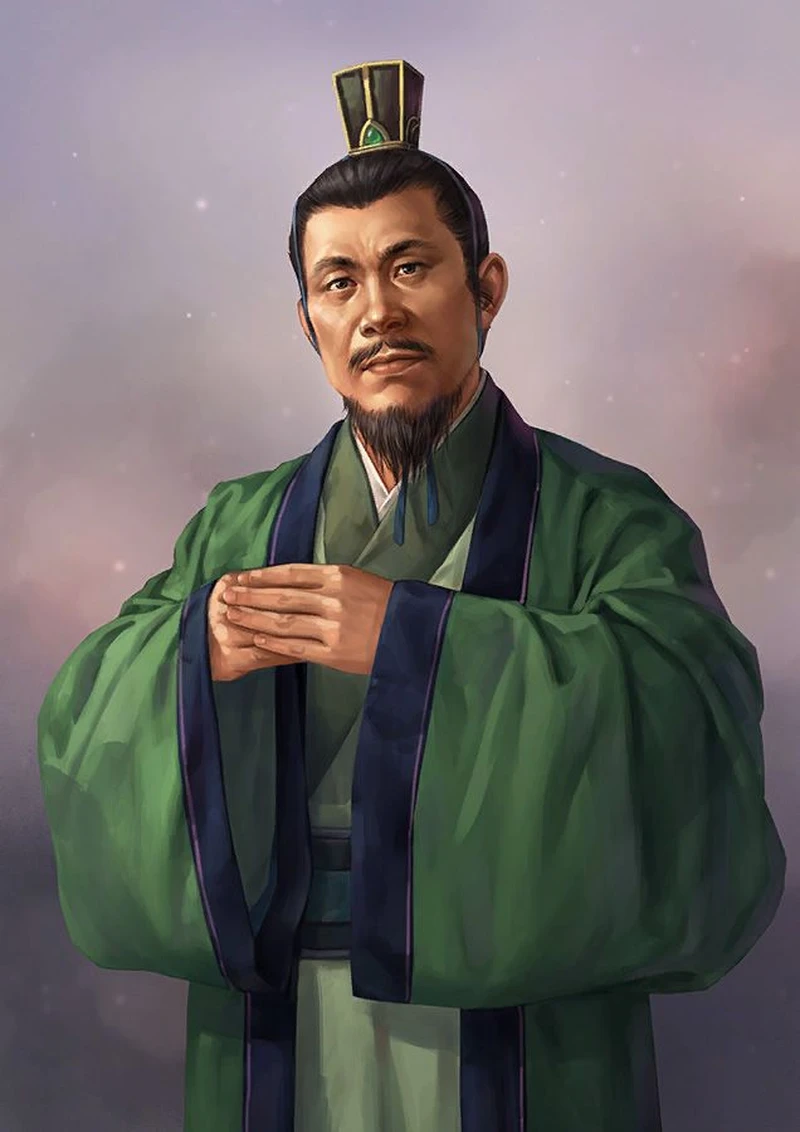
Lai Gong (赖恭) was a high-ranking official who served under the warlord Liu Biao and later became a prominent minister in the state of Shu Han during the Three Kingdoms period. Originally hailing from Lingling Commandery, Lai Gong was recognized for his integrity and administrative expertise.
Around 203 AD, following the death of Zhu Fu, the Inspector of Jiao Province (Jiaozhou), the warlord Liu Biao sought to extend his influence into the far south. He appointed Lai Gong as the new Inspector of Jiao Province and sent Wu Ju (吴巨) as the Administrator of Cangwu to assist him. However, deep political and personal friction soon developed between Lai Gong and Wu Ju. Wu Ju eventually turned against Lai Gong and expelled him from the region by force. Stripped of his command, Lai Gong fled back north.
Following Liu Bei’s expansion into Jing Province and his subsequent conquest of Yi Province, Lai Gong pledged his allegiance to Shu Han. Recognized for his vast knowledge of ritual court protocol and administrative seniority, Lai Gong was appointed to the prestigious position of Minister of Ceremonies (太常 – Tai Chang), one of the Nine Ministers of state.
In 219 AD, Lai Gong’s name appeared prominently among the lead signatories of the joint petition urging Liu Bei to assume the title King of Hanzhong. Later, in 221 AD, following the fall of the Han Dynasty and Cao Pi’s usurpation, Lai Gong played a central role alongside Zhuge Liang, Xu Jing, and Mi Zhu in petitioning Liu Bei to ascend the imperial throne as Emperor of Shu Han, preserving the legitimacy of the Han line.
Role in Romance of the Three Kingdoms
In Luo Guanzhong’s historical novel Romance of the Three Kingdoms, Lai Gong appears in Chapter 80 as a senior elder and official of Shu Han holding the post of Minister of Ceremonies. Following news of Emperor Xian’s forced abdication, Lai Gong joins Zhuge Liang, Xu Jing, and other high officials in repeatedly petitioning Liu Bei to accept the imperial title to maintain the Han Dynasty’s mandate.
“The empire cannot exist for a single day without a ruler. We urge Your Highness to ascend the imperial seat, continue the sacred line of the Han Dynasty, and satisfy the hopes of the people across the realm.”
Lai Gong — Historical & Literary Timeline
Dispatched to Jiao Province
Appointed Inspector of Jiao Province by Liu Biao and sent south accompanied by Wu Ju to establish northern authority in Jiaozhou.
Conflict with Wu Ju
Driven out of Jiaozhou by Wu Ju following internal political rivalries; subsequently enters the service of Liu Bei.
Petition for King of Hanzhong
Serves as a senior official under Liu Bei and co-signs the petition endorsing Liu Bei’s ascension to King of Hanzhong.
Establishment of Shu Han
As Minister of Ceremonies (Tai Chang), petitions Liu Bei to take the imperial throne following the collapse of the Han Dynasty.
Key Relationships
Family
- Lai Min (来敏, Lai Mẫn / Lại Mẫn): Clan relative / fellow scholar from Nanyang who served as prominent master classicist in Shu Han.
Friends
- Liu Bei (刘备, Lưu Bị): Founding First Sovereign of Shu Han. Lai Gong served as his highly revered Minister of Ceremonies (Taichang); co-signed the historic memorials creating Liu Bei King of Hanzhong (219 AD) and Emperor of Shu Han (221 AD).
- Zhuge Liang (诸葛亮, Gia Cát Lượng): Chancellor of Shu Han. Collaborated with Lai Gong in drafting the court rites, ancestral protocols, and coronation ceremonies for the newly established Shu Han dynasty.
- Xu Jing & Mi Zhu (许靖、麋竺, Hứa Tĩnh, Mi Trúc): Senior elder statesmen who co-headed the formal petitions endorsing Liu Bei’s imperial accession (221 AD).
- Liu Biao (刘表, Lưu Biểu): Governor of Jing Province. Lai Gong’s former lord who appointed him Inspector of Jiao Province (Jiaozhou Cishi) in 203 AD.
Enemies
- Wu Ju (吴巨, Ngô Cự): Grand Administrator of Cangwu. Co-dispatched south with Lai Gong in 203 AD, but developed bitter political rivalry and used military force to violently expel Lai Gong from Jiaozhou (208 AD).
- Cao Pi (曹丕, Tào Phi): Founding Emperor of Cao Wei whose usurpation of the Han throne in 220 AD prompted Lai Gong to lead the imperial coronation movement in Chengdu.
Others
- No information
In Novel
Chapter 61
- Lai Gong (赖恭, Lại Cung): Lai Gong is a senior official in Liu Zhang’s government in Yi Province. When Liu Bei enters Yi, Lai Gong is among the officials whose positions become important in the struggle between Liu Zhang and Liu Bei.
Chapter 63
- Lai Gong (赖恭, Lại Cung): After Liu Bei takes control of Chengdu and Liu Zhang’s regime collapses, Lai Gong transfers his allegiance to Liu Bei and becomes one of the officials serving the new Shu government.
In History
Early Career
- Lai Gong (赖恭, Lại Cung) was an official from Jiaozhi who later became involved in the political administration of Yi Province under Liu Bei (刘备, Lưu Bị).
Service under Liu Bei
- After Liu Bei established his government in Chengdu, Lai Gong entered the Shu administration. He was appointed to high civil office and participated in the government of the newly established Shu state.
Relationship with Liu Bei
- Lai Gong belonged to the group of regional officials whom Liu Bei incorporated into his administration after conquering Yi Province. His career illustrates the integration of local elites into the Shu government.
Later Years
- He remained a senior official during the early Shu period. His son Lai Min (来敏, Lai Mẫn) also became a noted Shu scholar and official.