


















Contents
Biography & Historical Record
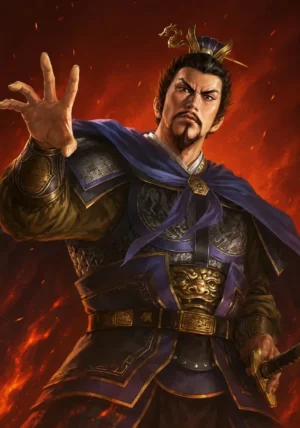
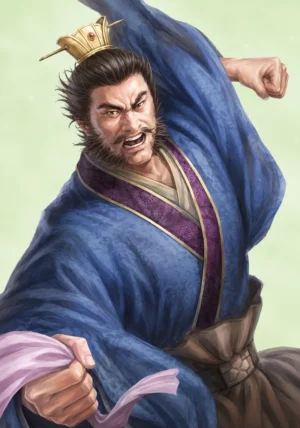
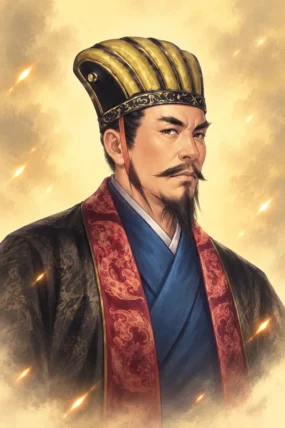
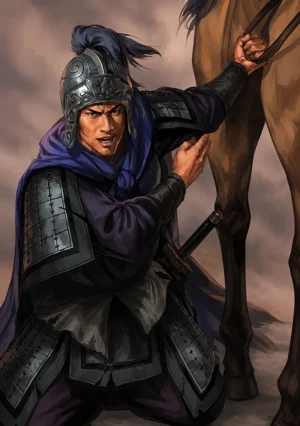
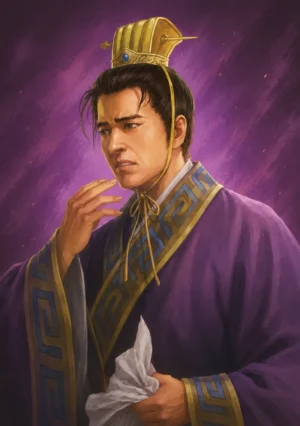
Cao Pi (187–226 AD), courtesy name Zihuan, was the founding emperor of the state of Cao Wei during the Three Kingdoms period, reigning as Emperor Wen of Wei from 220 until his death in 226 AD. The eldest surviving son of Cao Cao and Lady Bian, Cao Pi was a multifaceted figure celebrated equally for his political acumen, military consolidation, and profound contributions to Chinese literature and poetry. Growing up amidst the turbulent civil wars of the late Eastern Han dynasty, Cao Pi accompanied his father on numerous campaigns, demonstrating a sharp intellect, composure under pressure, and a deep appreciation for arts and letters alongside his brother Cao Zhi and strategist Sima Yi.
Following Cao Cao’s death in 220 AD, Cao Pi succeeded his father as the King of Wei and Chancellor of the Han dynasty. Recognizing the irreversible decay of the Han court, Cao Pi swiftly compelled Emperor Xian to abdicate the throne in his favor, officially ending the Eastern Han dynasty and establishing the Cao Wei dynasty, with Luoyang as its capital. During his brief but impactful six-year reign, Cao Pi instituted the Nine-Rank System (*Jiupin Zhongzheng Zhi*) for official recruitment, centralizing bureaucratic appointments. Militarily, he launched multiple large-scale expeditions against Eastern Wu under Sun Quan, though none achieved permanent conquest. Beyond politics, Cao Pi was a brilliant literary theorist, authoring the influential *Classified Discourses on Literature* (*Lun Wen*) and composing famed poetry such as *Fu on the Melancholy Gaze* (*Yanshang Fu*) and *Song of Ducks on the Water* (*Yange Xing*). He passed away in 226 AD at the age of 39, leaving the throne to his eldest son, Cao Rui.
Role in Romance of the Three Kingdoms
In Luo Guanzhong’s historical epic Romance of the Three Kingdoms, Cao Pi is portrayed as a shrewd, ambitious, and politically ruthless successor who outmaneuvered his literary rival brother Cao Zhi in the brutal succession struggle for northern supremacy. His narrative spans from Chapter 21 through Chapter 85. Major novelistic highlights include his tense rivalry with Cao Zhi (exemplified by the famous Seven-Step Poem), his assumption of power upon Cao Cao’s death, his forced abdication of Emperor Xian, his formal establishment of the Wei dynasty, and his failed military campaigns against Eastern Wu.
Notable Quotes & Famous Sayings
- “Boiling beans on the beanstalk fire, the beans weep in the pot; born from the selfsame root, why press me with such hot-headed lot?” — The legendary Seven-Step Poem extracted from Cao Zhi under Cao Pi’s lethal pressure.
- “The Mandate of Heaven has at last returned to the virtuous; today the Han dynasty cedes its glory to Wei.” — Cao Pi upon accepting the imperial abdication from Emperor Xian.
- “Literature is a grand enterprise of the state, an immortal glory that transcends the trials of time and sword.” — Cao Pi’s reflection on his literary philosophy.
Cao Pi (曹丕) — Historical & Literary Timeline
Campaigns with Cao Cao
Accompanies his father Cao Cao during the campaigns against Yuan Shao, displaying courage and administrative aptitude at an early age.
Capture of Ye & Marriage to Lady Zhen
Enters the captured city of Ye ahead of his father and takes Lady Zhen (former wife of Yuan Xi) as his wife.
Succession as King of Wei
Succeeds Cao Cao as King of Wei and Chancellor following his father’s passing in Luoyang.
Abdication of Emperor Xian & Establishment of Wei
Forces Emperor Xian of Han to abdicate the imperial throne, officially founding the Cao Wei dynasty and declaring himself Emperor Wen.
The Seven-Step Poem & Rivalry with Cao Zhi
Tests his estranged brother Cao Zhi with the execution order to compose a poem within seven steps or face death, leading to the creation of the immortal Seven-Step Poem.
Passing in Luoyang
Passes away from illness at the age of 39, leaving the Wei empire in the hands of his successor Cao Rui and regency advisors Sima Yi and Chen Qun.
For detailed historical records, archives, and official chronicles, explore Cao Pi on Wikipedia.
Key Relationships
Family
- Cao Cao (曹操, Tào Tháo) — Father and founder of the Wei hegemony who groomed Cao Pi for succession.
- Lady Bian (卞氏, Biện Thị) — Mother and Empress Dowager who supported Cao Pi during the succession struggle.
- Empress Zhen (甄氏, Chân Thị) — First primary wife and mother of his successor, Cao Rui.
- Cao Rui (曹叡, Tào Duệ) — Eldest son and successor who reigned as Emperor Ming of Wei.
- Cao Zhi (曹植, Tào Thực) — Younger brother and literary rival who famously faced Cao Pi’s pressure during the succession conflict.
- Cao Zhang (曹彰, Tào Chương) — Younger brother and formidable military general who served under Cao Pi’s reign.
Friends
- Sima Yi (司马懿, Tư Mã Ý) — Chief strategist and trusted counselor who served as a pillar of the Wei administration and future regency.
- Chen Qun (陈群, Trần Quần) — Prime minister and scholar who assisted Cao Pi in establishing the Nine-Rank System for official recruitment.
- Jia Xu (贾诩, Giả Hủ) — Veteran advisor whose counsel was instrumental in securing Cao Pi’s position as the heir to Cao Cao.
Enemies
- Sun Quan (孙权, Tôn Quyền) — Emperor of Eastern Wu and primary rival monarch against whom Cao Pi launched multiple failed military expeditions.
- Liu Bei (刘备, Lưu Bị) — Emperor of Shu Han and rival monarch representing the opposing faction in the Three Kingdoms struggle.
- Emperor Xian (汉献帝, Hán Hiến Đế) — The last Eastern Han emperor who was forced to abdicate the throne to Cao Pi in 220 AD.
Other
- No information
In Novel
Chapter 33
- Cao Pi (曹丕, Tào Phi): Second son of Cao Cao, courtesy name Zihuan (Tử Hoàn); took Lady Zhen as his wife upon capturing Yuan Shang’s residence in Jizhou.
Chapter 68
- Cao Pi (曹丕, Tào Phi): Appointed Crown Prince of the Kingdom of Wei after outwitting his younger brother Cao Zhi in political maneuvering.
Chapter 79
- Cao Pi (曹丕, Tào Phi): Inherited the kingship of Wei upon Cao Cao’s death, forcing his brother Cao Zhi to compose the famous Seven Steps Poem to spare his life.
Chapter 80
- Cao Pi (曹丕, Tào Phi): Coerced Emperor Xian into abdicating the Han throne, formally declaring himself Emperor of Cao Wei and moving the capital to Luoyang.
Chapter 82
- Cao Pi (曹丕, Tào Phi): Granted the Nine Bestowals to Sun Quan and enfeoffed him as King of Wu during the Xiaoting campaign.
Chapter 85
- Cao Pi (曹丕, Tào Phi): Launched a three-pronged invasion against Eastern Wu upon Sun Quan’s refusal to send his son as hostage, suffering severe defeats at Dongkou and Nanlin.
Chapter 86
- Cao Pi (曹丕, Tào Phi): Attempted another southern invasion across the Yangtze, but retreated in dismay upon witnessing Xu Sheng’s hundreds of miles of mock fortifications.
Chapter 91
In History
Summary
- Cao Pi (曹丕, Tào Phi), courtesy name Zihuan, was the founder and first emperor of Cao Wei and the son of Cao Cao (曹操, Tào Tháo).
Year: 220 AD
- Cao Pi (曹丕, Tào Phi) forced Emperor Xian (刘协, Hán Hiến Đế) to abdicate and established Cao Wei, ending the Eastern Han dynasty.
Year: 221 AD
- Cao Pi (曹丕, Tào Phi) fought against Shu Han after Liu Bei (刘备, Lưu Bị) proclaimed himself emperor.
Year: 226 AD
- Cao Pi (曹丕, Tào Phi) died at Luoyang and was succeeded by his son Cao Rui (曹叡, Tào Duệ).
Historical Record
- Cao Pi (曹丕, Tào Phi) was a real historical emperor, statesman, and literary figure. His literary works are among the important surviving writings of the period.
Gallery


5 comments
[…] and high-ranking secretarial advisor serving the warlord and Han Chancellor Cao Cao and his heir Cao Pi. Hailing from Nandun County in Runan Commandery (modern-day Xiangcheng City, Henan Province), Ying […]
[…] return journey in early 217 AD, Wang Can succumbed to a sudden illness at the age of 41. Emperor Cao Pi, who held Wang Can in immense affectionate esteem, personally attended his funeral and famously […]
[…] and high-ranking secretarial advisor serving the warlord and Han Chancellor Cao Cao and his heir Cao Pi. Hailing from Ji County in Beihai Commandery (modern-day Changle County, Shandong Province), Xu Gan […]
[…] Hạ Thất Tử). Alongside the three rulers of the Cao family—Cao Cao (曹操, Tào Tháo), Cao Pi (曹丕 / Tào Phi), and Cao Zhi (曹植 / Tào Thực) (collectively known as the Three Caos / […]
[…] and high-ranking secretarial advisor serving the warlord and Han Chancellor Cao Cao and his heir Cao Pi. Hailing from Dongping County in Dongping Kingdom (modern-day Dongping County, Shandong Province), […]