
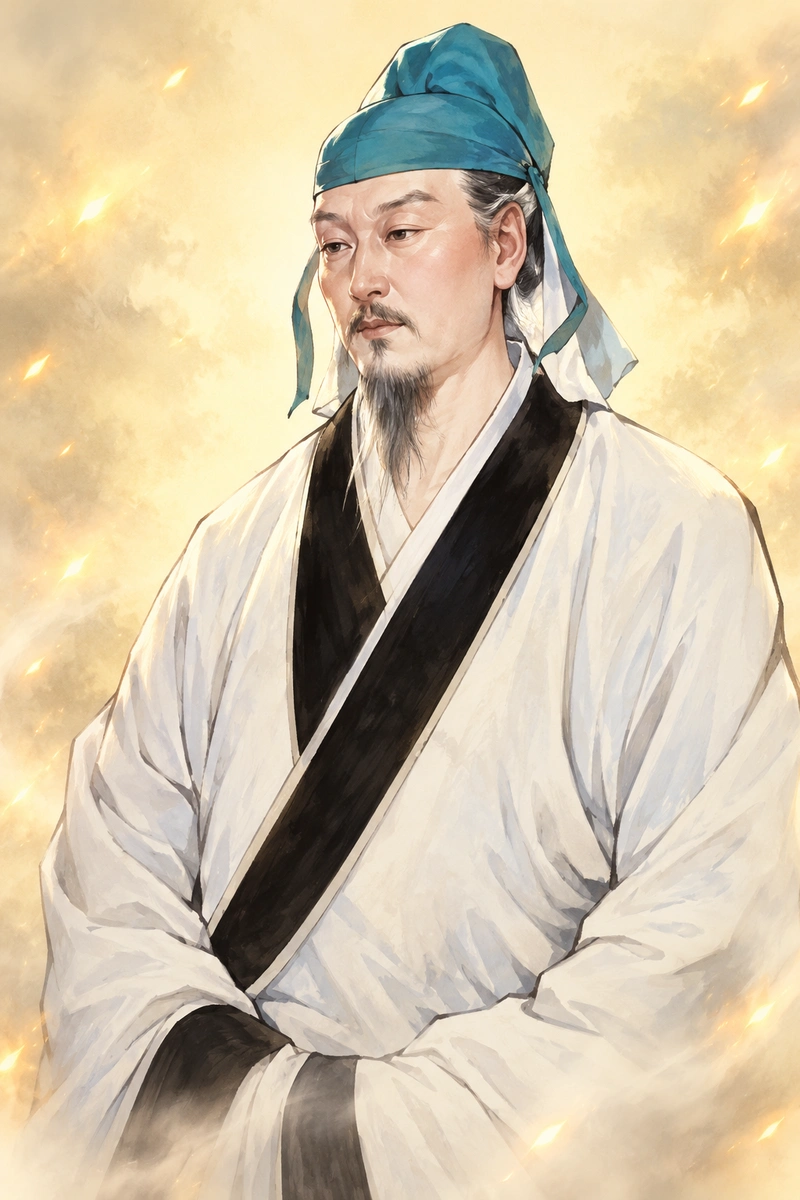

Qin Kui (秦桧, Tần Cối; 1090–1155; courtesy name Huizhi 会之), native of Jiangning (modern Nanjing), was a Grand Chancellor of the Southern Song Dynasty under Emperor Gaozong (Zhao Gou). Universally reviled in Chinese history as the quintessential treacherous minister (jianchen 奸臣), Qin Kui was the chief architect of the appeasement policy toward the Jurchen Jin dynasty, culminating in the tragic judicial murder of national hero Yue Fei.
Originally captured by Jurchen invaders during the Jingkang Incident of 1127 alongside Emperors Huizong and Qinzong, Qin Kui mysteriously returned south in 1130, claiming to have slain his guards and escaped. Gaining the absolute trust of Emperor Gaozong by advocating peace negotiations, he systematically purged hawkish generals and upright scholars from court. When Jin general Wuzhu demanded the execution of Yue Fei as an indispensable condition for peace, Qin Kui collaborated with his wife Lady Wang and suborned corrupt censors Moqi Xie and Zhang Jun to fabricate treasonous allegations against Yue Fei and his son Yue Yun.
When veteran general Han Shizhong furiously confronted Qin Kui to demand concrete evidence of Yue Fei’s treason, Qin Kui uttered the infamous phrase: “Mo Xu You” (莫须有 — ‘Perhaps there is; it may not be without cause’). On Chinese New Year’s Eve in 1142, Qin Kui had Yue Fei murdered in the Dali Temple prison. His surrender treaty ceded extensive northern territories and mandated humiliating annual tributes to the Jin. For centuries since, cast-iron statues of Qin Kui and Lady Wang have remained kneeling in shame before Yue Fei’s mausoleum by West Lake in Hangzhou, reviled and spat upon by generations of visitors.
Contents
Role in History & Literature (Song Shi & Shuo Yue Quan Zhuan)
History of Song (Song Shi, vol. 473, Biographies of Treasonous Ministers): “Qin Kui advocated peace to usurp authority, silenced the empire’s loyal voices, and slew heroic commanders like Yue Fei to satisfy the enemy’s appetite. His name remains synonymous with dynastic betrayal across ten thousand generations.”
General Yue Fei (Shuo Yue Quan Zhuan, Chapter 60): “Lady Wang urged Qin Kui: ‘Capturing a tiger is difficult, but releasing it is far harder.’ Hearing this venomous counsel, Qin Kui sealed Yue Fei’s death warrant in the Eastern Window, sealing his eternal infamy.”
Qin Kui — Historical & Literary Timeline
1090
Birth in Jiangning
Born into a scholar-gentry family; passes imperial examinations as Jinshi in 1115.
1127
Jingkang Incident
Captured by Jurchen invaders alongside the Northern Song imperial court and taken to the north.
1130
Return South & Court Ascension
Returns to Southern Song claiming escape; wins Emperor Gaozong’s favor with appeasement statecraft.
1138
Appointment as Grand Chancellor
Appointed Grand Chancellor; aggressively pushes peace treaties and purges resistance factions.
1141–1142
The Mo Xu You Murder of Yue Fei
Fabricates treason charges against Yue Fei; executes him in Dali Temple to appease the Jin.
1155
Death & Posthumous Condemnation
Dies in office; stripped of titles posthumously and commemorated by iron kneeling statues at Yue Fei’s tomb.
Key Relationships
Family
- Wife Lady Wang (王氏, Vương thị): Co-conspirator who famously warned him that releasing Yue Fei would invite disaster; knelt in iron effigy by his side.
- Adopted Son Qin Xi (秦熺, Tần Hi): Elevated to high bureaucratic and academic rank through Qin Kui’s nepotistic patronage.
Friends
- Sovereign / Protector Emperor Gaozong of Song (Zhao Gou) (宋高宗赵构, Tống Cao Tông): Southern Song founding monarch who backed Qin Kui’s appeasement to secure his throne and prevent Emperor Qinzong’s return.
- Co-conspirator Moqi Xie (万俟卨, Vạn Kỳ Tiết): Corrupt vice-censor who fabricated torture charges and evidence to execute Yue Fei.
- Military Accomplice Zhang Jun (张俊, Trương Tuấn): Senior military commander who colluded with Qin Kui to dismantle Yue Fei’s command structure.
Enemies
- Righteous Martyr Yue Fei (岳飞, Nhạc Phi): Supreme patriot general whom Qin Kui imprisoned and murdered on trumped-up charges to achieve peace with Jin.
- Heroic Youth Yue Yun (岳云, Nhạc Vân): Eldest son of Yue Fei, executed alongside his father at Dali Temple.
- Loyal General Han Shizhong (韩世忠, Hàn Thế Trung): Fierce Song loyalist who confronted Qin Kui over the baseless ‘Mo Xu You’ charges.
- Hawkish Statesman Zong Ze (宗泽, Tông Trạch): Elder statesman whose dying cries of ‘Cross the River!’ stood in stark contrast to Qin Kui’s appeasement.
Other
- Jurchen Diplomatic Contact Wuzhu (Wan-yan Zongbi) (完颜宗弼/兀术, Hoàn Nhan Tông Bật): Jin commander-in-chief who explicitly demanded Yue Fei’s death as a prerequisite for the 1142 Treaty of Shaoxing.
In History & Classical Literature
History of Song: The Notorious Excuse
“When Han Shizhong asked what proof justified Yue Fei’s execution, Qin Kui replied: ‘Though the letters cannot be found, the matter perhaps is not without cause (Mo Xu You 莫须有).’ Han Shizhong cried out: ‘How can three words like Mo Xu You satisfy the hearts of the world?!’”
In History: The Treaty of Shaoxing
Summary
Qin Kui dominated Southern Song foreign and domestic politics for nearly two decades. His appeasement treaty with Jin required Song to recognize Jin suzerainty, pay 250,000 taels of silver and silk annually, and surrender vast territories north of the Huai River.