
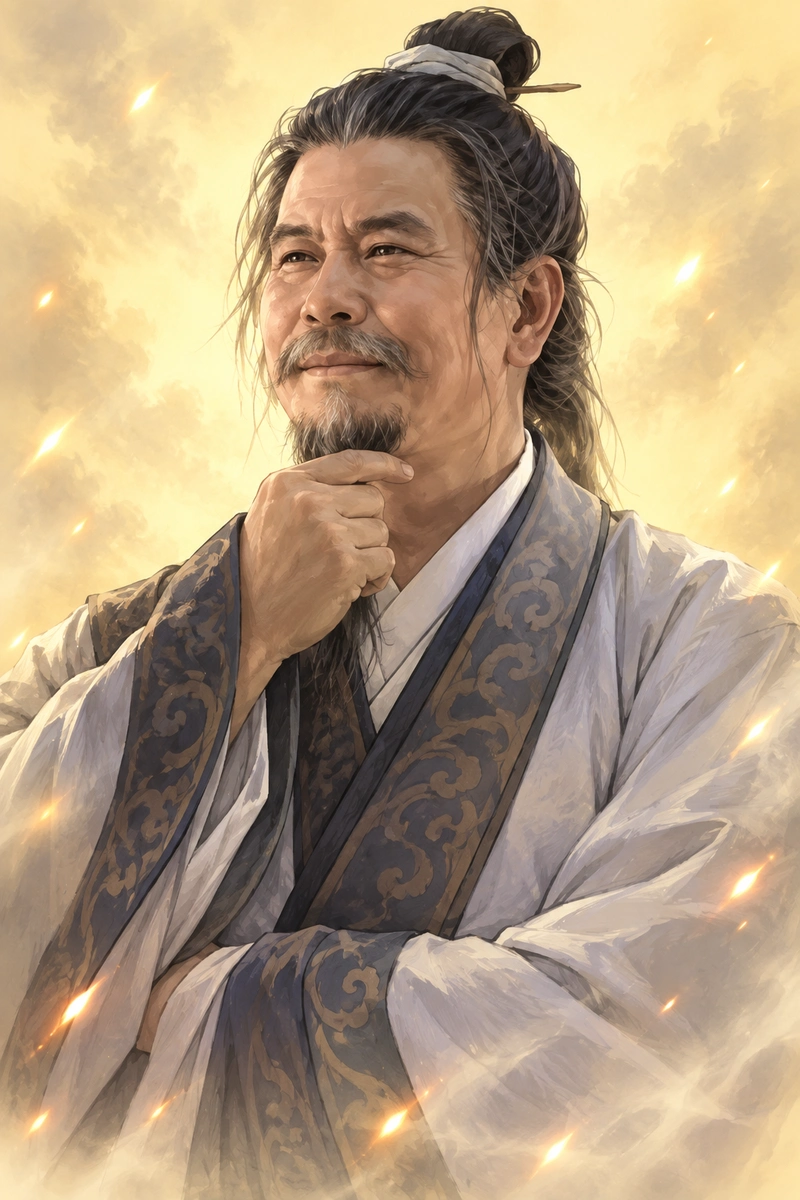
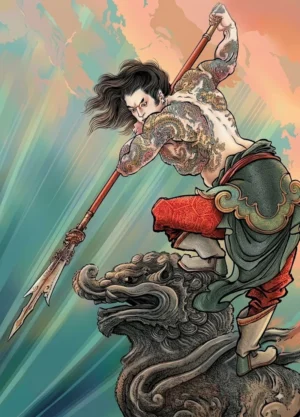
Shi Tai (史太, Sử Thái; commonly known as Squire Shi / 史太公), was the wealthy, upright patriarch of the Shi Family Village (史家庄) nestled beneath the peaks of Mount Shaohua in Huayin County, prominently introduced in the opening chapters of the classic epic Water Margin (水浒传, Shuihu Zhuan). Revered by local villagers for his benevolence and rectitude, he was the devoted father of Shi Jin (史进, Sử Tiến), the famed ‘Nine Dragons’ (九纹龙) hero of Mount Liang.
Distressed by his son’s youthful obsession with spearplay and neglect of agricultural stewardship, Squire Shi spared no expense hiring martial instructors from across the province. However, most turned out to be hollow braggarts until imperial arms instructor Wang Jin (王进), fleeing the tyrannical Grand Marshal Gao Qiu in the capital, sought overnight shelter at the Shi estate. Recognizing Wang Jin’s masterclass prowess after the instructor effortlessly disarmed young Shi Jin, Squire Shi humbly bowed, served him wine, and persuaded Wang Jin to stay for half a year to train his son in the eighteen martial disciplines.
Under Wang Jin’s rigorous tutelage funded by Squire Shi, Shi Jin transformed into a true warrior. Not long after Wang Jin departed for the Yan’an frontier garrison, Squire Shi fell ill and passed away in peace, giving his final patriarchal blessings to his son. His funeral drew hundreds of weeping peasants who had received his charity, setting the stage for Shi Jin’s fateful inheritance of the estate and eventual alliance with the Liangshan marshlands.
Contents
Role in Water Margin (Shuihu Zhuan)
Chapter 2 (Arms Instructor Wang Jin Escapes in Secret; Nine Dragons Shi Jin Creates Havoc): Squire Shi welcomes the exhausted Wang Jin and his elderly mother to the Shi manor. Witnessing his son defeated in a single pass, Squire Shi bows deeply: ‘Master Wang! My son has only encountered charlatans. If you deign to instruct him, I shall reward you with half my family fortune!’
Shi Tai — Historical & Literary Timeline
Northern Song
Patriarch of Shi Village
Manages the sprawling estates of Shi Family Village, earning widespread renown for generosity and village defense.
Northern Song
Youthful Training of Shi Jin
Accommodates his son’s passion for martial arts, commissioning masters to tattoo nine dragons across Shi Jin’s torso.
Ch. 2 / Northern Song
Sheltering Wang Jin
Offers asylum to capital instructor Wang Jin and commissions him to teach Shi Jin the eighteen martial weapons.
Ch. 2 / Northern Song
Peaceful Passing
Falls ill and passes away peacefully, bequeathing the estate to Shi Jin with ancestral admonitions of virtue.
Key Relationships
Family
- Son Shi Jin (史进, Sử Tiến – Nine Dragons): Beloved son whom Squire Shi nurtured, indulged, and guided into becoming a master martial artist through Wang Jin’s training.
Friends
- Honored Guest & Mentor Wang Jin (王进, Vương Tiến): Former Arms Instructor of the Imperial Eight Hundred Thousand Forbidden Troops, welcomed into the Shi estate and treated with filial reverence.
- Village Associate Li Ji (李吉, Lý Cát): Local hunter and neighbor who supplied game to the Shi estate before getting entangled with bandits.
Enemies
- Local Bandits Mount Shaohua Outlaws (Zhu Wu, Chen Da, Yang Chun): Bandit chieftains whose raids Squire Shi organized village militias to defend against during his lifetime.
Other
- Imperial Oppressor Gao Qiu (高俅, Cao Cầu): Corrupt Grand Marshal whose persecution of Wang Jin indirectly brought the master instructor to Squire Shi’s doorstep.
In Water Margin (Shuihu Zhuan)
Chapter 2: Welcoming the Imperial Instructor
“Squire Shi said to Wang Jin: ‘My ancestral line has tilled this soil for generations beneath Mount Shaohua. My only son neglects the plow and loves only weapons. If you, brother instructor, will open his eyes to true martial art, I shall be indebted to you in life and death.’”
In Classical Literature: Literary Significance
Summary
Squire Shi represents the traditional gentry archetype in Water Margin—an honorable, prosperous landowner whose generosity shields fugitives from imperial injustice, establishing the moral groundwork for the emergence of the 108 Liangshan heroes.