
Contents
Biography & Historical Record
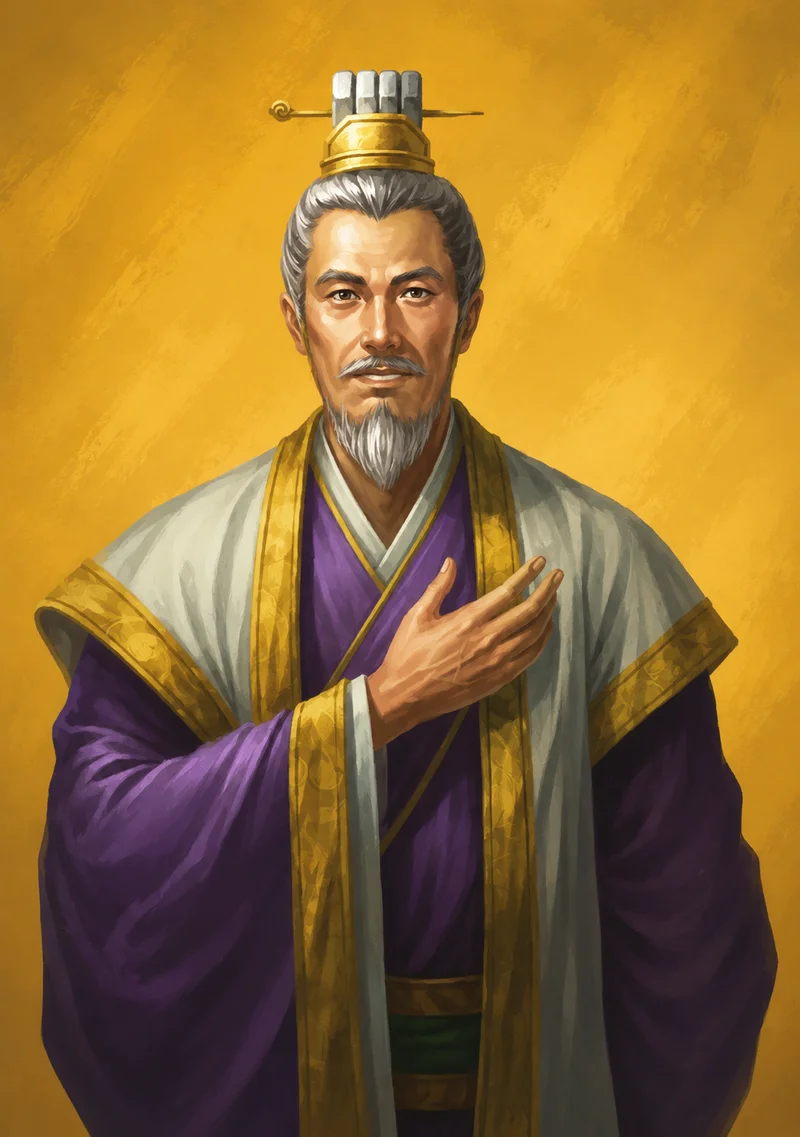
Shi Xie, courtesy name Weiyan, was a legendary ruler, high-ranking statesman, and warlord who served as the Grand Administrator (Taishou) of Jiaozhi Commandery and General of the Guards (Wei Jiangjun) during the late Eastern Han dynasty and Three Kingdoms period. Hailing from Guangxin County in Cangwu Commandery (modern-day Wuzhou, Guangxi), his family originally migrated south from Lu State during the Wang Mang interregnum. Documented in Chen Shou’s Records of the Three Kingdoms (Sanguozhi – Book of Wu, Biographies of Liu Du, Shi Xie, and Huan Jie) and Fan Ye’s Book of Later Han, Shi Xie governed the southern frontier region of Jiaozhou (encompassing modern northern Vietnam and Lingnan) with supreme autonomy, wisdom, and benevolence for over forty years, earning the venerated title ‘King Shi’ (Sĩ Vương) in regional folk tradition for introducing Chinese classical literature, Confucian ethics, and administrative stability to the southern realms.
Born in 137 AD under Emperor Shun of Han, Shi Xie demonstrated deep academic devotion from his youth. Journeying north to the imperial capital of Luoyang, he studied the Spring and Autumn Annals under the renowned scholar Liu Tao, earning nomination as an Exemplary Talent (Xiuliem) and appointment as a Gentleman of the Imperial Secretariat (Shangshu Lang). Following his father Shi Ci’s death, Shi Xie returned south and was officially commissioned as the Grand Administrator of Jiaozhi Commandery around 187 AD. Under his leadership, the Shi family expanded its political hegemony across the southern provinces: his younger brothers Shi Yi, Shi Huang, and Shi Wu were appointed Administrators of Hepu, Jiuzhen, and Nanhai commanderies respectively, effectively establishing a unified, family-ruled realm across the entire Lingnan and Jiaozhou territory.
Between 189 AD and 210 AD, as central China collapsed into warlord turmoil following Dong Zhuo’s usurpation, Shi Xie transformed Jiaozhou into a sanctuary of peace protected by mountain passes and southern seas. Renowned for his hospitality, patronage of scholarship, and moral integrity, Shi Xie opened his realm to thousands of refugee scholars, intellectuals, and gentry families fleeing civil war in the north. Among these refugees was the nationwide celebrated scholar Xu Jing (later Excellency over the Masses under Liu Bei) and Yuan Hui. Shi Xie welcomed Xu Jing with royal protocol, granting him luxurious estates, stipends, and absolute freedom to conduct scholarly research and education. For over two decades, Jiaozhou prospered as an oasis of peace, trade, and Confucian learning, maintaining order while central China burned.
Following the Battle of Red Cliffs in 208 AD, as Sun Quan’s Eastern Wu regime expanded south, Shi Xie executed a brilliant masterclass in flexible diplomacy. In 210 AD, when Sun Quan dispatched Bu Zhi as Inspector of Jiaozhou to establish imperial control, Shi Xie chose peaceful capitulation over bloody conflict. Leading his brothers and sons, Shi Xie formally submitted to Bu Zhi, integrating his autonomous domain into the Eastern Wu sphere while retaining complete internal authority. Every year, Shi Xie dispatched grand tribute caravans to Sun Quan’s capital at Jianye, laden with exotic southern treasures including peacocks, pearls, kingfisher feathers, incense, rhinoceros horns, and tropical fruits. Delighted by Shi Xie’s loyalty and immense economic contributions, Sun Quan elevated him to General of the Guards (Wei Jiangjun) and ennobled him as the Marquis of Longbian (Longbian Hou).
Throughout his long reign, Shi Xie maintained magnificent royal statecraft in Jiaozhi: historical texts record that when he traveled, incense was burned along the highways, attendants played traditional flutes and drums, and thousands of local citizens bowed beside the roads in veneration. Shi Xie passed away peacefully from old age at his capital in Jiaozhi in 226 AD at the extraordinary age of ninety. Following his death, Sun Quan reorganized Jiaozhou, leading to a tragic, bloody rebellion when Shi Xie’s son Shi Hui resisted Eastern Wu’s direct annexation, resulting in the total destruction of the Shi family’s political dominance.
Role in Romance of the Three Kingdoms
In Luo Guanzhong’s novel Romance of the Three Kingdoms, Shi Xie appears briefly across Chapters 49 to 67 as the Grand Administrator of Jiaozhi. Portrayed as a wise, peace-loving, and practical ruler, Shi Xie recognizes the overwhelming rise of Sun Quan’s power in Jiangdong and chooses diplomatic submission over futile military resistance. He regularly dispatches lavish tribute caravans featuring exotic southern treasures, peacocks, fine spices, and luminous pearls to Jianye, earning Sun Quan’s high favor and imperial titles. His peaceful governance highlights Jiaozhou as an autonomous, tranquil haven detached from the bloody central wars of the Three Kingdoms era.
Shi Xie (士燮) — Historical & Literary Timeline
Early Education and Appointment as Administrator of Jiaozhi
Studies the Spring and Autumn Annals in Luoyang; appointed Gentleman of the Imperial Secretariat before returning south to assume the post of Grand Administrator of Jiaozhi Commandery around 187 AD.
Establishing a Haven of Peace and Sheltering Xu Jing
Transforms Jiaozhou into an oasis of peace during the Northern warlord chaos; welcomes thousands of refugee scholars, treating the famous scholar Xu Jing with royal honors and hospitality.
Submitting to Bu Zhi and Tribute Diplomacy
Leads his brothers to submit to Sun Quan’s Inspector Bu Zhi; establishes annual tribute diplomacy sending peacocks, pearls, and incense to Jianye, earning appointment as General of the Guards and Marquis of Longbian.
Passing in Jiaozhi at Ninety Years of Age
Passes away peacefully of old age in Jiaozhi at the age of ninety; honored by posterity as ‘King Shi’ for establishing literature and peace across the southern realm.
Key Relationships
Family
- Shi Ci (士赐, Sĩ Tứ): Father who served as the Grand Administrator of Rinan Commandery under the Eastern Han dynasty.
- Shi Yi (士壹, Sĩ Nhất): Younger brother who served as the Grand Administrator of Hepu Commandery, helping establish the Shi clan’s unified rule across Jiaozhou.
- Shi Huang (士䵋, Sĩ Vĩ): Younger brother who served as the Grand Administrator of Jiuzhen Commandery, extending the family’s administrative hegemony southward.
- Shi Wu (士武, Sĩ Vũ): Younger brother who served as the Grand Administrator of Nanhai Commandery, governing the northern regions of Jiaozhou.
- Shi Xin (士廞, Sĩ Hâm): Eldest son who was sent to the Eastern Wu court as a hostage and diplomatic liaison, securing royal favor and surviving the later collapse of the clan.
- Shi Hui (士徽, Sĩ Huy): Son who took power following Shi Xie’s death in 226 AD, leading an ill-fated resistance against Eastern Wu direct rule that resulted in his execution.
- Shi Zhi (士祗, Sĩ Chỉ): Son who held administrative rank in Jiaozhou and was executed alongside Shi Hui after surrendering to Eastern Wu forces in 226 AD.
- Shi Gan (士干, Sĩ Cán): Son who served in the regional administration and was executed in 226 AD following the suppression of Shi Hui’s uprising.
- Shi Song (士颂, Sĩ Tụng): Son who served within the Jiaozhou governance and was executed in 226 AD after the Eastern Wu annexation.
Friends
- Xu Jing (许靖, Hứa Tĩnh): Renowned northern scholar and future Shu Han statesman who fled the central civil wars; Shi Xie sheltered him in Jiaozhou with royal hospitality and generous stipends.
- Yuan Hui (袁徽, Viên Huy): Prominent refugee scholar hosted and protected by Shi Xie, who wrote letters to central authorities praising Shi Xie’s scholarship, virtue, and benevolent governance.
- Bu Zhi (步骘, Bộ Chất): Eastern Wu Inspector of Jiaozhou to whom Shi Xie peacefully submitted in 210 AD, collaborating closely to integrate the southern commanderies under Eastern Wu suzerainty.
Enemies
- No information
Other
- Liu Tao (刘陶, Lưu Đào): Prominent Han scholar and mentor in Luoyang under whom Shi Xie studied the Spring and Autumn Annals during his youth.
- Sun Quan (孙权, Tôn Quyền): Sovereign of Eastern Wu to whom Shi Xie offered loyalty and annual tribute caravans, receiving elevation to General of the Guards and Marquis of Longbian while retaining autonomous rule.
In Novel
Shi Xie (士燮, Sĩ Nhiếp) does not have a securely verified named appearance in the supplied edition under the exact Chinese name 士燮. His historical rule of Jiaozhi should not be imported into the novel timeline without an exact textual occurrence.
In History
Summary
- Shi Xie (士燮, Sĩ Nhiếp), courtesy name Weiyan (威彦), was the long-serving Administrator of Jiaozhi and one of the most important political figures in the history of northern Vietnam during the late Eastern Han and early Three Kingdoms period.
Period I — Administration of Jiaozhi
- Shi Xie became Administrator of Jiaozhi in 187 and governed the commandery for decades during the weakening of Han central authority.
- He maintained considerable autonomy while formally operating within the Han political order and cultivated relationships with neighboring commanderies.
Period II — Relations with Sun Quan
- After the rise of Eastern Wu, Shi Xie entered the political orbit of Sun Quan while continuing to exercise substantial influence in Jiaozhi.
- His family and associates helped maintain Wu influence in the far south.
Period III — Death and Legacy
- Shi Xie died in 226 at the age of 89. After his death, Wu tightened direct control over Jiaozhou.
- Later Vietnamese tradition remembered him as Sĩ Vương and attributed a much broader cultural and civilizing role to him than the Chinese dynastic histories alone establish.
Historical Record
- Shi Xie was historical. His career is documented in Sanguozhi and later became an important part of Vietnamese historical memory.