Here is the exhaustive biography, fictional background, historical records, and Romance of the Three Kingdoms narrative for Xi Ni (奚泥) (d. 225 AD), a tribal leader and commander of the rattan-armored troops serving under King Wutugu of Junchu during the Southern Campaign of the Three Kingdoms period.
Contents
Tribal Background & Service Under King Wutugu
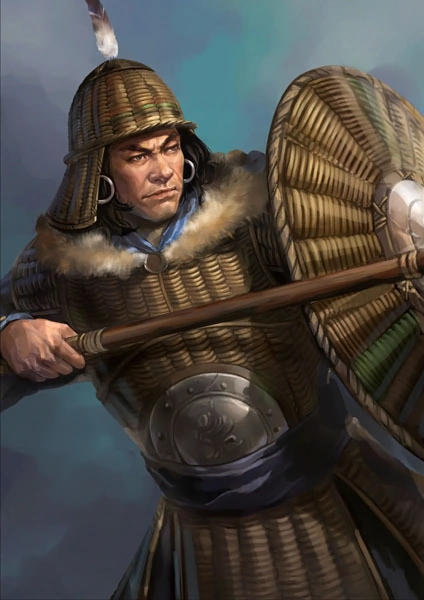
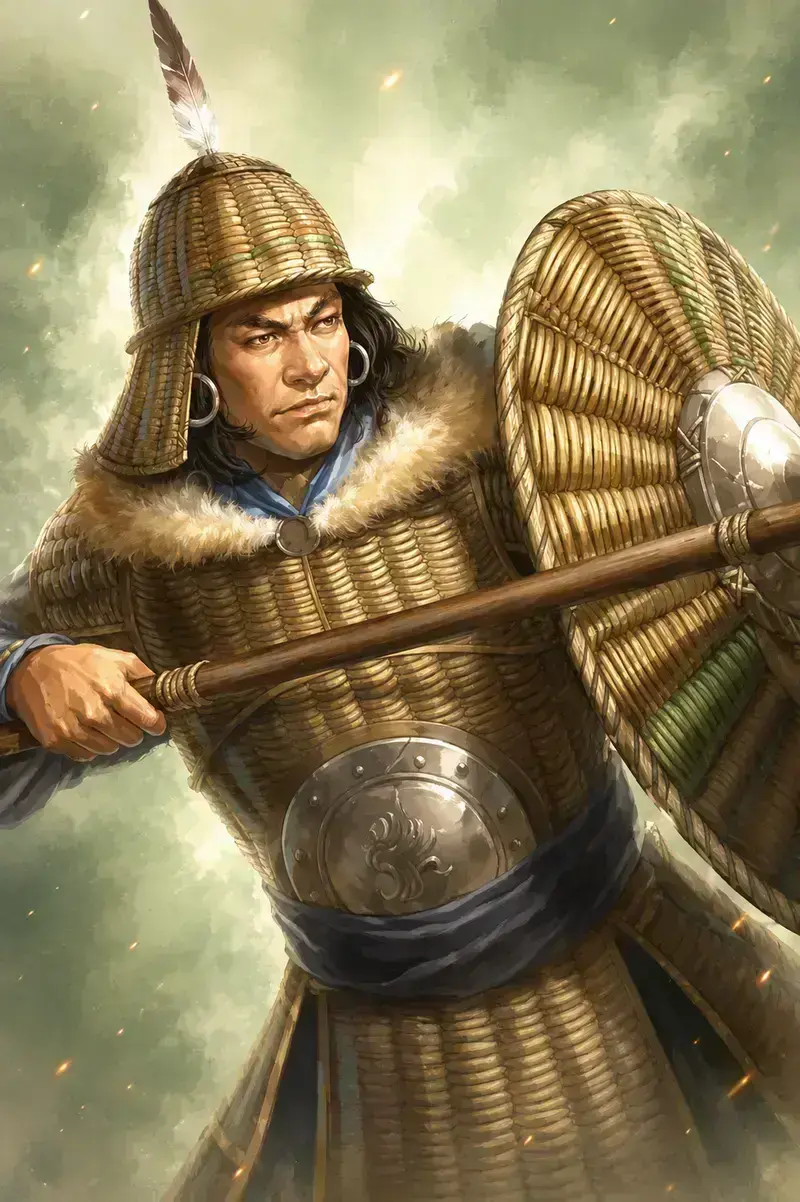
Xi Ni was a fierce tribal general operating within the southern regions of Nanzhong under the banner of King Wutugu of Junchu. He was entrusted with commanding elite warriors outfitted in impenetrable rattan armor, which was impervious to ordinary swords and arrows. Alongside fellow commander Tu An, Xi Ni played a vital tactical role during the defense of Nanzhong against Zhuge Liang’s southern expedition.
The Campaign against Shu & Death at Panshe Valley
During the conflict against Shu Han forces in 225 AD, Xi Ni and Tu An led the rattan-armored troops to aggressively pursue Wei Yan’s retreating forces across multiple engagements. Although initially successful in driving the Shu army back fifteen consecutive times, the Nanman forces were ultimately lured into a deep ravine known as Panshe Valley. Trapped by Zhuge Liang’s well-prepared fire attack, the highly flammable rattan armor proved fatal, and Xi Ni perished alongside King Wutugu and his entire army in the inferno.
Xi Ni (奚泥) — Literary Timeline
Deployment of Rattan Armor & Pursuit of Wei Yan
Joins King Wutugu’s elite forces. Alongside Tu An, commands the rattan-armored troops and repeatedly pursues Wei Yan’s feigned retreats across Nanzhong in Chapter 90.
Ambush at Panshe Valley & Death
Trapped in Panshe Valley during Zhuge Liang’s military campaign, Xi Ni is consumed by the devastating fire attack, perishing with the rest of the rattan-armored army in Chapter 90.
Romance of the Three Kingdoms Narrative
In Luo Guanzhong’s historical novel Romance of the Three Kingdoms, Xi Ni is featured prominently in Chapter 90 as a trusted subordinate of King Wutugu. He commands the fearsome rattan-armored warriors who give Shu forces intense trouble by shrugging off blade and arrow attacks. After driving Wei Yan’s forces back fifteen times into Panshe Valley, Xi Ni and his troops fall victim to Zhuge Liang’s trap, where explosive landmines and fire weapons destroy their oil-soaked rattan armor, resulting in his tragic demise.
For detailed historical records, archives, and official chronicles, explore Xi Ni on Wikipedia.
Key Relationships
Family
- No information
Friends
- Wutugu (兀突骨, Ngột Đột Cốt): Sovereign ruler of Junchu and leader of the rattan-armored troops; Xi Ni served as his trusted commander during the Southern Campaign.
- Tu An (土安, Thổ An): Fellow tribal commander who fought alongside Xi Ni, jointly leading the rattan-armored vanguard against Shu Han forces.
- Meng Huo (孟获, Mạnh Hoạch): King of Nanzhong who solicited the military aid of Wutugu and his commanders, including Xi Ni, to defend against the Shu expedition.
Enemies
- Zhuge Liang (诸葛亮, Gia Cát Lượng): Prime Minister of Shu Han who orchestrated the tactical fire trap at Panshe Valley in 225 AD, which resulted in the death of Xi Ni and his entire unit.
- Wei Yan (魏延, Ngụy Diên): Shu Han general who utilized feigned retreats to lure Xi Ni and his rattan-armored troops into the fatal ambush at Panshe Valley in 225 AD.
Other
- No information
In Novel
Chapter 90
- Xi Ni (奚泥, Hề Nê): One of the twin joint-commanders of the Wuge kingdom’s rattan-armored warriors under King Wutugu (兀突骨, Ngột Đột Cốt); he led his seemingly invincible troops across the Peach Blossom River to repel Shu forces, but was lured into the defile of Hutao Valley and burned to death in Zhuge Liang’s (诸葛亮, Gia Cát Lượng) explosive fire trap.
In History
Summary
- Xi Ni (奚泥, Hề Nê) is a fictional character associated with Luo Guanzhong’s Romance of the Three Kingdoms. He is portrayed as a subordinate of Wutugu (兀突骨, Ngột Đột Cốt) during Zhuge Liang (诸葛亮, Gia Cát Lượng)‘s southern campaign.
Historical Record
- The historical records do not provide a securely verified biography for an individual named 奚泥. The character’s campaign against Shu and death in the fire attack are literary events rather than securely documented historical events.
Gallery