
Contents
Biography & Historical Record
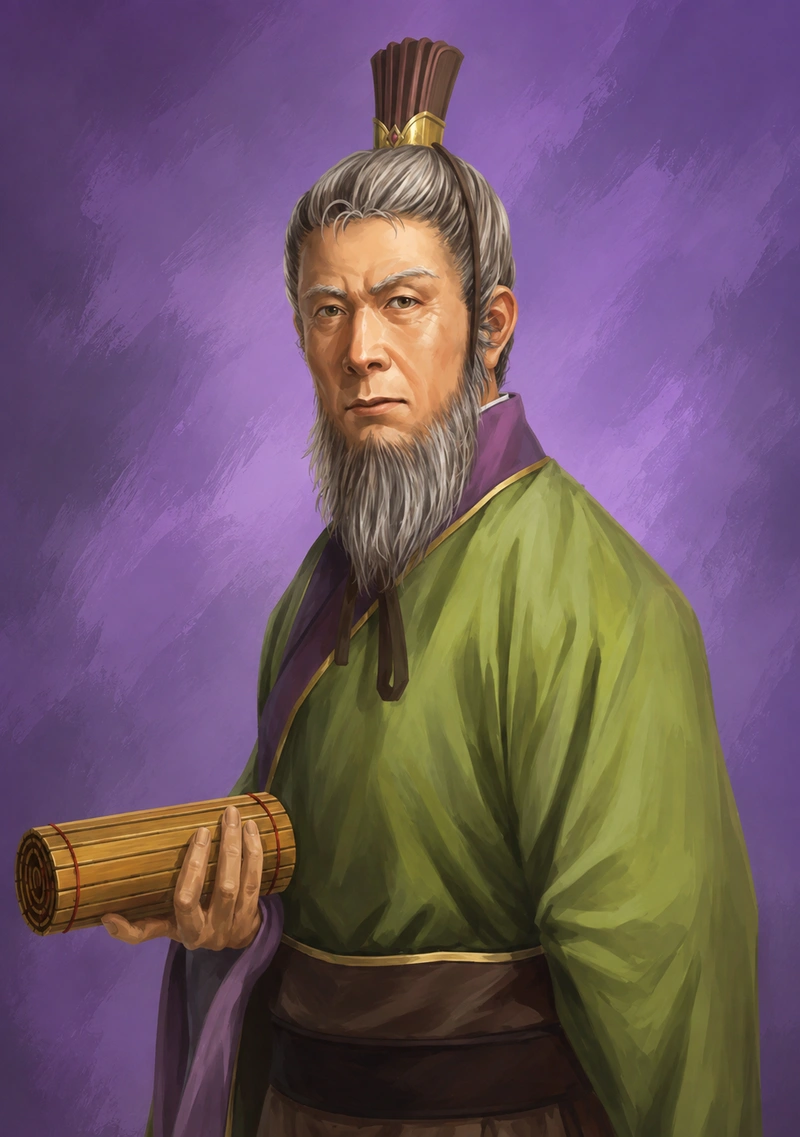
Xu Ci, courtesy name Rendou, was a distinguished Confucian scholar, imperial ritualist, legal scholar, and high-ranking civil official serving the Shu Han state during the Three Kingdoms period. Hailing from Nanyang Commandery in Jing Province (modern-day Nanyang, Henan Province), Xu Ci was celebrated across ancient China for his profound erudition and deep mastery of classical rites. Documented in Chen Shou’s official dynastic history Records of the Three Kingdoms (Sanguozhi – Book of Shu, Volume 42, Biography of Xu Ci) and Sima Guang’s Zizhi Tongjian, Xu Ci was historically renowned as one of the foundational intellectual architects who established the formal court etiquette, state rituals, and dynastic institutions for Liu Bei’s newly established Shu Han empire.
In his early years during the late Eastern Han dynasty, Xu Ci sought out education under the legendary polymath Liu Xi, studying classical philosophy and mastering the core Confucian canons, including the Classic of Changes (I Ching), Classic of History (Shujing), Mao Poetry (Mao Shi), Analects of Confucius (Lunyu), and especially the Three Books of Rites (Zhou Li, Yili, Li Ji). As war engulfed Jing Province, Xu Ci migrated south to Jiaozhou alongside the famous scholar Xu Jing, seeking refuge from the widespread chaos. In 214 AD, after Liu Bei successfully pacified Yi Province and took control of Chengdu, he recruited top intellectuals from across the realm. Recognizing Xu Ci’s exceptional scholarship and expertise in classical rites, Liu Bei appointed him as an Imperial Scholar (Xueshi) to oversee the restoration of educational standards and state ritual traditions in Chengdu.
In 221 AD, when Liu Bei claimed the imperial title as Emperor of Shu Han to preserve the Han dynasty’s mandate, the newborn empire desperately needed a formal code of imperial rituals, court ceremonies, and legal standards to establish dynastic legitimacy. Liu Bei assigned Xu Ci and fellow scholar Meng Guang the monumental task of researching ancient Han precedent and drafting the official system of court protocol, imperial sacrificial rites, and state administrative ceremonies. Despite his intellectual brilliance, Xu Ci developed a notoriously fierce personal and academic rivalry with fellow scholar Hu Qian. The two scholars frequently engaged in bitter, chaotic arguments over subtle interpretations of ancient ritual texts, sometimes escalating into loud altercations during imperial court gatherings. Rather than issuing harsh punishments, Emperor Liu Bei handled the feud with humor: during a grand palace banquet, Liu Bei commissioned court actors to perform a satirical comedy mocking the physical brawls and verbal disputes between Xu Ci and Hu Qian. The hilarious performance caused the assembled court to burst into laughter, leaving both scholars deeply embarrassed and compelling them to exercise greater restraint.
During the reign of Emperor Liu Shan, Xu Ci was promoted to the prestigious position of Senior Grand Master (Da Zhong Dai Fu), continuing to serve as a supreme consultant on state ceremony, ritual policy, and imperial education. His scholarly legacy and expertise in the Three Books of Rites were passed down to his son Xu Xun, who inherited his father’s academic mantle and also served as an Imperial Scholar in Shu Han. Xu Ci passed away peacefully of old age in office, honored as an immortal scholar whose intellectual contributions helped lay the administrative and ritual foundations of the Shu Han state.
Famous Quotes & Historical Sayings
In the historical records of Records of the Three Kingdoms (Sanguozhi – Book of Shu, Volume 42), historian Chen Shou recorded the paramount praise for Xu Ci’s scholarship and ritual legacy: ‘Xu Ci Rendou was a scholar of immense erudition, penetrating the deepest mysteries of the Three Books of Rites and classical Confucian canons. When Emperor Zhao Lie (Liu Bei) founded the realm in Yi Province, Xu Ci was entrusted alongside Meng Guang to draft the imperial court protocol and state ceremonies. Though plagued by petty academic disputes with Hu Qian, his foundational work in establishing imperial rites and preserving Han traditions provided the Shu Han court with its enduring dynastic majesty.’
Xu Ci (許慈) — Historical & Literary Timeline
Mastering Classical Canons & Refuge in Jiaozhou
Studies classical rites under polymath Liu Xi in Nanyang; migrates south to Jiaozhou alongside Xu Jing to escape the chaos of the late Han warlord conflicts.
Entering Liu Bei’s Service in Chengdu
Recruited by Liu Bei after the pacification of Yi Province; appointed as Imperial Scholar (Xueshi) in Chengdu to manage state education and ritual reform.
Drafting Imperial Rites for the Shu Han Dynasty
Commissioned alongside Meng Guang to research ancient precedents and establish the official imperial rites, court protocols, and state ceremonies for Liu Bei’s enthronement.
Senior Grand Master & Scholarly Legacy
Promoted to Senior Grand Master (Da Zhong Dai Fu) under Emperor Liu Shan; continues advising on imperial rites until his peaceful passing in office, leaving his son Xu Xun to inherit his scholarly position.
Key Relationships
Family
- Xu Xun (许逊, Hứa Tốn): Son who inherited his father’s academic mastery of the Three Books of Rites and succeeded him as an Imperial Scholar in Shu Han.
Friends
- Xu Jing (许靖, Hứa Tĩnh): Fellow scholar and companion who traveled south alongside Xu Ci to seek refuge in Jiaozhou during the chaos of the late Eastern Han dynasty before both entered Liu Bei’s service.
- Meng Guang (孟光, Mạnh Quang): Colleague and fellow classical scholar who was jointly commissioned with Xu Ci in 221 AD to research Han precedents and formulate the official imperial rites and court protocols for Shu Han.
Enemies
- Hu Qian (胡潜, Hồ Tiềm): Academic rival and fellow scholar who engaged in bitter disputes and physical brawls with Xu Ci over ritual interpretations, prompting Liu Bei to commission a satirical court comedy to embarrass and pacify them.
Other
- Liu Xi (刘熙, Lưu Hy): Renowned scholar and mentor under whom Xu Ci studied classical philosophy, the Three Books of Rites, and core Confucian canons in his youth.
- Liu Bei (刘备, Lưu Bị): Founding Emperor of Shu Han who recruited Xu Ci as an Imperial Scholar in 214 AD, tasked him with designing the state ceremonies for his imperial enthronement in 221 AD, and humorously curbed his court disputes.
- Liu Shan (刘禅, Lưu Thiền): Second Emperor of Shu Han, during whose reign Xu Ci was elevated to the prestigious post of Senior Grand Master.
In Novel
Chapter 104
- Xu Ci (许慈, Xǔ Cí): Xu Ci is a Shu scholar and classical scholar who serves in Chengdu. He is involved in the scholarly and ritual affairs of the Shu court and represents the highly formal literary culture surrounding the government of Liu Shan and Zhuge Liang.
In History
Summary
- Xu Ci (许慈, Hứa Từ) was a scholar and classical expert who served Shu Han.
Scholarly Career
- Xu Ci was known for his learning in the classical texts and for his role in preserving and transmitting scholarly traditions within Shu.
- He was one of the learned officials whom Liu Bei and later Zhuge Liang relied upon to strengthen the intellectual and ceremonial foundations of the new Shu government.
Scholarship and Court Life
- Historical accounts portray him as a highly learned but sometimes contentious scholar, reflecting disputes among specialists over ritual and classical interpretation.
- Classification: Historical / Scholarly.