
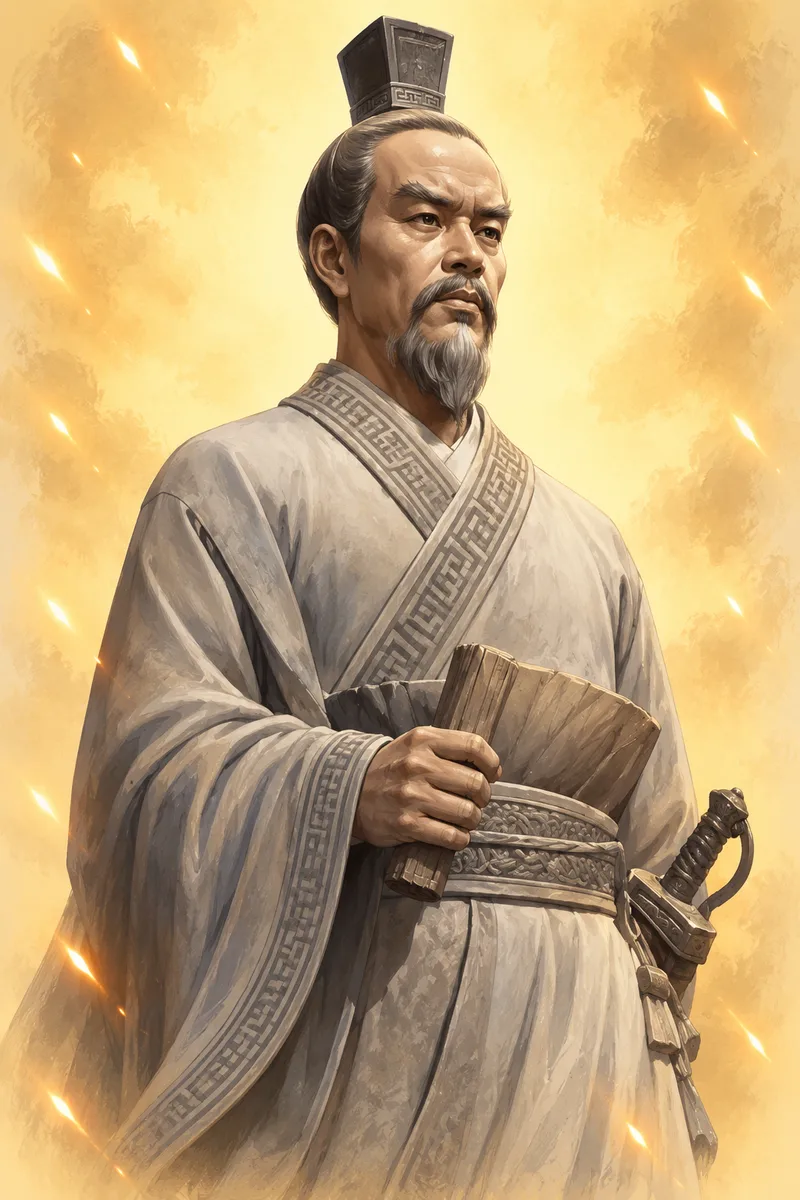
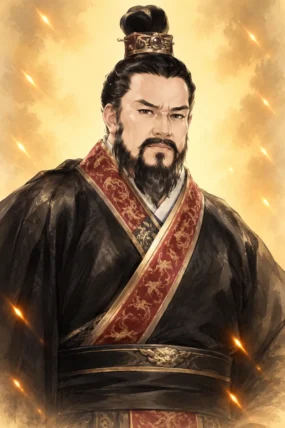

Zhao Tuo (赵佗, Triệu Đà; c. 240–137 BC; King Wu of Nanyue 南越武王), native of Zhending in Zhao, was the legendary Qin general and founding monarch of the kingdom of Nanyue (Nam Việt), reigning for over seventy years until his death at the extraordinary age of over one hundred.
Dispatched by Qin Shi Huang in 214 BC alongside General Ren Xiao with an army of five hundred thousand soldiers to conquer Lingnan, Zhao Tuo pacified the Baiyue tribes and founded the city of Panyu (Guangzhou). In 208 BC, as the Qin Empire dissolved into civil war, the dying Ren Xiao appointed Zhao Tuo Supreme Military Commissioner of Nanhai, advising him to sever the mountain passes and establish an independent state. Zhao Tuo immediately barred the strategic passes, repelled northern warlords, and unified Nanhai, Guilin, and Xiang commanderies, proclaiming himself King Wu of Nanyue.
Adopting indigenous Baiyue customs—wearing his hair in a topknot, sitting cross-legged, and promoting intermarriage between Han settlers and the Yue people—Zhao Tuo established lasting peace and civilization across Lingnan. In 196 BC, Emperor Gaozu Liu Bang dispatched the eloquent scholar Lu Jia (陆贾) to Panyu; Zhao Tuo was won over by Lu Jia’s Confucian wisdom, voluntarily submitting to Han suzerainty as a vassal king while maintaining independent dominion. He lived through the reigns of Qin Shi Huang, Er Shi, Liu Bang, Emperor Hui, Empress Lü, Emperor Wen, and Emperor Jing, passing away in 137 BC during the reign of Emperor Wu of Han as one of antiquity’s most enduring monarchs.
Contents
Role in History (Shiji & Dai Viet Su Ky Toan Thu)
Records of the Grand Historian (Shiji, vol. 113, House of Nanyue): “Zhao Tuo sat cross-legged with unkempt hair to receive Lu Jia. Lu Jia admonished him: ‘You are a gentleman of the Central Plains; why abandon the robes of your ancestors to emulate barbarians?!’ Zhao Tuo leaped to his feet, apologized, and received the royal seal of Han.”
Complete Annals of Dai Viet (Dai Viet Su Ky Toan Thu): “Triệu Vũ Vương was courageous and wise; he united the Yue realms, opened borders, and laid the foundations of sovereign rule in the south.”
Zhao Tuo — Historical & Literary Timeline
c. 240 BC
Birth in Zhending
Born in the State of Zhao; joins Qin imperial military command.
214 BC
The Conquest of Lingnan
Commands the 500,000-man Qin expeditionary army alongside Ren Xiao.
208 BC
Sealing the Mountain Passes
Ren Xiao dies; Zhao Tuo bars the passes and consolidates Lingnan.
204 BC
Founding of Nanyue
Proclaims himself King Wu of Nanyue, establishing his capital at Panyu.
196 BC
Submission to Han
Receives Han envoy Lu Jia; accepts vassal king status from Liu Bang.
137 BC
Passing at Age 103
Passes away in Panyu after a seventy-year reign; succeeded by grandson Zhao Mo.
Key Relationships
Family
- Grandson & Successor Zhao Mo (赵眜 – King Wen of Nanyue): Grandson whose magnificent jade burial suit was discovered in Guangzhou in 1983.
- Ancestral Home Lineage of Zhending: Honored by Emperor Wen of Han who tended his ancestral graves.
Friends
- Commanding Mentor Ren Xiao (任嚣, Nhậm Ngao): Qin commander who advised him to establish the independent state of Nanyue.
- Han Diplomat Lu Jia (陆贾, Lục Giả): Confucian scholar who persuaded Zhao Tuo to accept Han peace treaties.
Enemies
- Hostile Han Empress Empress Lü (吕后): Banned iron exports to Nanyue, prompting Zhao Tuo to briefly declare himself Emperor.
- Warlords of Late Qin Marauders of the Central Plains: Barred from entering Lingnan.
Other
In Shiji
The Wisdom of the South
“Lu Jia asked: ‘Is your estate greater, or the Son of Heaven’s?’ Zhao Tuo laughed: ‘Had I risen in the Central Plains, how would I have been inferior to Liu Bang?! Yet here in the south, amidst my mountains and seas, I am happy to reign in peace.’”
Historical Significance
Zhao Tuo was the founder of urban civilization in Guangdong and Guangxi, whose cultural integration of Han and Baiyue peoples laid the bedrock of South China and northern Vietnam.