

Contents
Biography & Historical Record
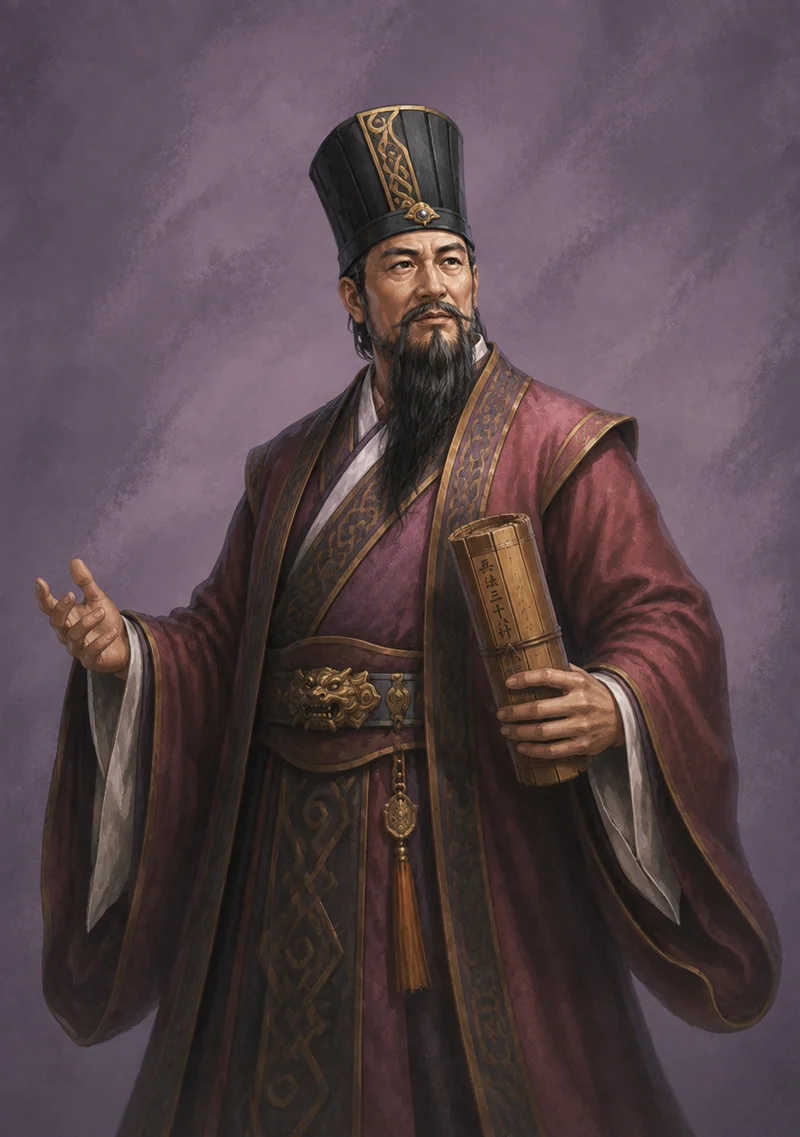
Zhao Dian, courtesy name Zhongjing, was a highly celebrated and fiercely upright senior statesman of the Eastern Han dynasty who attained the supreme office of Minister Guards (Weiwei). Born in Chengdu, Shu Commandery (modern-day Chengdu, Sichuan Province), he was the second son of Grand Commandant Zhao Jie. From his youth, Zhao Dian was acclaimed for his frugality, studious nature, and profound mastery of classical Confucian scriptures. Entering imperial service initially as a Court Gentleman and subsequently as a Palatine Attendant, he served as an imperial tutor, instructing the young Han emperor in classical statecraft.
During the reign of Emperor Huan of Han, the emperor sought to expand the imperial pleasure grounds at Hongchi Lake by more than a hundred qing. Zhao Dian submitted an uncompromising memorial admonishing the emperor, arguing that enlarging an already expansive pleasure lake contradicted the frugal virtue of ancient sage rulers and demonstrated a lack of compassion for the suffering populace. Impressed and swayed by his tutor’s moral clarity, Emperor Huan canceled the extravagant construction project.
Upon the death of his father, Zhao Jie, Zhao Dian inherited the noble title of Marquis of Kouting. He was successively appointed as Grand Administrator of Hongnong and later Administrator of Youfufeng before being recalled to the imperial capital at Luoyang to serve as Minister Herald (Dahonglu). During this era, Emperor Huan liberally bestowed noble marquisates upon unmeritorious eunuchs and imperial relatives, provoking widespread private discontent among high officials. Standing alone in open defiance, Zhao Dian submitted an impassioned ssu warning that rewarding the unmeritorious demoralized genuine public servants and violated Han Founder Liu Bang’s sacred White Horse Oath that non-meritorious figures should never be enfeoffed as marquises. He urged the throne to revoke all unearned titles to preserve ancestral law. Though his counsel was not fully enacted, his fearless moral courage earned him immense awe and respect across the court.
When political turmoil erupted in his home jurisdiction and local officials attempted to implicate his lineage, Zhao Dian demonstrated uncompromising integrity. He immediately surrendered his official seal, cast off his robes of office, handed them over to the local magistrate, and galloped alone on horseback night and day back to the imperial capital to submit to judgment. Deeply moved by his moral rectitude, high ministers and court officials stood up collectively in his defense, petitioning the throne to forfeit their own official salaries to redeem Zhao Dian from punishment. Exonerated by imperial decree, Zhao Dian was subsequently promoted to Privy Purse and ultimately elevated to Minister Guards (Weiwei), taking supreme command of the imperial palace guards protecting the throne. Renowned alongside seven other esteemed scholars as one of the Eight Worthies (Ba Jun) of his generation, Zhao Dian fell gravely ill and died just as the court grand ministers unanimously nominated him for the supreme position of Grand Tutor. Dowager Empress Dou dispatched a special imperial envoy to attend his funeral, presenting royal silk seals and granting him the posthumous title Marquis Xian.
Role in Romance of the Three Kingdoms
In Luo Guanzhong’s classic 14th-century historical novel Romance of the Three Kingdoms, Zhao Dian stands as an important historical precursor whose moral rectitude and ministerial prestige highlight the institutional resistance against imperial corruption prior to the Yellow Turban Rebellion. Appearing in genealogical commentaries and historical court lineage backstories in Chapter 1 and Chapter 2, Zhao Dian embodies the Confucian ministerial ideal that attempted to restrain imperial extravagance and curb corrupt court factions. His fearless admonitions against unmeritorious enfeoffments and his heroic ride to Luoyang illustrate the moral strength of the Han civil court before its collapse, setting the historical and ethical standard inherited by his nephews Zhao Qian and Zhao Wen during the chaotic Three Kingdoms era.
Renowned as one of the Eight Worthies and serving as Minister Guards, Zhao Dian’s life exemplifies the unyielding moral courage of the Eastern Han court ministers, whose fearless remonstrances and incorruptible integrity preserved the ethical foundation of the Han dynasty prior to its final fragmentation.
Zhao Dian (趙典) — Literary & Historical Timeline
Admonishing Emperor Huan at Hongchi Lake
Serves as Palatine Attendant and imperial tutor; submits a stern memorial criticizing Emperor Huan’s proposed expansion of Hongchi Lake, persuading the emperor to halt the wasteful project.
Inheriting Marquisate and Opposing Unmeritorious Enfeoffments
Inherits the title Marquis of Kouting following Zhao Jie’s death; serves as Minister Herald and fearlessly petitions Emperor Huan to revoke unmeritorious marquisates granted to court eunuchs.
Galloping to Capital and Court Vindication
Resigns office in protest during regional official harassment, riding day and night to Luoyang to submit to trial; exonerated after court ministers offer their salaries to redeem him, leading to his appointment as Minister Guards.
Nomination for Grand Tutor and Posthumous Honors
Nominated unanimously for Grand Tutor by high ministers; falls ill and dies before receiving imperial decree, receiving posthumous honors as Marquis Xian from Dowager Empress Dou.
Key Relationships
- Family:
- Zhao Jie — Grand Commandant of the Eastern Han dynasty and father of Zhao Dian.
- Zhao Qian — Grand Administrator of Runan and Grand Commandant, nephew of Zhao Dian.
- Zhao Wen — Excellency over the Masses during the late Eastern Han dynasty, nephew of Zhao Dian.
- Comrades / Allies:
- Emperor Huan of Han — Eastern Han emperor who accepted Zhao Dian’s tutor admonition regarding Hongchi Lake.
- Dowager Empress Dou — Empress Dowager who honored Zhao Dian with imperial silk seals and the posthumous title Marquis Xian.
- Enemies / Opponents:
- Liang Ji — Tyrannical Regent General whose court faction and eunuch allies Zhao Dian fiercely opposed.
For detailed historical records, archives, and official chronicles, explore Zhao Dian on Wikipedia.
In Novel
Zhao Dian (赵典, Zhào Diǎn) does not have a securely verified named appearance in the supplied edition under the exact Chinese name 赵典. His historical career should not be converted into an In Novel timeline without an exact textual match.
In History
Summary
- Zhao Dian (赵典, Triệu Điển) was a historical Eastern Han official and military-administrative figure.
Period I — Eastern Han Service
- Zhao Dian held senior offices under the Eastern Han court and belonged to the Zhao family of officials active during the late Han period.
- He was associated with the central government during the political instability that preceded the Yellow Turban rebellion.
Historical Record
- Zhao Dian was historical. The exact offices and chronology should be taken from the relevant Han biographies rather than reconstructed from later novel scenes.