
Contents
Biography & Historical Record
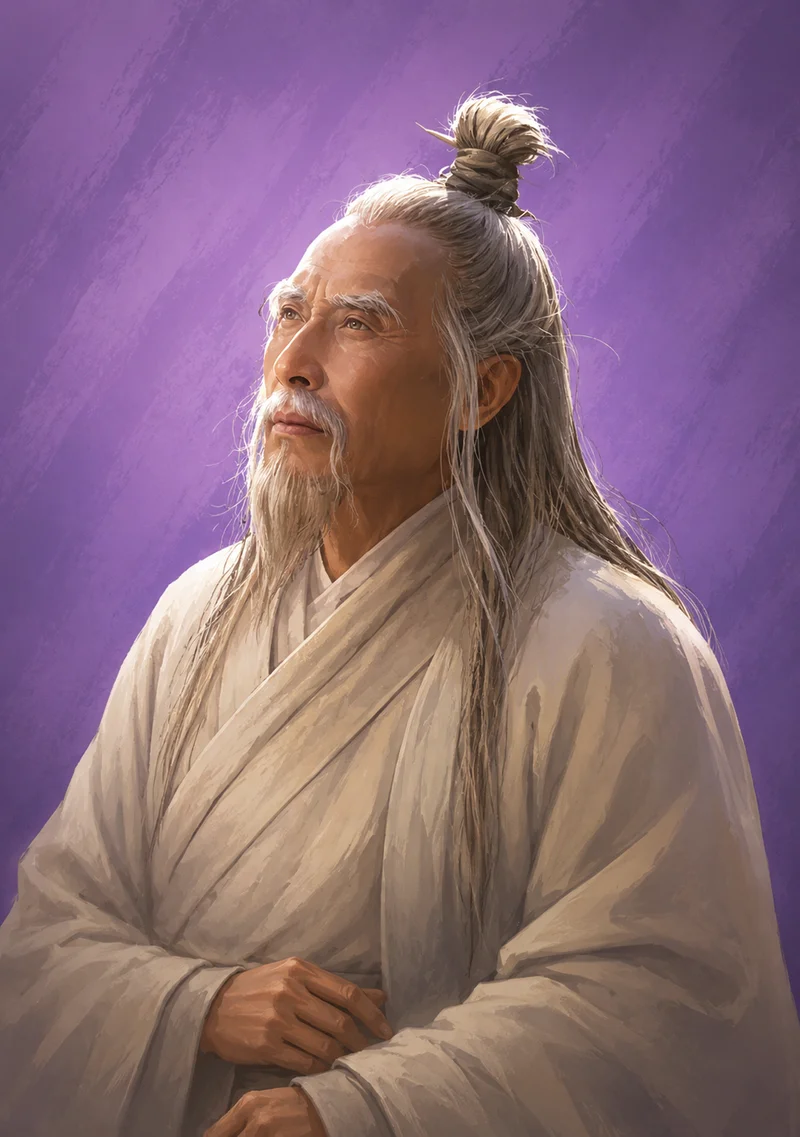
Pang Degong was a legendary elder hermit scholar, venerable intellectual patriarch, and master evaluator of human character in Xiangyang County, Jing Province (modern-day Xiangyang, Hubei Province) during the late Eastern Han dynasty. In historical records, his personal given name is unrecorded; posterity honors him respectfully as Pang Degong (Degong being a title of supreme moral reverence for an elder). Documented in Fan Ye’s Book of Later Han (Hou Han Shu – Book 83, Biographies of Hermits), Chen Shou’s Records of the Three Kingdoms (Sanguozhi – Book of Shu, Biographies of Zhuge Liang and Pang Tong), and Xi Zuochi’s Xiangyang Ji (Records of Xiangyang), Pang Degong stood at the absolute zenith of the Xiangyang intellectual circle. He is historically immortalized as the master who coined the iconic sobriquets ‘Sleeping Dragon’ (Wulong) for Zhuge Liang, ‘Phoenix Fledgling’ (Fengchu) for his nephew Pang Tong, and ‘Water Mirror’ (Shuijing) for Sima Hui, effectively framing the grandest intellectual dynamics of the Three Kingdoms era.
Hailing from a distinguished and wealthy gentry family in Xiangyang, Pang Degong possessed profound erudition, razor-sharp insight into human nature, and an unyielding commitment to Taoist and Confucian hermit virtue. When warlord Liu Biao governed Jing Province, he recognized Pang Degong’s immense social prestige and repeatedly visited his residence in person, offering lavish gifts, high ministerial titles, and fiefs to entice him into government service. Pang Degong steadfastly declined every offer. On one occasion, Liu Biao traveled to Pang Degong’s country estate, observing him plowing his agricultural fields in simple hemp robes while his wife and children weeded the furrows. Liu Biao pointed to the farm work and asked: ‘Sir, you live in the wild, laboring in the mud and refusing imperial honors or bountiful stipends. What inheritance will you leave behind for your descendants?’ Pang Degong smiled serenely and replied: ‘When worldly men die, they leave behind an inheritance of ambition, rivalry, vanity, and danger. In contrast, by living in seclusion, what I leave behind for my children is peace, honest agriculture, study, and moral safety. Though the nature of our inheritances differs, mine is by no means empty.’ Deeply moved and humbled, Liu Biao sighed in admiration and departed without pressing him further.
Pang Degong maintained a sacred, secluded retreat at Deer Gate Mountain (Lumen Shan) south of Xiangyang. He cultivated a vibrant, elite scholarly community that served as the foundational intellectual cradle for the Three Kingdoms era. Younger scholars, including Zhuge Liang, Xu Shu, Shi Tao, Meng Jian, and Cui Zhouping, frequently gathered at his residence for philosophical discourses. Historical texts record that whenever young Zhuge Liang visited Pang Degong, he bowed reverently at the side of his couch, paying absolute filial and disciple deference. Recognizing Zhuge Liang’s unparalleled strategic vision, Pang Degong bestowed upon him the title ‘Wulong’ (Sleeping Dragon). Observing the hidden genius of his nephew Pang Tong, whom contemporary society overlooked due to his plain and clumsy physical appearance, Pang Degong personally fostered his education and dubbed him ‘Fengchu’ (Phoenix Fledgling). Furthermore, he gave his younger friend Sima Hui the honorific ‘Shuijing’ (Water Mirror). Through these legendary sobriquets, Pang Degong shaped public opinion across China, steering Liu Bei toward recruiting Zhuge Liang and Pang Tong.
When Liu Biao made his final attempt to recruit him, Pang Degong led his wife and children up Deer Gate Mountain under the pretext of gathering medicinal herbs. He settled permanently in the misty, inaccessible peaks, plowing fields, gathering herbs, and cutting himself off completely from the chaotic mortal world. He lived out his remaining years in tranquil freedom until passing away peacefully of natural causes, leaving an immortal legacy as the patron patriarch of Xiangyang recluses.
Role in Romance of the Three Kingdoms
In Luo Guanzhong’s novel Romance of the Three Kingdoms, Pang Degong appears through the reverent accounts of Sima Hui (Water Mirror) in Chapter 35 and Chapter 37. In Chapter 35, after Liu Bei narrowly escapes assassination at Tanxi Creek by leaping across the river on Dilu, he stumbles upon Sima Hui’s secluded estate. When Liu Bei inquires about grand talents who can assist him in restoring the Han Empire, Sima Hui introduces Pang Degong as a master scholar of peerless erudition and character evaluation in Xiangyang. Sima Hui reveals to Liu Bei the immortal origin of the grand sobriquets: ‘In Jing Province, there are five supreme minds. Pang Degong of Xiangyang is the patriarch who penetrates all character. He named Zhuge Liang the Sleeping Dragon, his nephew Pang Tong the Phoenix Fledgling, and myself Water Mirror. The world knows these grand names entirely through the lips of Pang Degong.’ In Chapter 37, during Sima Hui’s visit to Liu Bei at Xinye, Sima Hui recounts Pang Degong’s noble refusal of Liu Biao’s royal offers, praising his decision to leave peace and agriculture to his descendants rather than vanity and danger. Sima Hui’s glowing narratives establish Pang Degong as the ultimate spiritual catalyst and intellectual architect behind the Longzhong circle, whose endorsement validated Zhuge Liang and Pang Tong as the supreme strategists of the age.
Pang Degong (龐德公) — Historical & Literary Timeline
Coining Sobriquets for Zhuge Liang, Pang Tong, and Sima Hui
Establishes his intellectual retreat in Xiangyang; evaluates young talents and bestows the immortal sobriquets ‘Sleeping Dragon’ on Zhuge Liang, ‘Phoenix Fledgling’ on Pang Tong, and ‘Water Mirror’ on Sima Hui.
Praised by Sima Hui to Liu Bei as Master Evaluator
Introduced indirectly to Liu Bei by Sima Hui following the Tanxi Creek escape in Chapter 35; credit given to Pang Degong for establishing the reputations of Wulong and Fengchu.
Declining Royal Fiefs to Leave Peace for Descendants
Politely rejects Governor Liu Biao’s lavish offers of office and fiefs, delivering his famous discourse that leaving peace and agriculture to descendants far exceeds leaving vanity and danger.
Retreat to Deer Gate Mountain & Seclusion
Leads his family into permanent hermit seclusion atop Deer Gate Mountain, gathering herbs and plowing fields until passing away peacefully of natural causes.
Key Relationships
Family
- Pang Tong (庞统, Bàng Thống): Nephew whose hidden intellect Pang Degong recognized and nurtured despite others overlooking his plain appearance, bestowing upon him the celebrated sobriquet “Phoenix Fledgling” (Fengchu).
- Pang Shanmin (庞山民, Bàng Sơn Dân): Son who inherited the family’s scholarly tradition in Xiangyang and married the elder sister of Zhuge Liang.
Friends
- Sima Hui (司马徽, Tư Mã Huy): Close intellectual peer and lifelong friend who revered Pang Degong as an elder brother, receiving from him the renowned sobriquet “Water Mirror” (Shuijing).
- Zhuge Liang (诸葛亮, Gia Cát Lượng): Outstanding junior scholar who paid deep disciple deference at Pang Degong’s couch and was bestowed the iconic title “Sleeping Dragon” (Wulong).
- Xu Shu (徐庶, Từ Thứ): Member of the Longzhong intellectual circle who frequently joined philosophical assemblies hosted at Pang Degong’s retreat.
- Cui Zhouping (崔州平, Thôi Châu Bình): Hermit scholar of Boling who engaged in regular philosophical discussions at Pang Degong’s Deer Gate Mountain estate.
- Shi Tao (石韬, Thạch Thao): Fellow scholar in the Xiangyang intellectual network who participated in study circles guided by Pang Degong and Sima Hui.
- Meng Jian (孟建, Mạnh Kiến): Scholar of the Xiangyang circle who associated closely with Pang Degong’s community before entering government service.
Enemies
- No information
Other
- Liu Biao (刘表, Lưu Biểu): Governor of Jing Province who personally visited Pang Degong to offer high ministerial offices and fiefs, all of which Pang Degong firmly and serenely declined to preserve his family’s peaceful seclusion.
- Liu Bei (刘备, Lưu Bị): Warlord who benefited directly from Pang Degong’s character appraisals after Sima Hui relayed the titles of “Sleeping Dragon” and “Phoenix Fledgling” to him in 207 AD.
In Novel
Chapter 37
- Pang Degong (庞德公, Páng Dégōng): Pang Degong is a highly respected elder scholar of Jingzhou and the uncle of Pang Tong. Liu Bei seeks him while trying to locate the most talented advisers in the region. Pang Degong speaks highly of Zhuge Liang, calling attention to the young strategist’s exceptional ability and helping establish Zhuge Liang’s reputation before Liu Bei meets him.
In History
Summary
- Pang Degong (庞德公, Bàng Đức Công) was a highly respected scholar and recluse of Xiangyang in the late Eastern Han, famous for recognizing talented men.
Mentor and Elder of the Xiangyang Scholars
- Pang Degong was associated with the local intellectual elite around Xiangyang and was renowned for his judgment of character.
- He was one of the elders whom the young Zhuge Liang respected and regularly visited. The tradition records Zhuge Liang showing exceptional courtesy when visiting him.
“Sleeping Dragon” and “Young Phoenix”
- Later historical tradition credits Pang Degong with describing Zhuge Liang as the “Sleeping Dragon” and Pang Tong as the “Young Phoenix”, expressions that became central to Three Kingdoms culture.
- These titles are preserved through the commentarial tradition attached to Sanguozhi, rather than being inventions unique to the novel.
Family and Legacy
- His son Pang Shanmin married Zhuge Liang’s younger sister, creating a close family connection between the Pang and Zhuge families.
- Pang Degong’s importance therefore extended beyond his own scholarship: he was part of the intellectual and kinship network surrounding Zhuge Liang and Pang Tong.
Historical Record
- Classification: Historical / Scholar and Recluse. Some later anecdotes about his wisdom are traditional embellishments, so they should be distinguished from the core biographical record.