


Contents
Biography & Historical Record
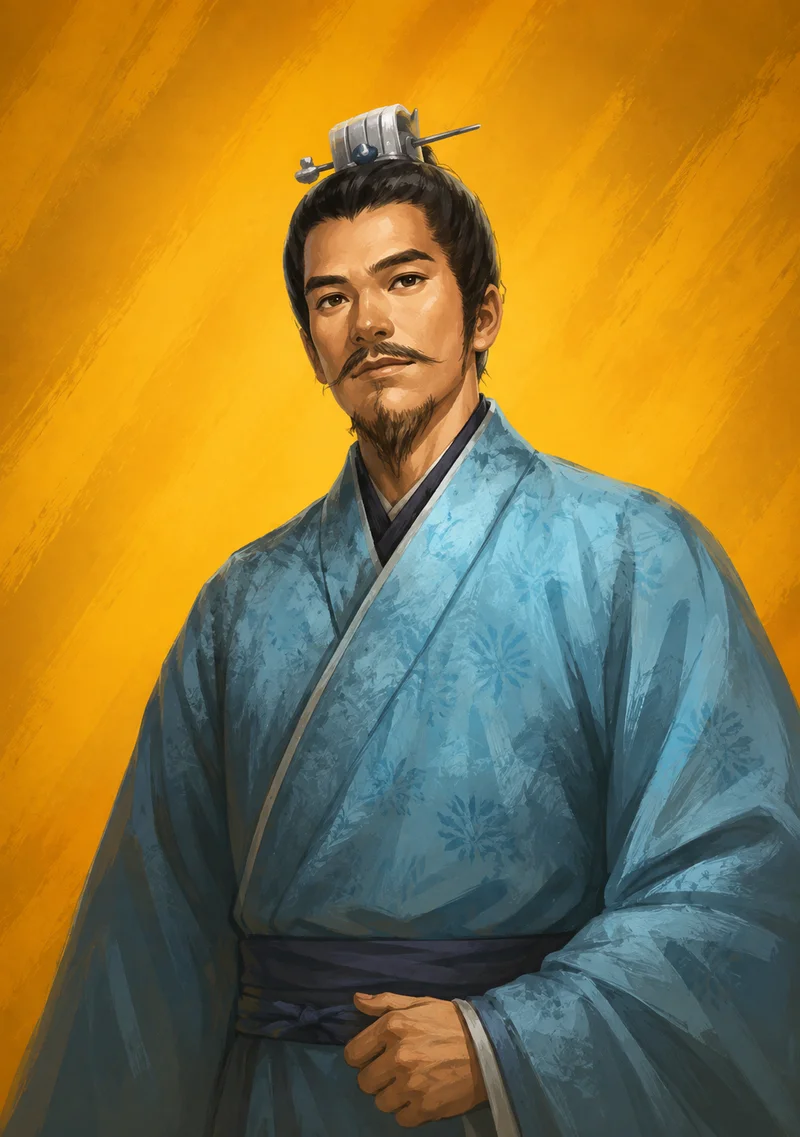
Pang Shanmin was an Eastern Han dynasty and Cao Wei scholar, high-ranking court official, and prominent member of the illustrious Pang gentry clan of Xiangyang. Hailing from Xiangyang County in Jing Province (modern-day Xiangyang, Hubei Province), he was the eldest son of the legendary hermit master Pang Degong, the elder cousin of supreme Shu Han strategist Pang Tong, and the husband of Zhuge Liang’s elder sister (Lady Zhuge). Documented in official historical texts such as Xi Zuochi’s Xiangyang Ji (Records of Xiangyang), Fan Ye’s Book of Later Han (Hou Han Shu – Biographies of Hermits), and Chen Shou’s Records of the Three Kingdoms (Sanguozhi – Book of Shu, Biography of Zhuge Liang and Biography of Pang Tong), Pang Shanmin was celebrated across Jing Province for his dignified moral character, profound learning, and noble demeanor inherited directly from his father.
Growing up at the Pang family estate near Xiangyang during the 190s AD, Pang Shanmin was raised at the center of northern Jing Province’s elite intellectual network. He received rigorous classical education from his father Pang Degong alongside his younger cousin Pang Tong. To solidify a powerful marital and intellectual alliance between the migrant Zhuge clan and the indigenous Pang aristocracy of Xiangyang, Pang Shanmin married the eldest daughter of Zhuge Kui (the elder sister of Zhuge Jin, Zhuge Liang, and Zhuge Jun). This marital union played a pivotal historical role in integrating young Zhuge Liang—who was then a orphaned refugee cultivating fields at Longzhong—into the supreme gentry hierarchy of Jing Province, facilitating Zhuge Liang’s close disciple relationship with Pang Degong and his lifelong friendship with Pang Tong.
In 208 AD, following Cao Cao’s southern expedition and military occupation of Jing Province, Pang Degong chose to lead his wife up Deer Gate Mountain (Lumen Shan) into absolute hermit seclusion. In contrast to his father’s uncompromising rejection of worldly office, Pang Shanmin responded to the imperial recruitment of the Cao Wei administration. Recognizing his noble lineage, moral virtue, and administrative competence, the Wei imperial court appointed Pang Shanmin as Gentleman of the Yellow Gate (Huangmen Shilang), a prestigious position serving inside the imperial palace. In Luoyang and Xuchang, Pang Shanmin served the court with distinction and integrity before passing away from illness at a relatively young age. His son, Pang Huan (courtesy name Chengzu), inherited the family’s scholarly legacy and eventually rose to serve as Grand Commandant (Taiwei) under the Jin dynasty.
Role in Romance of the Three Kingdoms
In Luo Guanzhong’s novel Romance of the Three Kingdoms, Pang Shanmin is an influential background figure who forms a vital genealogical and intellectual bridge between the recluses of Longzhong and the grand strategists of the era. Mentioned indirectly through the narratives of Sima Hui (Water Mirror) and Zhuge Liang in Chapter 35, Chapter 37, and Chapter 38, Pang Shanmin represents the crucial familial bond connecting the Pang and Zhuge families. As the son of Pang Degong, the elder cousin of Pang Tong (Phoenix Fledgling), and the brother-in-law of Zhuge Liang (Sleeping Dragon), Pang Shanmin’s marriage to Zhuge Liang’s elder sister explains why Zhuge Liang frequently visited Xiangyang, bowed reverently at Pang Degong’s couch, and engaged in deep strategic discourses with Pang Tong before entering Liu Bei’s service. His presence in the underlying lore underscores the interconnected elite gentry web of Jing Province that nurtured China’s greatest minds.
Pang Shanmin (龐山民) — Historical & Literary Timeline
Marriage to Zhuge Liang’s Sister and Gentry Alliance
Marries the elder sister of Zhuge Liang, establishing a foundational marital alliance between the Pang and Zhuge families that integrates Zhuge Liang into the Jing Province gentry circle.
Connecting Sleeping Dragon and Phoenix Fledgling
Serves as the key family link during Liu Bei’s visits to Longzhong; his home and lineage provide the backdrop for the close bond between Zhuge Liang, Pang Tong, and Pang Degong.
Entering Service under Cao Wei Administration
Enters Cao Cao’s administration following the submission of Jing Province; appointed Gentleman of the Yellow Gate (Huangmen Shilang) in the imperial court.
Service as Imperial Attendant and Premature Passing
Serves honorably as a palace attendant in Wei until his premature death from illness; his son Pang Huan later rises to become Grand Commandant under the Jin dynasty.
For detailed historical records, archives, and official chronicles, explore Pang Shanmin on Wikipedia.
Key Relationships
Family
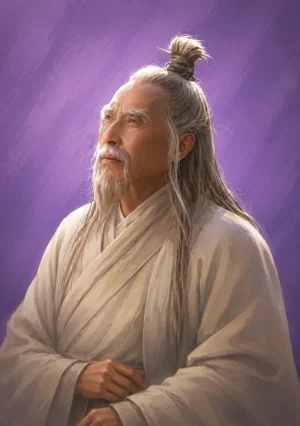
- Pang Degong (庞德公, Bàng Đức Công): Father, the revered hermit master of Xiangyang who provided his classical education and coined the monikers Sleeping Dragon and Phoenix Fledgling.
- Lady Zhuge (诸葛氏, Gia Cát thị): Wife, the eldest daughter of Zhuge Gui and elder sister of Zhuge Liang, whose marital union forged a foundational alliance between the indigenous Pang clan and the migrant Zhuge family.
- Pang Huan (庞涣, Bàng Hoán): Son, who carried on the family’s scholarly tradition and later rose to high office as Grand Commandant (Taiwei) under the Western Jin dynasty.
- Pang Tong (庞统, Bàng Thống): Younger cousin, who grew up and studied alongside him under Pang Degong before achieving fame as Liu Bei’s chief strategist.
- Zhuge Liang (诸葛亮, Gia Cát Lượng): Brother-in-law (wife’s younger brother), whose early integration into the Xiangyang intellectual elite and discipleship under Pang Degong were fostered through his marriage to Zhuge Liang’s sister.
- Zhuge Jin (诸葛瑾, Gia Cát Cẩn): Brother-in-law (wife’s elder brother), who went on to serve as a senior statesman and supreme general for Eastern Wu.
- Zhuge Jun (诸葛均, Gia Cát Quân): Brother-in-law (wife’s younger brother), who later accompanied Zhuge Liang and served as an official in Shu Han.
- Zhuge Gui (诸葛珪, Gia Cát Khuê): Father-in-law, a former Han provincial official whose children integrated into the Jing Province gentry network.
Friends
- Sima Hui (司马徽, Tư Mã Huy): Renowned hermit master known as Water Mirror, a frequent guest at the Pang family estate and a close intellectual companion to Pang Degong.
- Xu Shu (徐庶, Từ Thứ): Prominent scholar in Jing Province who participated in the academic circle connected to the Pang and Zhuge households.
- Cui Zhouping (崔州平, Thôi Châu Bình): Scholar associated with the Longzhong and Xiangyang literary circle connected to the Pang family.
- Meng Jian (孟建, Mạnh Kiến): Scholar from Runan who studied in Jing Province alongside members of the Pang and Zhuge intellectual circle before entering Wei service.
- Shi Tao (石韬, Thạch Thao): Yingchuan scholar and mutual peer within the Xiangyang gentry network who, like Pang Shanmin, later accepted an official appointment under the Cao Wei administration.
Enemies
- No information
Other
- Cao Cao (曹操, Tào Tháo): Warlord and Chancellor of Han, whose court Pang Shanmin entered following the submission of Jing Province in 208 AD, receiving the imperial post of Gentleman of the Yellow Gate (Huangmen Shilang).
In Novel
Chapter 38
- Pang Shanmin (庞山民, Páng Shānmín): Pang Shanmin is associated with the Pang family of Jingzhou and is mentioned among the learned men connected with Pang Tong and Pang Degong. His appearance is brief and primarily establishes the scholarly network from which Liu Bei learns about the talents of Jingzhou.
In History
Summary
- Pang Shanmin (庞山民, Bàng Sơn Dân) was the son of Pang Degong and a member of the influential Pang family of Jing Province.
Family Connection to Zhuge Liang
- Pang Shanmin married Zhuge Liang’s younger sister, making him Zhuge Liang’s brother-in-law.
- This marriage connected two prominent intellectual families of the Xiangyang region and helps explain the close relationship between Zhuge Liang and Pang Degong’s household.
Service under Cao Wei
- Unlike his father, who was known as a recluse, Pang Shanmin entered government service.
- He served Cao Wei and eventually held the office of Huangmen and Minister of Personnel, according to the biography of Pang Tong and related Xiangyang traditions.
- He died relatively early, leaving a reputation as a learned and capable member of the Pang family.
Historical Record
- Classification: Historical. His marriage to Zhuge Liang’s sister and his Wei career are explicitly preserved in the historical tradition.