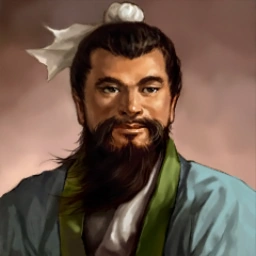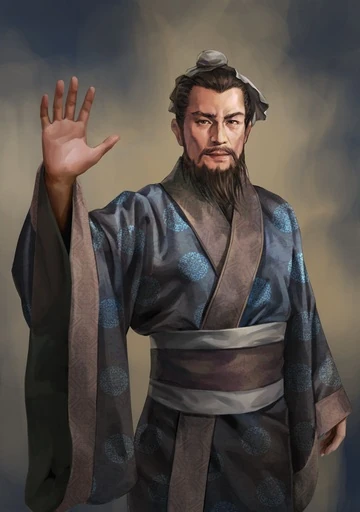

Here is the exhaustive biography of Sima Hui (司馬徽 / 司马徽), courtesy name Decao (德操), sobriquet Water Mirror / Shuijing (水鏡) (? – 208), a celebrated hermit and judge of talent in Jing Province, incorporating historical records and the narrative of Romance of the Three Kingdoms.
Contents
Historical Career
Sima Hui was a native of Yangzhai, Yingchuan Commandery (Yu Province). He lived as a reclusive scholar in northern Jing Province and was renowned for his clear-sighted evaluation of character. His friend Pang Degong (uncle of Pang Tong) bestowed on him the famous sobriquet “Water Mirror.” Historically it was Pang Degong who first described Zhuge Liang as “Sleeping Dragon” and Pang Tong as “Fledgling Phoenix,” while calling Sima Hui “Water Mirror”; Sima Hui later repeated the recommendations to Liu Bei.
He was known for answering nearly every question with the non-committal phrase “Good, good” (好, 好), a habit his wife joked was ingrained in his speech and which is widely interpreted as a deliberate means of avoiding political entanglement. After Liu Cong surrendered Jing Province to Cao Cao (208), Cao Cao sought to employ Sima Hui, but the hermit died of illness before he could be put to use. Among those associated with him as students or protégés were Xiang Lang, Liu Yi, Yin Mo and Li Zhuan; popular tradition also links him with Xu Shu, Zhuge Liang and Pang Tong as teacher or mentor.
Romance of the Three Kingdoms Portrayal
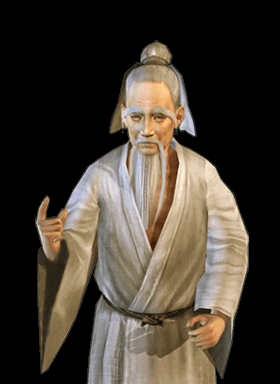
In the novel Sima Hui appears as the wizened “Master Water Mirror.” He first meets Liu Bei in Chapter 35 after the latter’s escape from Cai Mao’s assassination attempt (the famous leap of Dilu across the Tan Stream). A young servant guides Liu Bei to the hermit’s hut; Water Mirror has already foreseen the events. After hearing Liu Bei’s story he advises him to seek a worthy strategist and utters the celebrated line: “If you could find either Sleeping Dragon or Young Phoenix, you could restore order in the empire.” He refuses to give clearer identification and answers further questions only with “Good, good!”
In the following chapters Xu Shu (who had been scolded by his master) hurries to Liu Bei’s side. When Water Mirror later learns that Xu Shu has been tricked into leaving for Cao Cao, he is disappointed; upon hearing that Zhuge Liang has been recommended as the Sleeping Dragon he relates stories of Zhuge’s talent, comparing him to Lü Wang and Zhang Liang, then departs. The novel thus makes Sima Hui the pivotal figure who points Liu Bei toward the two great advisers of Shu.
Family, Friends and Enemies
Family: Wife (mentioned in anecdotes about his habitual “Good, good”); no children recorded.
Close associates: Pang Degong (treated as an elder brother / uncle figure; the one who originally coined the sobriquets); Pang Tong (regarded affectionately, sometimes called “younger brother” in the novel).
Students / protégés (historical or traditional): Xiang Lang, Liu Yi, Yin Mo, Li Zhuan; popular tradition also includes Xu Shu, and he is the one who directs Liu Bei to Zhuge Liang and Pang Tong.
Those who sought him: Liu Bei (received the key recommendation); Cao Cao (attempted to recruit him after taking Jing, but Sima Hui died first).
Sima Hui (司馬徽) — Historical & Literary Timeline
Late 2nd century – early 3rd century AD — Life as a hermit
Water Mirror of Jing Province
Lived in seclusion in northern Jing; famous for discernment of talent. Received the sobriquet “Water Mirror” from Pang Degong. Known for answering most inquiries with “Good, good.”
c. 207–208 AD — Meeting with Liu Bei
Recommendation of Sleeping Dragon and Young Phoenix
After Liu Bei’s escape from Cai Mao, receives him at his hut, advises him to seek a great strategist, and points him toward Zhuge Liang (“Sleeping Dragon”) and Pang Tong (“Young Phoenix / Fledgling Phoenix”). Later confirms Zhuge Liang’s exceptional talent to Liu Bei.
208 AD — Death
Death before Cao Cao could employ him
After Liu Cong’s surrender of Jing Province, Cao Cao wished to recruit Sima Hui, but the hermit died of illness before any appointment could take effect.
Historical Note
Historically Sima Hui was a reclusive scholar of Yingchuan origin living in Jing Province, celebrated for his ability to judge character. The famous sobriquets “Sleeping Dragon,” “Fledgling Phoenix” and “Water Mirror” were originally coined by Pang Degong; Sima Hui repeated the recommendations of Zhuge Liang and Pang Tong to Liu Bei. He died in 208 before Cao Cao could make use of him. The novel expands his role into the dramatic “Master Water Mirror” episode that directly sets Liu Bei on the path to obtaining Zhuge Liang, thereby giving him a pivotal place in the founding mythology of Shu Han.
For detailed historical records, archives, and official chronicles, explore Sima Hui on Wikipedia.
Key Relationships
Family
- No information
Friends
- Pang Degong (庞德公, Bàng Đức Công): Venerable hermit and clan elder of Xiangyang whom Sima Hui treated as an older brother; Pang Degong famously coined the titles “Sleeping Dragon” (Wolong) for Zhuge Liang, “Fledgling Phoenix” (Fengchu) for Pang Tong, and “Water Mirror” (Shuijing) for Sima Hui.
- Zhuge Liang (诸葛亮, Gia Cát Lượng): Prodigious genius whom Sima Hui famously praised to Liu Bei: “Wolong and Fengchu: if you obtain either one of them, you can bring peace to all under Heaven!”
- Pang Tong (庞统, Bàng Thống): Young genius whom Sima Hui interviewed day and night beneath a mulberry tree, declaring Pang Tong the undisputed master of southern scholars.
- Xu Shu (徐庶, Từ Thứ): Brilliant scholar and close friend who visited Sima Hui’s hermitage before serving Liu Bei.
- Meng Jian (孟建, Mạnh Kiến): Scholar friend of Xiangyang (Meng Gongwei).
- Shi Tao (石韬, Thạch Thao): Scholar friend of Xiangyang (Shi Guangyuan).
- Liu Bei (刘备, Lưu Bị): Lord whom Sima Hui sheltered at his hermitage in 207 AD, introducing him to the strategic talent needed to restore the Han empire.
Enemies
- Cao Cao (Cao Cao, Tào Tháo): Northern warlord who occupied Jingzhou in 208 AD; Cao Cao sought to recruit Sima Hui, but Sima Hui fell ill and passed away shortly after.
Others
- No information
Appearance

In Novel
Chapter 35
- Sima Hui (司马徽, Tư Mã Huy), courtesy Decao (德操, Đức Thao), sobriquet Water Mirror: After Cai Mao (蔡瑁, Thái Mạo)’s plot and Dilu’s leap of the Tan Stream, a youth leads Liu Bei (刘备, Lưu Bị) to the hermitage. Water Mirror already knows the night’s danger, urges him to find a true strategist, and declares that Sleeping Dragon or Young Phoenix could settle the empire — then answers only “Good, good!” when pressed for names.
Chapter 36–37
- Sima Hui (司马徽, Tư Mã Huy): Frames the path from Xu Shu (徐庶, Từ Thứ)’s brief service to the greater recommendation of Zhuge Liang (诸葛亮, Gia Cát Lượng) and Pang Tong (庞统, Bàng Thống); compares Zhuge to Lü Wang and Zhang Liang, then withdraws so Liu Bei must seek the Sleeping Dragon himself.
Appearance
In History
Summary
- Sima Hui (司马徽, Tư Mã Huy), styled Decao, was a Yingchuan native living as a Jing recluse, praised for clear judgment of character. Pang Degong (庞德公, Bàng Đức Công) coined the Water Mirror sobriquet; the Sleeping Dragon / Fledgling Phoenix labels for Zhuge Liang and Pang Tong likewise begin with Pang Degong and are repeated in the counsel tradition associated with Sima Hui.
Year: before 208 AD
- Taught or mentored scholars including Xiang Lang (向朗, Hướng Lãng), Liu Yi (刘廙, Lưu Di), Yin Mo (尹默, Doãn Mặc), and Li Zhuan (李譔, Lý Soạn). Anecdotes preserve an unnamed wife who mocked his perpetual “Good, good.”
Year: 208 AD
- After Jing’s surrender, Cao Cao (曹操, Tào Tháo) sought to recruit him; Sima Hui died of illness before taking office.
Historical Record
- Notices in Xiangyang / Jing scholarly lore and Pei Songzhi annotations tied to Zhuge Liang and Pang Tong; the novel expands the Water Mirror episode into Liu Bei’s decisive talent-hunt scene.
Appearance
Gallery