

Contents
Biography & Historical Record
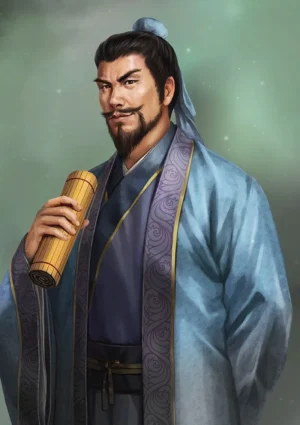
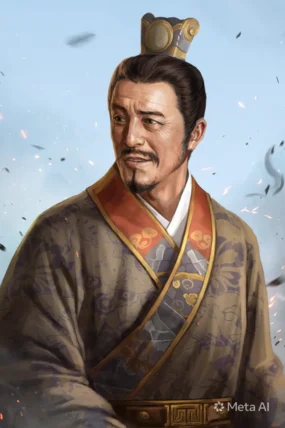
Pei Mao, courtesy name Juguang, was a high-ranking imperial court minister, loyalist statesman, and Marquis of Yangting (Yangting Hou) of the Eastern Han dynasty. Hailing from Wenxi County in Hedong Commandery (modern-day Wenxi County, Shanxi Province), he was the patriarch who established the illustrious Hedong Pei clan, one of the most prominent aristocratic, political, and historiographical lineages in ancient Chinese history (serving as the great-great-grandfather of the celebrated Three Kingdoms historian Pei Songzhi, who annotated Chen Shou’s Records of the Three Kingdoms). Documented in Fan Ye’s Book of Later Han (Hou Han Shu) and Chen Shou’s Records of the Three Kingdoms (Sanguozhi – Book of Wei, Biography of Pei Qian), Pei Mao served successively as Palace Attendant (Shizhong), Prefect of the Imperial Secretariat (Shangshu Ling), and Intendant of Zuo Fengyi, governing one of the three strategic administrative districts surrounding the imperial capital of Chang’an.
Following the death of Dong Zhuo in 192 AD and the violent usurpation of the imperial capital by Liang Province warlords Li Jue and Guo Si, China was plunged into horrific anarchy. For years, Li Jue and Guo Si held Emperor Xian hostage in Chang’an, devastating the surrounding Guanzhong countryside and slaughtering imperial ministers. When Emperor Xian escaped Chang’an and Cao Cao escorted the royal court to establish the new imperial capital at Xuchang in 196 AD, the shattered remnants of Li Jue and Guo Si’s army fled westward into the mountains of Guanzhong, operating as ruthless bandits and continuing to menace the western frontiers of the Han Empire.
In 197 AD (the second year of Jian’an), Emperor Xian issued a secret imperial decree appointing Consultant (Yilang) Pei Mao as Imperial Commissioner and Commander-in-Chief. Granted full imperial authority and the royal staff, Pei Mao was tasked with coordinating regional warlords and Guandong commanders—including Duan Wei, Zhang Heng, and Liang Xing—to launch a joint extermination campaign against Li Jue’s mountain stronghold. Executing brilliant strategic coordination, Imperial Commissioner Pei Mao surrounded Li Jue’s mountain fortress. In 198 AD, Duan Wei stormed the stronghold, decapitated Li Jue on the battlefield, and captured over two hundred members of Li Jue’s clan. Pei Mao executed strict imperial justice, supervising the arrest of the rebel clan and escorting Li Jue’s severed head and captured prisoners to Xuchang. Emperor Xian ordered Li Jue’s head displayed above the city gates to avenge the slaughtered ministers, formally terminating the decade-long nightmare triggered by Dong Zhuo’s army. For his monumental victory in restoring imperial law, Emperor Xian ennobled Pei Mao as Marquis of Yangting.
Following the pacification of Guanzhong, Pei Mao continued serving the Han court with absolute integrity, ensuring the stability of the Hedong region. His sons rose to high ministerial positions: his eldest son, Pei Qian, served as Prefect of the Imperial Secretariat (Shangshu Ling) under Cao Wei, while his descendants maintained unmatched political and literary prestige across the Han, Wei, Jin, and Southern dynasties. Pei Mao lived out his remaining years in honor until passing away peacefully of natural causes.
Role in Romance of the Three Kingdoms
In Luo Guanzhong’s novel Romance of the Three Kingdoms, Pei Mao appears in Chapter 18 as an indispensable imperial commissioner and loyalist commander under Emperor Xian. Following the transfer of the imperial capital to Xuchang, the remnant warlord Li Jue continues to terrorize the western mountains of Guanzhong. Emperor Xian issues a secret decree appointing Consultant Pei Mao as Imperial Envoy and Commander-in-Chief, entrusting him with imperial staff to mobilize western generals Duan Wei, Zhang Heng, and Liang Xing. Pei Mao coordinates the joint siege of Li Jue’s mountain stronghold with supreme authority. When Duan Wei slays Li Jue and captures his entire clan, Pei Mao solemnly enforces imperial law, taking custody of Li Jue’s severed head and two hundred rebel prisoners. Escorting the head and captives to Xuchang, Pei Mao presents them to Emperor Xian, who orders the head displayed at the city gates to appease the spirits of fallen loyalists and rewards Pei Mao with the noble title Marquis of Yangting. Pei Mao’s campaign in Chapter 18 marks the final resolution of the chaos that began with Dong Zhuo’s usurpation in Chang’an.
Pei Mao (裴茂) — Historical & Literary Timeline
Service as Palace Attendant & Intendant of Zuo Fengyi
Serves as Palace Attendant (Shizhong) and Intendant of Zuo Fengyi in Chang’an, gaining widespread distinction for his upright governance and legal integrity.
Commissioned by Imperial Secret Decree to Exterminate Li Jue
Appointed Imperial Envoy and Commander-in-Chief by Emperor Xian’s secret decree; mobilizes Guanzhong generals Duan Wei, Zhang Heng, and Liang Xing for a joint offensive.
Escorting Severed Head to Xuchang & Ennobled Marquis of Yangting
Supervises the siege of Li Jue’s stronghold; receives Li Jue’s severed head and captured clan from Duan Wei, escorting them to Xuchang and earning ennoblement as Marquis of Yangting.
Establishing the Hedong Pei Clan Legacy and Passing
Maintains the prestige of the Hedong Pei clan; fosters his sons Pei Qian and Pei Hui, who rise to high ministerial rank in Cao Wei, until passing away peacefully of natural causes.
For detailed historical records, archives, and official chronicles, explore Pei Mao on Wikipedia.
Key Relationships
Family
- Pei Qian (裴潜, Bùi Tiềm) — Eldest son who rose to prominent ministerial standing under Cao Wei, serving as Prefect of the Imperial Secretariat (Shangshu Ling).
- Pei Hui (裴徽, Bùi Huy) — Son who served as an esteemed official and intellectual in the state of Cao Wei.
- Pei Ji (裴辑, Bùi Tập) — Son who held high official rank during the Cao Wei era.
- Pei Songzhi (裴松之, Bùi Tùng Chi) — Celebrated historian, scholar, and great-great-grandson who authored the indispensable historical annotations to Chen Shou’s Records of the Three Kingdoms.
Friends
- Duan Wei (段煨, Đoạn Oa) — Guanzhong general who coordinated under Pei Mao’s imperial commission during the joint 197–198 AD offensive, successfully storming Li Jue’s fortress, decapitating the rebel leader, and handing the captives over to Pei Mao.
- Zhang Heng (张横, Trương Hoành) — Guanzhong military leader who aligned with Pei Mao’s coalition to encircle and eliminate Li Jue’s remnants in the mountains.
- Liang Xing (梁兴, Lương Hưng) — Regional commander in the Guanzhong area who participated alongside Pei Mao in the pacification campaign against Li Jue.
Enemies
- Li Jue (李傕, Lý Thôi) — Tyrannical Liang Province warlord and former usurper whose mountain stronghold in Guanzhong was besieged and eliminated under Pei Mao’s coordinated campaign in 198 AD.
- Guo Si (郭汜, Quách Dĩ) — Rebel warlord and co-conspirator of Li Jue whose brutal oppression of the Han court and devastation of Guanzhong led to royal efforts to wipe out their remnant forces.
- Dong Zhuo (董卓, Đổng Trác) — Tyrannical chancellor whose initial usurpation plunged the Han court into violent turmoil, giving rise to the warlord factions Pei Mao eventually helped suppress.
Other
- Emperor Xian of Han (汉献帝, Hán Hiến Đế) — Han sovereign who entrusted Pei Mao with imperial authority and the royal staff via secret decree in 197 AD, later ennobling him as Marquis of Yangting after Pei Mao delivered Li Jue’s severed head and captives.
- Cao Cao (曹操, Tào Tháo) — Han Chancellor and warlord based in Xuchang who received Li Jue’s severed head and the captured rebel clan escorted by Pei Mao in 198 AD.
In Novel
Chapter 9
- Pei Mao (裴茂, Péi Mào): Pei Mao serves the Han court during the chaos following Dong Zhuo’s death. He is involved in the imperial government’s efforts to resist the forces of Li Jue and Guo Si and is associated with the officials attempting to restore the emperor’s authority.
Chapter 13
- Pei Mao (裴茂, Péi Mào): Pei Mao remains among the Han officials supporting Emperor Xian during the struggle between the rival warlords around Chang’an. His role is primarily administrative and connected with the imperial faction rather than an independent battlefield command.
In History
Summary
- Pei Mao (裴茂, Bùi Mậu) was a late Eastern Han official from the prominent Pei family.
Career
- Pei Mao held senior administrative and judicial responsibilities during the final decades of Han rule.
- He was associated with campaigns against local disorder and with the restoration of Han authority in areas affected by rebellion.
Family Legacy
- His career formed part of the long political tradition of the Hedong Pei clan, which remained influential during the Cao Wei and later dynasties.
Historical Record
- Classification: Historical. His surviving biography is relatively short compared with major warlords, so unsupported details should not be added.