
Contents
Biography & Historical Record
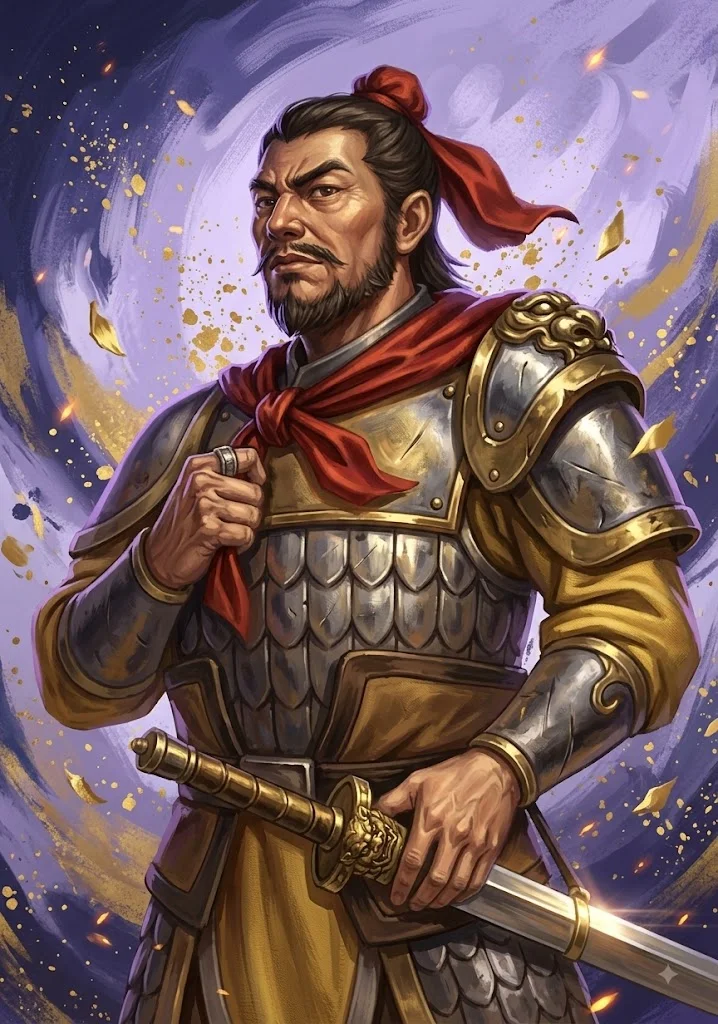
Wang Mai (historically transliterated as Vuong Mua or Vuong Mai in Vietnamese due to the literal translation of 買 meaning trade/buy) was a distinguished Cao Wei military general and vanguard shock commander who served under Senior General Zhong Hui during the conquest of Shu Han in 263 AD. Documented in Chen Shou’s Records of the Three Kingdoms (Sanguozhi – Book of Wei, Biography of Zhong Hui) and Luo Guanzhong’s classic historical novel Romance of the Three Kingdoms, Wang Mai was celebrated as a fearless, battle-hardened cavalry officer capable of spearheading assault waves across formidable mountain terrain, playing a pivotal role in shattering Shu Han’s Hanzhong defense perimeter.
In the autumn of 263 AD, Regent Sima Zhao mobilized a grand expeditionary force of 180,000 troops divided into three columns to extinguish the kingdom of Shu Han. Senior General Zhong Hui was appointed Supreme Commander of the main eastern assault force tasked with invading Hanzhong. To breach the fortified mountain passes, Zhong Hui organized a specialized vanguard command consisting of elite generals including Wang Mai, Army Advisor Huangfu Kai, Guard General Wei Guan, Hu Lie, and Pang Hui. As Wei armies entered the steep valleys, Shu Han Grand General Jiang Wei deployed an interconnected ‘box’ defense, fortifying strategic passes at Yangping, Han, and Yue cities to stall the invasion and exhaust Wei’s logistical lines. Confronted by this defensive stalemate, Zhong Hui formulated a high-risk flanking strategy.
Zhong Hui issued secret orders entrusting General Wang Mai and Army Advisor Huangfu Kai with joint command of a heavy cavalry shock division. Wang Mai personally led his vanguard contingent through unmapped, treacherous mountain ravines south of Hanzhong, advancing at double-speed toward Funan. Emerging suddenly behind Shu Han’s rear encampments, Wang Mai spearheaded a ferocious downhill charge that panicked the Shu garrisons before they could assemble battle ranks. Coordinating seamlessly with Huangfu Kai’s secondary column, Wang Mai’s assault severed supply lines between Hanzhong and Chengdu, cut off retreat paths toward Jiange, and broke the defensive chain across Hanzhong. This decisive tactical breakthrough forced Jiang Wei to abandon Hanzhong, retreat to Jiange, and ultimately paved the way for Emperor Liu Shan’s surrender later that winter. Following the fall of Shu Han and the establishment of the Western Jin Dynasty by Sima Yan, Wang Mai was ennobled as a founding imperial marquis in recognition of his battlefield achievements.
Role in Romance of the Three Kingdoms
In Luo Guanzhong’s novel Romance of the Three Kingdoms, Wang Mai appears in Chapter 116 as a fierce vanguard general serving in Zhong Hui’s expeditionary army during the grand campaign against Shu Han. Introduced alongside Huangfu Kai, Wei Guan, Hu Lie, and Pang Hui, Wang Mai is depicted as a formidable shock officer entrusted with breaking the strategic deadlock at Hanzhong. In Chapter 116, when Shu forces under Jiang Wei hold the fortified passes, Zhong Hui dispatches Wang Mai and Huangfu Kai with an elite strike force through the hidden mountain trails of Funan. Wang Mai brandishes his spear and leads his cavalry down the slopes like a mountain torrent, shattering the Shu rear guard and severing communication with Chengdu. His decisive victory at Funan secures control over Hanzhong, driving Jiang Wei back to Jiange and setting the stage for the final collapse of Shu Han.
Wang Mai (王買) — Historical & Literary Timeline
Appointed Vanguard General in Zhong Hui’s Expeditionary Force
Appointed vanguard officer under Supreme Commander Zhong Hui in the 180,000-strong invasion force, joining elite generals Wei Guan, Huangfu Kai, Hu Lie, and Pang Hui.
Leading Shock Attack & Breaking Hanzhong Defenses
Co-commands a mobile shock division with Huangfu Kai, bypassing northern Shu fortresses through southern mountain ravines at Funan, routing Shu rear garrisons and opening Hanzhong.
Pacification of Shu & Ennoblement under Jin Dynasty
Participates in the total pacification of Shu Han; rewarded with official marquisate honors following the founding of the Western Jin Dynasty.
For detailed historical records, archives, and official chronicles, explore Wang Mai on Wikipedia.
Key Relationships
Family
- No information
Friends
- Huangfu Kai (皇甫闿, Hoàng Phủ Khải): A fellow Cao Wei military officer who co-commanded the heavy cavalry shock division alongside Wang Mai during the strategic flanking assault through the Funan ravines in 263 AD.
- Zhong Hui (钟会, Chung Hội): The Supreme Commander of Wei’s eastern invasion army during the 263 AD conquest of Shu Han, who appointed Wang Mai as a vanguard officer and entrusted him with the high-risk mountain breakthrough operation.
- Wei Guan (卫瓘, Vệ Quán): Army Supervisor and fellow general serving in the high command of the expeditionary force during the invasion of Shu Han in 263 AD.
- Hu Lie (胡烈, Hồ Liệt): A fellow senior commander who served alongside Wang Mai in Zhong Hui’s expeditionary vanguard corps during the 263 AD campaign.
- Pang Hui (庞会, Bàng Hội): A fellow vanguard general deployed in Zhong Hui’s expeditionary command during the military campaign against Shu Han in 263 AD.
Enemies
- Jiang Wei (姜维, Khương Duy): Grand General of Shu Han whose fortified defensive perimeter across Hanzhong was compromised when Wang Mai’s shock cavalry struck the rear garrisons at Funan in 263 AD, forcing Jiang Wei to retreat to Jiange.
- Liu Shan (刘禅, Lưu Thiện): Emperor of Shu Han whose regime collapsed and ultimately surrendered following the breach of Hanzhong and the subsequent fall of Chengdu in 263 AD.
Other
- Sima Zhao (司马昭, Tư Mã Chiêu): Regent of Cao Wei who organized and authorized the grand 180,000-man expedition against Shu Han in 263 AD.
- Sima Yan (司马炎, Tư Mã Viêm): Founding Emperor of the Western Jin Dynasty (Emperor Wu), under whose reign Wang Mai was ennobled as an imperial marquis in recognition of his campaign achievements.
In Novel
Wang Mai (王买, Wáng Mǎi) does not have a securely verified named appearance in the supplied edition under the exact Chinese name 王买. The name belongs to a historical Wei general associated with Zhong Hui’s campaign, but that historical identification is not sufficient to assign a novel chapter.
In History
Summary
- Wang Mai (王买, Vương Mua) is a minor figure appearing in the historical-literary record of the Three Kingdoms era.
Historical Record
- The surviving evidence is too limited to support a long biography with confidence.
- Classification: Historical / Briefly Attested.