

Contents
Biography & Historical Record
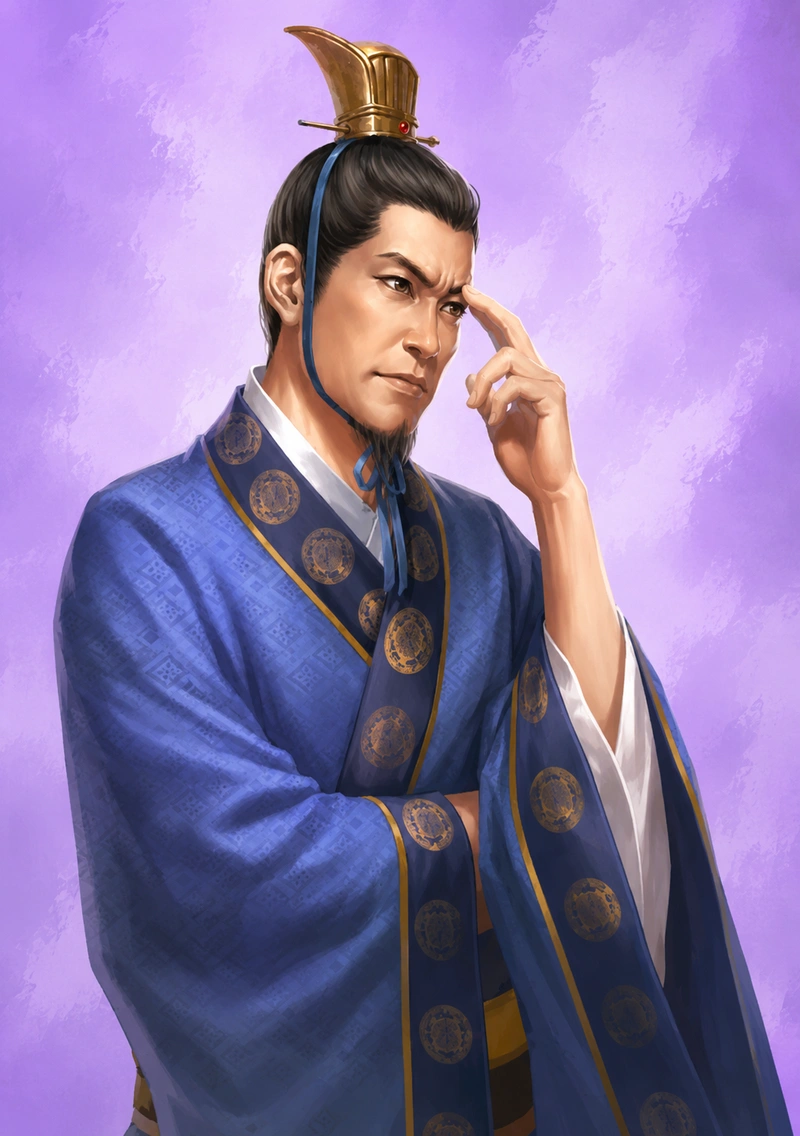
Wei Zhen, courtesy name Gongzhen, was an exemplary Cao Wei senior statesman, jurist, and master of personnel administration who served as Minister of Personnel (Libu Shangshu), Minister of Education (Situ), and Grand Commandant (Taiwei), being ennobled as the Marquis of Trường Lạc (Changshuai Hou). Hailing from Xiangyi County in Chenliu Commandery (modern-day Sui County, Henan Province), Wei Zhen was the son of Wei Zi, a loyalist who had previously exhausted his family fortune to assist Cao Cao in raising his initial righteous army. Documented in Chen Shou’s official dynastic history Records of the Three Kingdoms (Sanguozhi – Book of Wei, Biography of Wei Zhen, Volume 22) and Sima Guang’s Zizhi Tongjian, Wei Zhen was historically celebrated for his unyielding uprightness, deep knowledge of legal and ritual institutions, and absolute incorruptibility across four successive Cao Wei reigns.
During the late Eastern Han dynasty, in recognition of his father’s foundational loyalty, Cao Cao summoned Wei Zhen to his headquarters and appointed him to initial clerical posts. Later, he was dispatched to Xu’andao to serve as a Gentleman of the Palace Household close to the young Han Emperor Xian. When Cao Pi ascended the throne as the King of Wei in 220 AD and prepared to force Emperor Xian’s abdication, widespread court panic ensued, with many officials rushing to flatter the rising regime. Wei Zhen alone maintained his composure, publicly reminding Cao Pi of the former grace and historical achievements of the Han dynasty, thereby displaying a rare, independent moral character that refused to bend with political winds.
Following the formal establishment of the Cao Wei dynasty, Cao Pi appointed Wei Zhen as Minister of Personnel (Libu Shangshu), placing him in supreme control of state appointments and bureaucratic promotions. At the time, the powerful clan general Xiahou Dun attempted to use his immense imperial influence to pressure Wei Zhen into appointing personal favorites and clients to high office, dispatching agents laden with gold and silk to Wei Zhen’s residence. Unfazed by Xiahou Dun’s intimidating military authority, Wei Zhen flatly rejected the gifts and strictly adhered to objective merit and talent in his official evaluations. Impressed by his uncompromising integrity, Cao Pi deeply commended him and elevated his noble title to the Marquis of Anguo. Later in his career, under Emperor Ming (Cao Rui) and Emperor Cao Fang, Wei Zhen rose through the supreme ranks of the Three Ducal Ministers, serving successively as Minister of Education and Grand Commandant.
Wei Zhen maintained strict neutrality and political prudence during the intense factional struggles between Cao Shuang and Sima Yi, focusing entirely on civil governance, agricultural frugality, and the preservation of institutional order. He passed away peacefully in office in 248 AD at an advanced age, deeply mourned by the Cao Wei court, which posthumously honored him with prestigious titles, leaving his son Wei Lie to inherit his noble lineage.
Famous Quotes & Historical Sayings
In the historical records of Records of the Three Kingdoms (Sanguozhi – Book of Wei), historian Chen Shou recorded the paramount praise for Wei Zhen’s unblemished character: ‘Wei Zhen Gongzhen was an elder statesman of three reigns, enforcing the law with iron discipline and refusing to bow before the terrifying power of imperial relatives and powerful generals. Rising to the supreme office of Grand Commandant, his heart remained as pure and incorruptible as water. His lifelong dedication to preserving administrative justice and institutional integrity established him as an immortal model of a loyal state pillar.’
Wei Zhen (衛臻) — Historical & Literary Timeline
Entering Cao Cao’s Administration
Recruited into Cao Cao’s headquarters in honor of his father Wei Zi’s early financial contributions; serves in initial administrative and imperial guard posts.
Upholding Moral Dignity During the Han-Wei Transition
Serves as a palace official during Cao Pi’s ascension; maintains upright moral composure and reminds the court of Han historical precedents, earning widespread respect.
Minister of Personnel & Defying Xiahou Dun
Appointed Minister of Personnel; staunchly rejects political bribery and cronyism attempts from powerful clan generals like Xiahou Dun, upholding strict meritocratic standards.
Grand Commandant & Peaceful Passing in Office
Serves successively as Minister of Education and Grand Commandant (Taiwei) under Cao Wei; passes away peacefully in office in 248 AD, with his son Wei Lie inheriting his noble title.
For detailed historical records, archives, and official chronicles, explore Wei Zhen on Wikipedia.
Key Relationships
Family
- Wei Zi (卫兹, Vệ Tư): Father, an early loyalist who exhausted his family fortune to assist Cao Cao in raising his initial righteous army against Dong Zhuo.
- Wei Lie (卫烈, Vệ Liệt): Son, who inherited Wei Zhen’s marquisate and noble lineage following Wei Zhen’s death in 248 AD.
Friends
- No information
Enemies
- Xiahou Dun (夏侯惇, Hạ Hầu Đôn): High-ranking imperial clan general who attempted to exert pressure and send gifts to secure government offices for his personal associates, but was firmly rebuffed by Wei Zhen’s strict adherence to meritocracy.
Other
- Cao Cao (曹操, Tào Tháo): Founding warlord of Cao Wei who remembered Wei Zi’s foundational sacrifices and recruited Wei Zhen into his headquarters and administrative service.
- Cao Pi (曹丕, Tào Phi): First Emperor of Cao Wei who appointed Wei Zhen as Minister of Personnel, deeply respecting his incorruptibility and his moral integrity during the dynastic transition of 220 AD.
- Cao Rui (曹叡, Tào Duệ): Second Emperor of Cao Wei who relied upon Wei Zhen’s seasoned administrative and legal expertise, promoting him to the highest ministerial ranks.
- Emperor Xian of Han (汉献帝, Hán Hiến Đế): Last emperor of the Eastern Han dynasty, whom Wei Zhen served as a Gentleman of the Palace Household, openly upholding courtly decorum and the dynasty’s historical dignity prior to the abdication.
In Novel
Wei Zhen (卫臻, Wèi Zhēn) does not have a securely verified named appearance in the supplied edition under the exact Chinese name 卫臻. No chapter is assigned without an exact textual match.
In History
Summary
- Wei Zhen (卫臻, Vệ Trăn) was a senior official of Cao Wei who served across several reigns.
Career in Wei
- Wei Zhen came from a prominent family and entered government service during the early years of Cao Wei.
- He held a succession of important offices and became known for his administrative ability and political reliability.
Service under the Wei Court
- He remained active during the reigns of several Wei emperors and participated in major state affairs during a period of growing Sima family influence.
- His long career illustrates the continuity of the Wei bureaucracy from the generation of Cao Cao to the final decades of the dynasty.
Legacy
- Classification: Historical.