
Contents
Biography & Historical Record
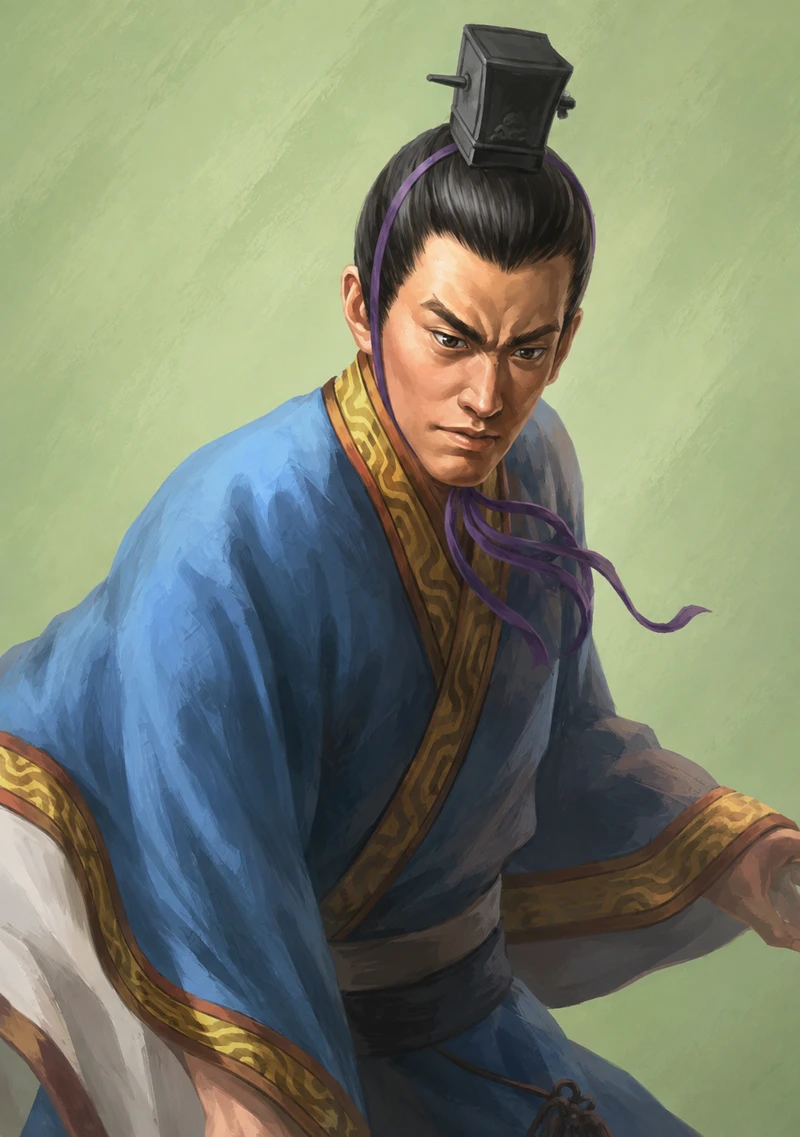
Zhu Shuo, courtesy name Yancai, was a high-ranking imperial minister, military commander, and intimate political advisor who served the Cao Wei state during the late Eastern Han dynasty and early Three Kingdoms period. Hailing from Yingchuan Commandery (modern-day Yuzhou, Henan Province), Zhu Shuo was a member of the elite intellectual circle that rose to prominence during the consolidation of Cao Wei’s imperial power. Documented in Chen Shou’s official dynastic history Records of the Three Kingdoms (Sanguozhi – Book of Wei, Biography of Emperor Wen / Cao Pi) and Sima Guang’s Zizhi Tongjian, Zhu Shuo is historically noted as a core member of the inner circle of advisors to Cao Pi during his long and intense political struggle to be named the Crown Prince against his brother Cao Zhi.
Zhu Shuo belonged to a select group of intimate companions and strategists known as the Four Friends of Cao Pi (Si You), alongside the formidable statesman Sima Yi, the brilliant administrator Chen Qun, and the pragmatic diplomat Wu Zhi. As Cao Pi vied for his father Cao Cao’s favor to secure his position as the designated heir to the Wei Kingdom, Zhu Shuo provided crucial logistical, administrative, and political support, helping to solidify Cao Pi’s faction within the court. His close association with such giants as Sima Yi and Chen Qun ensured that he remained a trusted confidant at the highest levels of the burgeoning Wei state.
Following the death of Cao Cao in 220 AD and Cao Pi’s formal establishment of the Cao Wei dynasty, Zhu Shuo’s loyal service was rewarded with rapid promotion. He was appointed as the General of the Central Guards (Lingjun Jiangjun), a paramount military role that entrusted him with the supreme command over the imperial caved-in (cấm vệ quân) units responsible for guarding the capital at Luoyang and overseeing the conduct of military officials. While his office granted him immense authority over the imperial household and capital security, historical accounts describe Zhu Shuo as a reserved and cautious individual. He rarely intervened in grand state debates or aggressively pursued major political initiatives, which allowed his influence to remain secondary compared to the sweeping power wielded by his contemporaries, Sima Yi and Chen Qun. Zhu Shuo continued to hold high office throughout the early years of the reign of Emperor Cao Rui (Emperor Ming) and passed away peacefully around the early years of the Taihe era.
Role in Romance of the Three Kingdoms
In Luo Guanzhong’s classic 14th-century historical novel Romance of the Three Kingdoms, Zhu Shuo is omitted from the main literary narrative. The novel prioritizes the grand military confrontation between the major warlords and the strategic dominance of figures like Sima Yi, Zhuge Liang, and Chen Qun. As a figure who operated primarily in the background of court administration and imperial protection rather than on the active military frontiers, Zhu Shuo’s character does not contribute to the dramatic battlefield plots that define the core narrative structure of the novel.
Zhu Shuo (朱鑠) — Historical & Literary Timeline
Advisor to Cao Pi during Succession Struggle
Serves as a member of Cao Pi’s Four Friends (Si You), providing administrative and political support during the intense rivalry between Cao Pi and Cao Zhi for the position of Crown Prince.
Appointment as General of the Central Guards
Appointed by Emperor Cao Pi as General of the Central Guards (Lingjun Jiangjun), assuming supreme command over the imperial guards responsible for capital security at Luoyang.
Passing in Office
Serves throughout the transition to the reign of Emperor Cao Rui (Emperor Ming); passes away peacefully of natural causes during the early Taihe era.
For detailed historical records, archives, and official chronicles, explore Zhu Shuo on Wikipedia.
Key Relationships
Family
- No information
Friends
- Sima Yi (司马懿, Tư Mã Ý): Fellow member of Cao Pi’s intimate political circle known as the “Four Friends” (Si You), collaborating closely to secure Cao Pi’s succession and serving alongside him in the Wei imperial administration.
- Chen Qun (陈群, Trần Quần): Prominent scholar-statesman from Yingchuan and fellow member of the “Four Friends” who provided strategic and political counsel alongside Zhu Shuo to support Cao Pi’s faction.
- Wu Zhi (吴质, Ngô Chất): Fellow confidant within the “Four Friends” who actively coordinated political strategy to advance Cao Pi’s standing at court.
Enemies
- Cao Zhi (曹植, Tào Thực): Cao Pi’s younger brother and chief rival in the succession struggle during the 210s AD, whose faction Zhu Shuo actively worked against to secure the crown prince title for Cao Pi.
Other
- Cao Pi (曹丕, Tào Phi): Sovereign and Emperor Wen of Wei, whom Zhu Shuo served as a trusted advisor during the heir dispute and was later appointed by him as General of the Central Guards (Lingjun Jiangjun) in 220 AD to command the imperial capital garrison.
- Cao Rui (曹叡, Tào Duệ): Second emperor of Wei (Emperor Ming), under whose reign Zhu Shuo continued to hold high imperial military office until his death around the early Taihe era (c. 227 AD).
In Novel
Zhu Shuo (朱铄, Chu Toái) does not have a securely verified named appearance in the supplied edition under the exact Chinese name 朱铄. No chapter is assigned without an exact textual match.
In History
Summary
- Zhu Shuo (朱铄, Chu Toái), courtesy name Yancai, was a Cao Wei general and a close associate of Cao Pi.
Four Friends of the Crown Prince
- During the late Eastern Han, Zhu Shuo served Cao Pi and was counted with Chen Qun, Sima Yi and Wu Zhi among the Four Friends of the Wei Crown Prince.
Military Command
- After Cao Pi became emperor, Zhu Shuo succeeded Xiahou Mao as Central Army Commander and was entrusted with command of the imperial guards.
Character
- Sources describe him as physically thin and quick-tempered.
- An incident at a gathering hosted by Wu Zhi illustrates his temper: after a dispute involving Cao Zhen and Wu Zhi, Zhu Shuo became angry and struck the ground with his sword.
Legacy
- He reached the rank of Imperial Guard Commander before his death.
- Classification: Historical.