
Contents
Biography & Historical Record
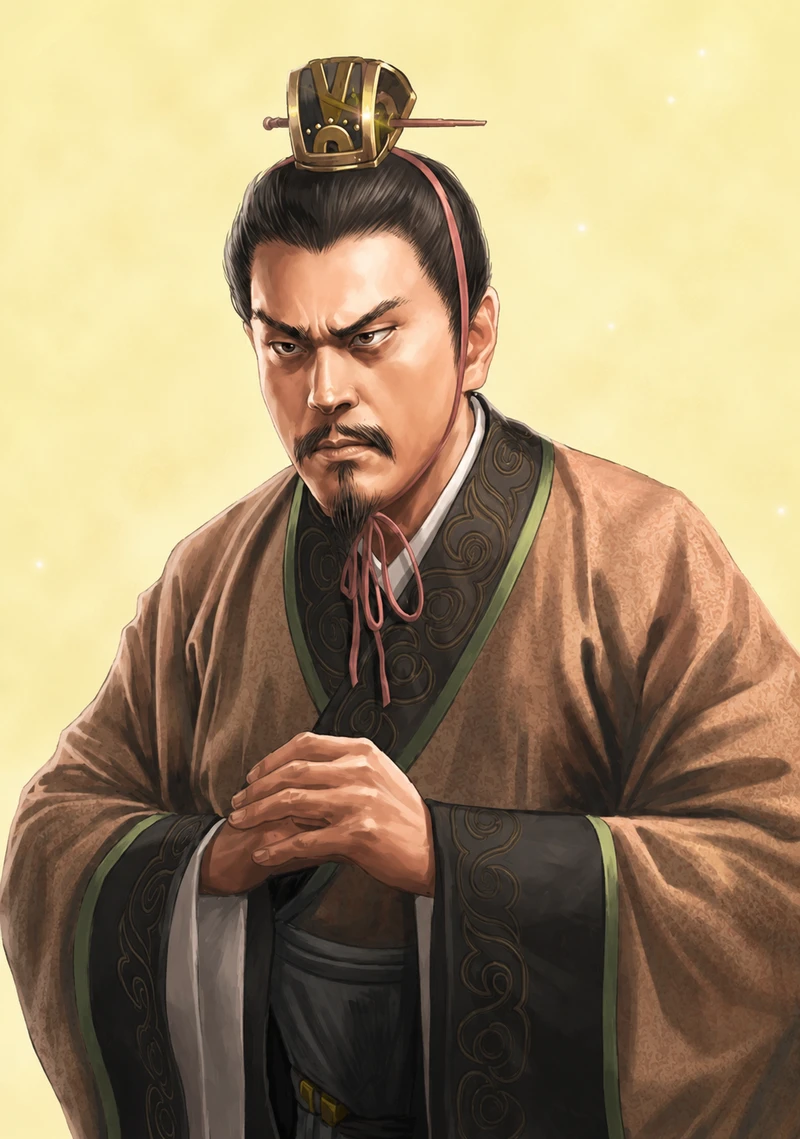
Dai Yuan (戴渊, ? – 322 AD), courtesy name Ruosi (若思), was a prominent military commander and statesman during the late Western Jin and early Eastern Jin dynasties. Born in Guangling Commandery, he is famously remembered in Chinese history for his dramatic reformation from a river bandit leader to a revered, high-ranking general and scholar.
In his youth, Dai Yuan possessed exceptional martial bravery and leadership, but lacked moral direction. He led a band of armed robbers along the Yangtze and Huai rivers, plundering merchant vessels. The famous Wu scholar and general Lu Ji (陸機) once traveled along the river with substantial baggage. From the shore, Dai Yuan sat comfortably on a couch, commanding his men with precise tactical military discipline to seize the cargo. Lu Ji, struck by Dai Yuan’s remarkable commanding presence and organizational skill, called out from his ship: ‘With such exceptional talent, why do you turn to banditry?’ Deeply moved and overcome with shame, Dai Yuan wept, threw away his sword, and surrendered his life as a bandit. He devoted himself entirely to scholarship, moral cultivation, and military ethics under Lu Ji’s guidance and recommendation.
Dai Yuan quickly rose through the Jin administrative ranks due to his talents. During the late Western Jin period, he served as a Minister and local official. Following the Disaster of Yongjia and the collapse of the Northern Jin capital, Dai Yuan migrated south to join Sima Rui (the future Emperor Yuan of Jin) at Jiankang. Sima Rui recognized Dai’s military capability and administrative integrity, appointing him as General Who Conquers the West (征西將軍) and Inspector of Yanzhou.
As Emperor Yuan sought to curtail the growing, tyrannical influence of the warlord Wang Dun (王敦), he placed Dai Yuan and Liu Wei in command of strategic border garrisons. In 322 AD, Wang Dun launched an armed rebellion under the pretext of eliminating Liu Wei and Dai Yuan. Dai Yuan led loyalist forces back to defend the capital Jiankang. However, Wang Dun’s forces breached the city defenses. Following the capital’s fall, Dai Yuan was captured and executed by Wang Dun. After Wang Dun’s eventual downfall, the Jin court restored Dai Yuan’s post and honored him posthumously with high ministerial ranks.
Role in Romance of the Three Kingdoms
‘Dai Yuan was a figure of the late Western Jin and early Eastern Jin transition, living after the complete unification under Jin and the eventual end of the Three Kingdoms era. As such, he does not appear in Luo Guanzhong’s 14th-century historical novel, Romance of the Three Kingdoms.’
Dai Yuan — Historical & Literary Timeline
Bandit Leader & Transformation
Operates as a river bandit in Guangling. Encounters Lu Ji, who recognizes his natural leadership talent. Touched by Lu Ji’s words, Dai Yuan abandons banditry to pursue classical studies and military arts.
Entry into Jin Governance
Recommended by Lu Ji and local scholars, entering Western Jin civil service and gaining administrative experience across various commanderies.
Southern Migration & Imperial Service
Flees south following the fall of Luoyang. Joins Sima Rui in Jiankang and becomes a key military figure in establishing the Eastern Jin dynasty.
Appointment as Western Expedition Commander
Appointed General Who Conquers the West (征西將軍) by Emperor Yuan to secure border defenses and counterbalance the factional power of warlord Wang Dun.
Defending Jiankang & Execution
Wang Dun rebels. Dai Yuan returns to defend the imperial capital. Upon Jiankang’s fall to the rebels, Dai Yuan is captured and executed on Wang Dun’s orders. Later fully exonerated and honored post-rebellion.
Key Relationships
Family
- Dai Jiao (戴矫, Đái Kiểu): Father. Scholar-official who served in the Western Jin administration.
- Dai Miao (戴邈, Đái Mạo): Younger brother. Senior minister of Eastern Jin who served as Master of Writing and General of Agile Cavalry.
Friends
- Lu Ji (陆机, Lục Cơ): Master poet, scholar, and general. Encountered the young Dai Yuan when Dai was leading river bandits along the Yangtze; Lu Ji’s stinging moral rebuke inspired Dai Yuan to abandon banditry, master classical literature, and enter the imperial service under Lu Ji’s mentorship and recommendation.
- Sima Rui (司马睿, Tư Mã Duệ): Founding Emperor of Eastern Jin (Emperor Yuan). Deeply relied on Dai Yuan’s military competence during the southern founding at Jiankang (317 AD), appointing him General Who Conquers the West (Zhengxi Jiangjun) and Area Commander of Six Commanderies.
- Liu Wei (刘隗, Lưu Ngôi): Imperial minister and close political ally who co-directed Emperor Yuan’s northern frontier garrisons to curb warlord power.
- Diao Xie (刁协, Điêu Hiệp): Chancellor of Eastern Jin who allied with Dai Yuan in central court governance.
Enemies
- Wang Dun (王敦, Vương Đôn): Arrogant warlord and Grand General of Eastern Jin. Launched an armed rebellion against the throne in 322 AD under the pretext of eliminating Dai Yuan and Liu Wei; after capturing the capital Jiankang, Wang Dun had Dai Yuan arrested and executed at the South Gate.
- Wang Han (王含, Vương Hàm): Elder brother of Wang Dun who commanded rebel forces besieging Jiankang during the 322 AD insurrection.
- Qian Feng (钱凤, Tiền Phụng): Chief military advisor to Wang Dun who actively incited the execution of loyalist ministers including Dai Yuan.
Others
- No information
In Novel
Dai Yuan (戴渊, Đái Uyên) does not have a securely verified named appearance under the exact Chinese name 戴渊 in the supplied novel text. He belongs to the later historical Jin narrative and should not be inserted into the novel timeline without exact evidence.
In History
Jin Career
- Dai Yuan (戴渊, Đái Uyên) was a prominent official of the Western Jin period and a member of the Dai family of Lujiang.
Political Service
- He served the Jin government during the troubled years following the reunification of China. His reputation for learning and administration brought him into the higher levels of government.
Later Career
- Dai Yuan was appointed to senior office during the reign of Emperor Hui of Jin. His career was eventually overtaken by the political conflicts of the early fourth century.
Historical Importance
- His life belongs to the immediate post-Three-Kingdoms transition, when the Jin dynasty attempted to consolidate the territories formerly ruled by Wei, Shu, and Wu.