
Contents
Biography & Historical Record
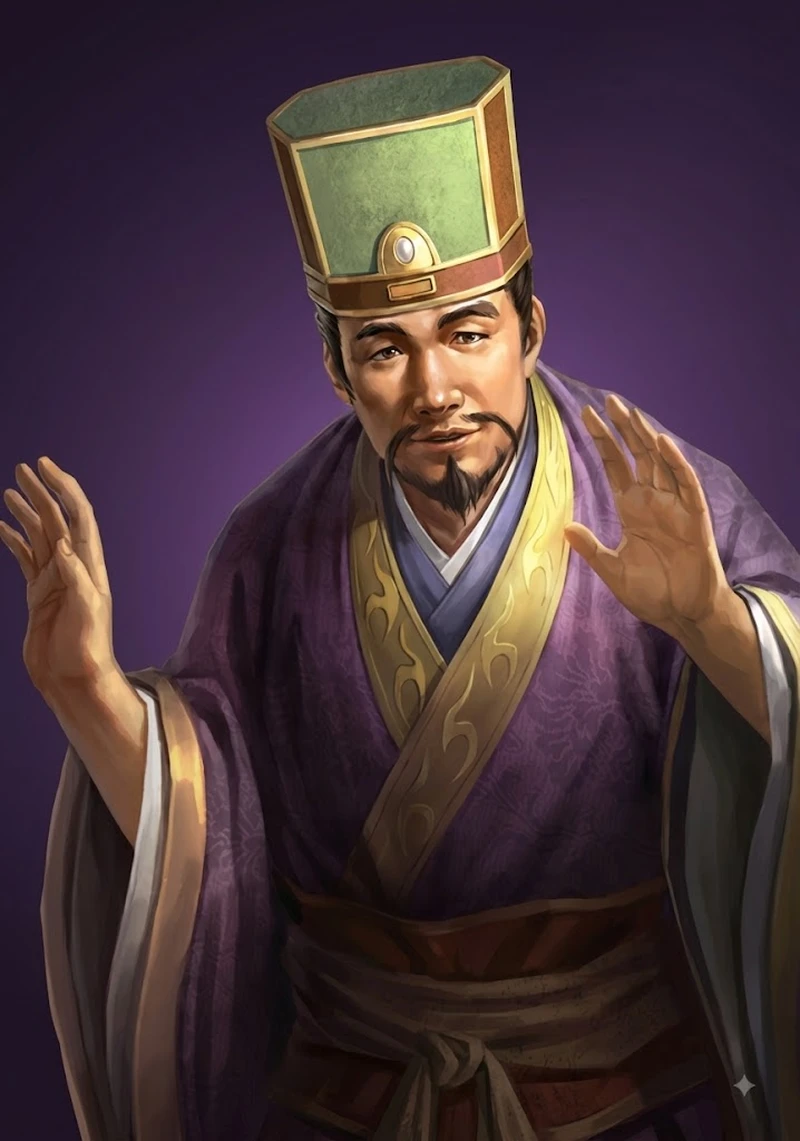
Ma Ridi (马日磾) was a prominent scholar and official during the late Eastern Han Dynasty. He was a descendant of the famous general Ma Yuan and the son of the great Confucian scholar Ma Rong. Ma Ridi was well-versed in the classics and held various high-ranking positions in the Han court, including Minister of Ceremonies (Taichang). Following the rise of Dong Zhuo and the subsequent chaos in the capital, Ma Ridi was sent as an imperial envoy to appease the regional warlords. While traveling in the Kanto region, he was detained by Yuan Shu, who attempted to force him to support his own political ambitions. Humiliated and unable to fulfill his imperial mission, Ma Ridi fell ill and passed away in 194 AD.
Role in Romance of the Three Kingdoms
In Luo Guanzhong’s epic, Ma Ridi is portrayed as a loyalist of the Han, attempting to navigate the treacherous political landscape. His encounter with Yuan Shu highlights the arrogance of the warlords during the collapse of the dynasty, as he was effectively held hostage for his imperial credentials.
Ma Ridi — Historical & Literary Timeline
Imperial Envoy
Ma Ridi is sent to the Kanto region as an envoy of the Han Emperor to stabilize the regional administration and confer titles.
Death
After being insulted by Yuan Shu, who seized his imperial seals and attempted to coerce him, Ma Ridi dies of depression and illness.
Key Relationships
Family
- Ma Rong (马融, Mã Dung): Father. Master Confucian classicist and scholar of the Eastern Han dynasty.
- Ma Yuan (马援, Mã Viện): Ancestor. Legendary General Who Calms the Waves (Fubo Jiangjun) of the early Eastern Han.
Friends
- Emperor Xian of Han (汉献帝刘协, Hán Hiến Đế Lưu Hiệp): Sovereign of Eastern Han whom Ma Ridi served faithfully as Grand Tutor (Taifu) and Minister of Ceremonies (Taichang).
- Cai Yong (蔡邕, Sái Ung): Master historian and scholar who collaborated with Ma Ridi in collating the Confucian classics at the Dongguan Imperial Library.
- Lu Zhi & Huangfu Song (卢植、皇甫嵩, Lư Thực, Hoàng Phủ Song): Loyal Han ministers who shared Ma Ridi’s devotion to preserving the dynasty.
- Zhao Qi (赵岐, Triệu Kỳ): Senior Han envoy who was dispatched alongside Ma Ridi to pacify regional warlords in the Guandong provinces (192 AD).
- Sun Ce (孙策, Tôn Sách): Young warrior whom Ma Ridi officially recommended as a Filial and Incorrupt candidate (Xiaolian) and appointed as Major in Huainan (193 AD).
Enemies
- Yuan Shu (袁术, Viên Thuật): Paramount warlord of Huainan. When Ma Ridi arrived in Shouchun as imperial envoy in 193–194 AD, Yuan Shu seized his Imperial Credential Staff, insulted his authority, and attempted to force him to appoint his henchmen; overwhelmed by humiliation and grief, Ma Ridi fell ill and died in captivity in 194 AD.
- Dong Zhuo (董卓, Đổng Trác): Tyrannical Chancellor whose violent coup in Luoyang and forced relocation of the capital Ma Ridi struggled to restrain.
- Li Jue & Guo Si (李傕、郭汜, Lý Thôi, Quách Dĩ): Liangzhou tyrants who terrorized Chang’an, sending Ma Ridi on the perilous eastern pacification mission.
Others
- No information
In Novel
Chapter 6
- Ma Ridi (马日磾, Mã Nhật Đê): Ma Ridi is a Han court official during the political turmoil following Dong Zhuo’s seizure of power. He is associated with the imperial court and later with the attempts of the Han government to preserve its authority as warlords dominate the empire.
In History
Eastern Han Scholar
- Ma Ridi (马日磾, Mã Nhật Đê) was a distinguished scholar and official of the late Eastern Han. He was associated with the scholarly tradition surrounding the imperial court.
Imperial Mission
- During the political turmoil of the late Han, Ma Ridi was sent on missions intended to maintain imperial authority and negotiate with powerful regional commanders.
Death
- He eventually fell into the hands of Li Jue (李傕, Lý Thôi) during the struggle for control of the Han court. His authority was disregarded and he died amid the political violence of the period.
Legacy
- Ma Ridi is remembered as a learned Han official whose career was overtaken by the collapse of central imperial power.