
Contents
Biography & Historical Record
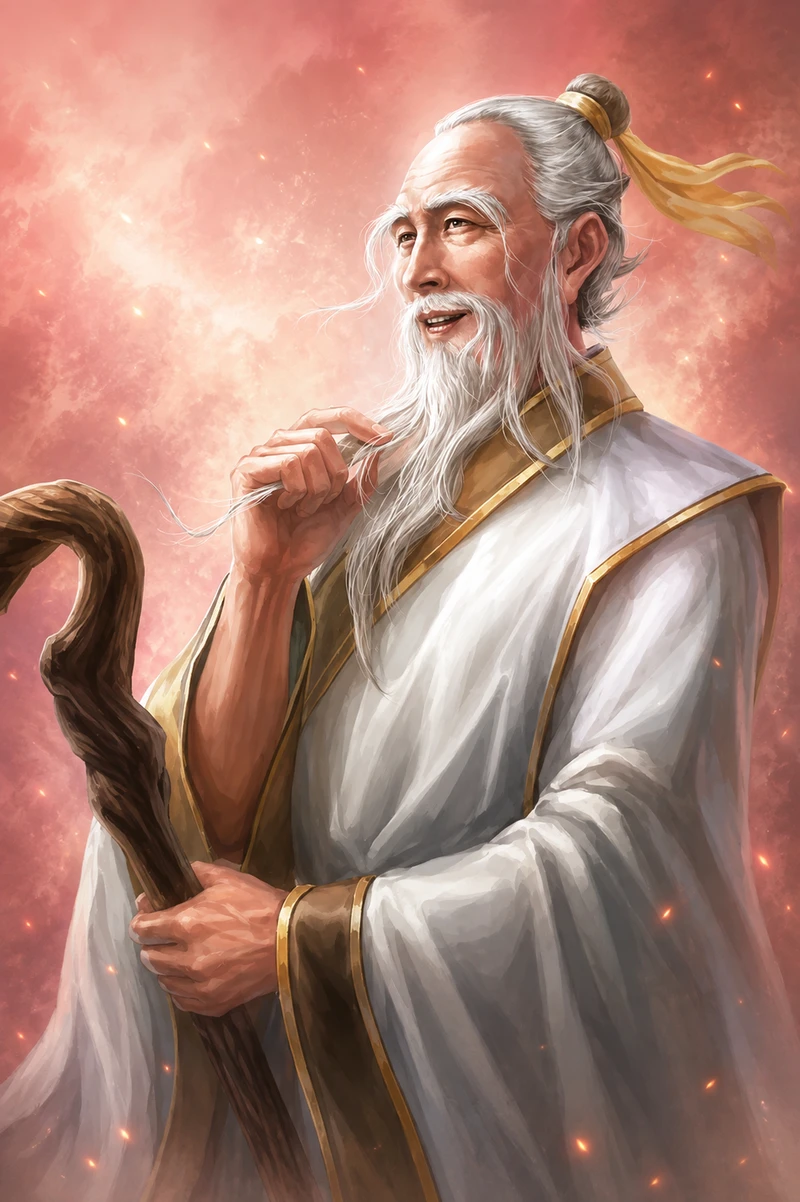
Gan Ji (于吉, Vu Cát) was a prominent Daoist practitioner and healer during the late Eastern Han Dynasty. Historical records from the Records of the Three Kingdoms (Sanguozhi) describe him as a charismatic figure who roamed the Jiangdong region, performing miracles and curing the sick using charms and water. He garnered an immense following among the common people, which eventually drew the ire of the regional warlord Sun Ce (孫策, Tôn Sách). Sun Ce perceived Gan Ji’s influence as a threat to his authority, fearing that his soldiers and officials would become more loyal to the ‘sorcerer’ than to their commander. Despite pleas from his advisors to show leniency, Sun Ce ordered the execution of Gan Ji. Following his death, historical accounts and local folklore claim that Sun Ce was haunted by Gan Ji’s spirit, leading to his eventual death.
Role in Romance of the Three Kingdoms
“The Taoist is no charlatan; he is a being of higher order who has come to save the world from suffering. To kill him is to invite the wrath of the heavens.”
In Luo Guanzhong’s Romance of the Three Kingdoms, Gan Ji is portrayed as a supernatural entity rather than just a healer. He appears to Sun Ce as a mysterious, ethereal figure. The novel dramatizes the conflict between the two, emphasizing Sun Ce’s arrogance and lack of faith. Gan Ji is shown performing miracles, such as bringing rain during a severe drought to save the people of Jiangdong. The narrative focuses on the supernatural aftermath of his execution, where the vengeful spirit of Gan Ji constantly haunts Sun Ce, manifesting in reflections and nightmares, which eventually drive the young warlord to his own tragic end.
Gan Ji — Historical & Literary Timeline
The Confrontation and Execution
Gan Ji is captured by Sun Ce (孫策, Tôn Sách) in Wu. Despite the intervention of civil and military officials who warn against killing a man with such a vast following, Sun Ce executes him. The event marks the onset of Sun Ce’s mental decline and eventual death.
For detailed historical records, archives, and official chronicles, explore Yu Ji, Gan Ji on Wikipedia.
Key Relationships
Family
- No information
Friends
- No information
Enemies
- Sun Ce (孙策, Tôn Sách): The regional warlord of Jiangdong who viewed Gan Ji’s massive religious influence as a direct threat to his authority. Despite widespread pleas for leniency from his officers and mother, Sun Ce ordered Gan Ji’s execution in 200 AD. Both historical folklore and romance accounts state that Gan Ji’s vengeful spirit haunted Sun Ce afterward, directly causing his mental decline and sudden death.
Other
- Sun Quan (孙权, Tôn Quyền): The younger brother of Sun Ce, who witnessed the supernatural turmoil and political aftermath surrounding Gan Ji’s execution, ultimately inheriting leadership of the Sun clan after Sun Ce’s death.
In Novel
Chapter 29
- Gan Ji (于吉, Vu Cát): Daoist master and immortal from Langya who distributed talismanic water to heal commoners across Jiangdong; condemned as a sorcerer and executed by Sun Ce (孙策, Tôn Sách), Gan Ji’s apparition haunted Sun Ce relentlessly, provoking Sun Ce’s fatal collapse from his wounds.
In History
Period I
- Gan Ji (于吉, Vu Cát, Can Cát) is a historical religious figure whose name is written 于吉 in the supplied Diaochan data. He was a Daoist religious practitioner associated with the lower Yangtze region and became known for healing and religious activities. The name Gan Ji should therefore not be confused with a separate historical person under the Chinese name 于吉.
Year: 200 AD
- Gan Ji (于吉, Vu Cát, Can Cát) became associated with the court and followers of Sun Ce (孙策, Tôn Sách) in later accounts. Sun Ce regarded his religious influence with suspicion and had him executed. The historical tradition is uncertain in detail, and later literature greatly expanded the supernatural aspects of the story.
Historical Status
- Gan Ji (于吉, Vu Cát, Can Cát) should be treated as a historical/religious figure, not as a purely fictional creation of Luo Guanzhong. The supernatural episodes associated with him in Romance of the Three Kingdoms are literary elaborations and should not be presented as established historical facts.
Gallery







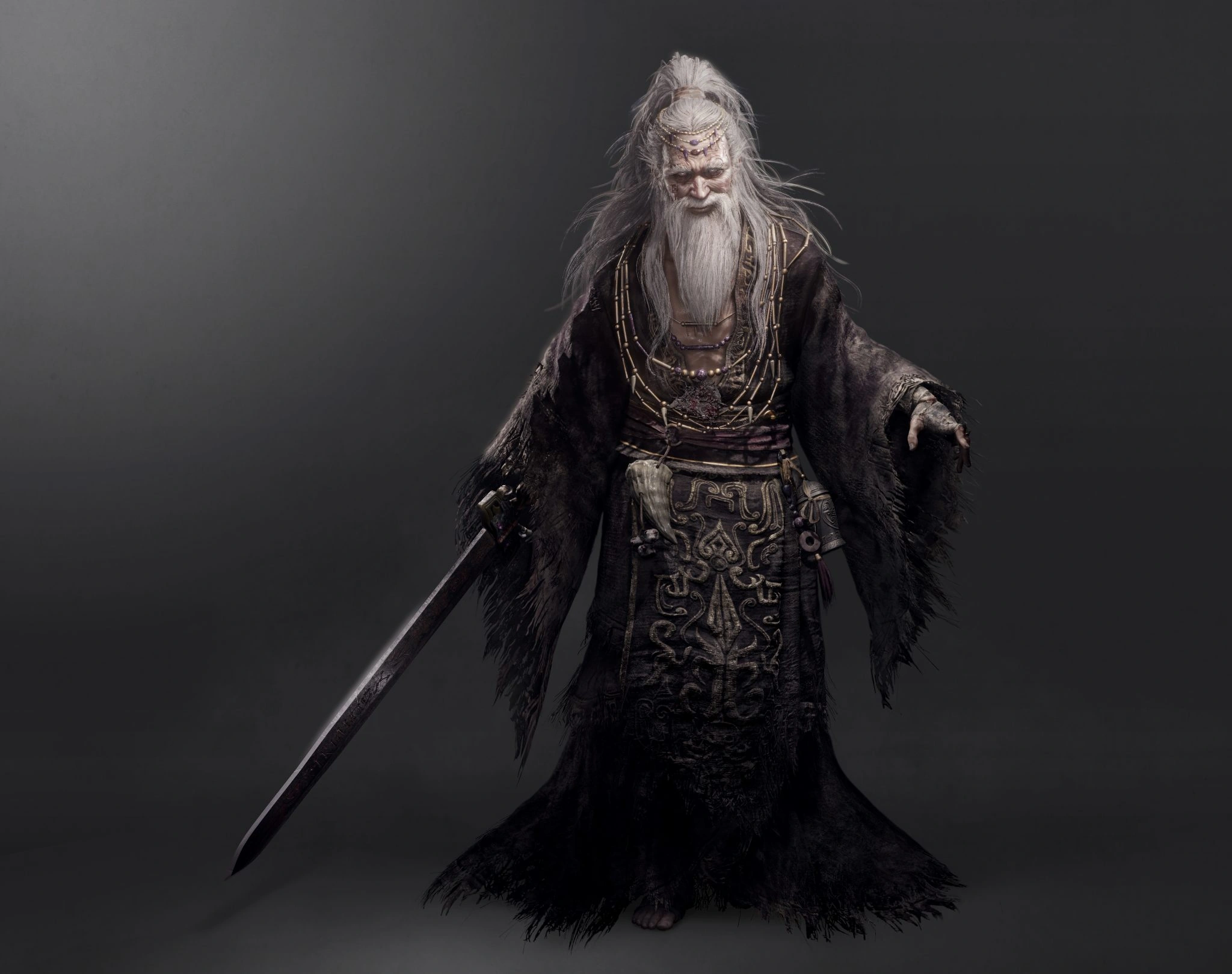
2 comments
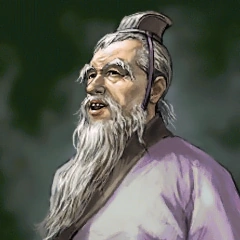
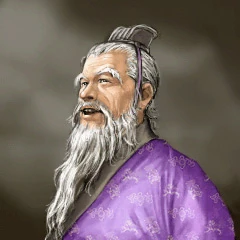
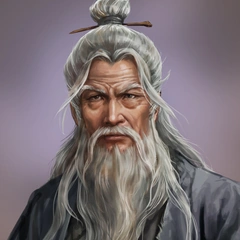
Yu Ji (于吉, onyomi: U Kitsu) is generally regarded as the fictional name for Gan Ji (干吉, onyomi: Kan Kitsu), a Taoist practitioner during the late Han Dynasty. He is commonly known as a sage who is said to have prophesied Sun Ce‘s death.
He placed third with fans in Gamecity’s Shin Sangoku Musou Blast first card promotion poll.
Historical Information
Gan Ji was born in Xuzhou, Langye District. Not much was written about him, but there are two primary accounts of his activities. The Jiangbiao Zhuan states that he was a wandering hermit who traveled within the eastern sections of China as an herbalist and doctor. He was said to have healed the injured with holy water and Taoist prayers. His status as a “miracle worker” allegedly earned him thousands of followers within Wu, although the authenticity of this record is disputed as radical propaganda for Taoism. One of his disciples was Gong Chong.
According to Book of Later Han, either he or his disciple presented one hundred volumes of Taiping Jing to Emperor Shun sometime during his reign. Since he was not described within detail in the latter record, most people agree that it was likely that someone like Gong Chong could have delivered the text in Gan Ji’s name. In legends and folklore, Gan Ji was said to have personally authored the text after rigorously creating the writing material himself from hundreds of pure white trees.
Sometime in 200, Sun Ce intercepted a Taoist social gathering. He was angered by the popularity of their teachings and sought to execute the ringleader. Despite pleas from thousands of his men and possibly his own mother to spare the Taoist, his order was carried out without fail. Record of Three Kingdoms doesn’t specifically identify the ringleader as Gan Ji (the person is unnamed), but the Soushenji does under the “Yu Ji” name. Fan Ye, the compiler of Book of Later Han, identified Gan Ji with Yu Ji as though they are one and the same person based on observations regarding the ringleader’s popularity. People are still divided over whether this is truly the case.
Romance of the Three Kingdoms
Romance of the Three Kingdoms adapts Yu Ji’s account from the Soushenjì into its narrative. He was a wanderer who traveled around the Jiangdong region and convinced people that he was a mystic who had healing powers. Sun Ce, on the other hand, became suspicious of his sorcery and had him imprisoned on grounds of heresy. The merciful pleas of his followers went ignored as the healer was executed via decapitation. For this, Yu Ji’s spirit rose from the dead and began to haunt Sun Ce which eventually brought about his demise.
Gan Ji (died 200), rendered also as Yu Ji, was a Taoist priest who lived during the late Eastern Han dynasty of China. As a Taoist clergy, Gan Ji helped to cure the diseases of the people and saved many lives. He was widely respected in Wu County and Kuaiji, this caused Sun Ce to be jealous of his fame and reputation among the locals. He was eventually executed by Sun Ce under the pretext of deceiving the public.
Life
Gan Ji was born in Langya Commandery (琅琊郡, present-day southeastern Shandong). He first lived further in the east before travelling to Wu County and Kuaiji. When he arrived, he helped the locals with harvest, promoted Taoist culture by reading texts and burning incense. Furthermore, he also made talismans to treat diseases among the common people. Therefore, he became popular with the residents of Wu and Kuaiji. Many joined him to become his disciples. During a meeting, when Sun Ce gathered his officers and officials at the top of the county’s tower. They noticed that Gan Ji was walking by the road in a splendid attire while carrying a small pouch in his hand. Seeing him, around two-thirds of Sun Ce’s retainers left the tower to pay their respect to Gan Ji. Although those in charge of the assembly tried to, they couldn’t stop them. Sun Ce was furious and imprisoned Gan Ji.[1]
The people who served as Gan Ji’s disciples sent their wives to plead for his case with Sun Ce’s mother and saved him. Lady Wu told her son: “Master Gan assists the army and provides good fortune. He heals and saves the officers and soldiers; do not kill him.” However, Sun Ce answered: “This man is a sorcerer who can deceive and confuse the masses. Because of him, the officers stopped caring for the rules between a sovereign and his ministers. Going as far as to ignore me to pay their respect to him. He must be killed.”[2]
When Sun Ce’s officers heard about his decision to execute Gan Ji. They also sent letters to explain the situation and pleaded to save his life. Sun Ce told them: “In the past, Zhang Jin served as the Governor of Jiao Province yet he abandoned the common teaching, abolished the ancestral customs and laws so he could promote the Tao’s evil precepts. Proclaiming it was to help others yet in the end he was killed by the southerners. This is the just result of his actions. All of you do not understand this. Now Gan Ji is already a dead man, don’t waste paper and brush for this.”[3]
Thereafter, Sun Ce beheaded Gan Ji and had his head hung in the market. However, the disciples of Gan Ji didn’t believe that he was dead, only that his soul left his body. They would continue to offer sacrifices to him and promote his teachings.[4][5]
According to the Book of Later Han, during the reign of Emperor Shun of Han (r. 125–144), Gong Chong (宮崇), one of Gan Ji’s disciples, submitted the Taiping Qingling Shu (太平清領書) to the emperor; although there is no certitude that this is the same Gan Ji.
In Romance of the Three Kingdoms
Some believe that the character Yu Ji (于吉) in the 14th-century historical novel Romance of the Three Kingdoms is a misspelling of Gan Ji.[6] In the novel, Yu Ji wandered around the Jiangdong region, chatting with soldiers and civilians, making everyone believe that he was a magician and healer. The warlord of Jiangdong, Sun Ce, heard of Yu Ji’s magic and grew suspicious of him, thinking that he was casting spells on people. Sun Ce accused Yu Ji of sorcery and had him executed after Yu Ji stated that he cured people of diseases for free. However, Yu Ji’s spirit returned to haunt Sun Ce and eventually caused him to die from shock.
In popular culture
In the video games Dynasty Warriors 5 and 7, there is a stage based on Sun Ce’s confrontation with Yu Ji, a fictional event. In the stage Sun Ce has to fight Yu Ji clones, as well as a Da Qiao and Sun Jian clone.
The 1983 Hong Kong film The Weird Man by the Shaw Brothers Studio is loosely based on the story of Yu Ji and Sun Ce. Yu Ji was put to death by Sun Ce and he later comes back as a ghost and wreaks havoc on Sun Ce for revenge by possessing his army and his wife. He also helped Sun Ce kill Xu Gong while killing Sun Ce in the process. In this film, he is seen as the hero while Sun Ce is portrayed as the anti-hero. The Weird Man was remade in 1993 as Ninja in Ancient China which also combined some concepts from another Shaw Brothers movie the Five Elements Ninjas.
A fictionalized version of Yu Ji appears as the central antagonist in the 2023 video game Wo Long: Fallen Dynasty.