


Contents
Biography & Historical Record
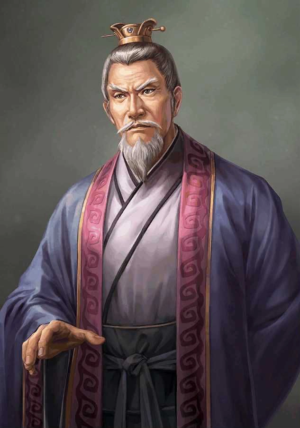
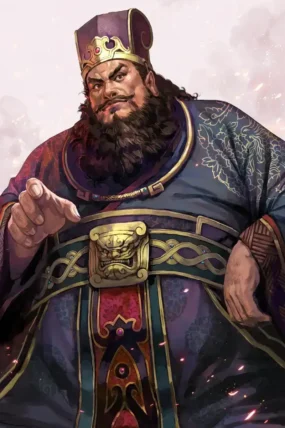
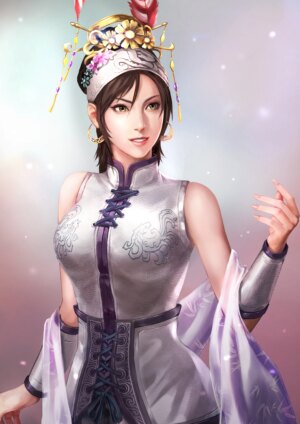
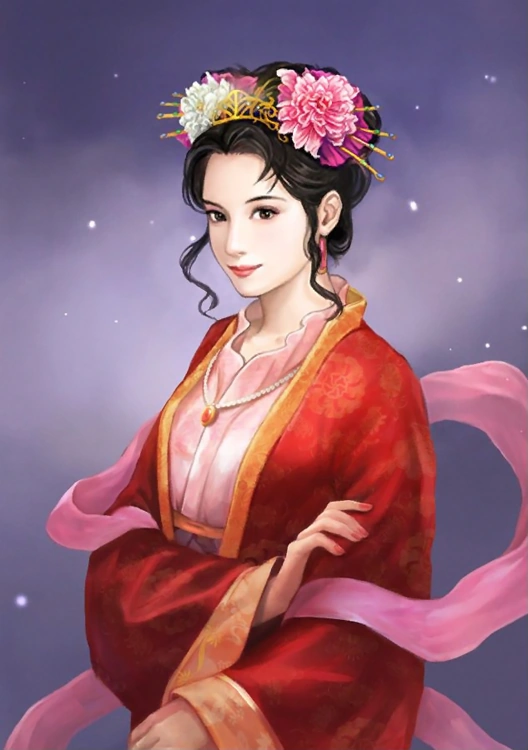
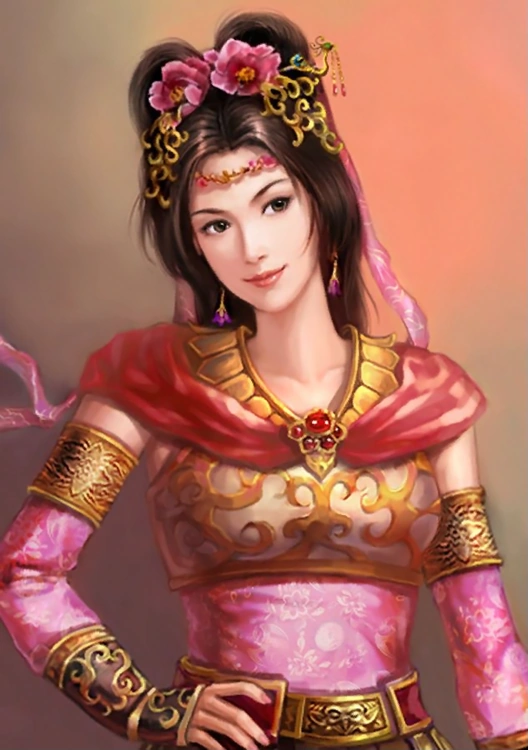
Diaochan (貂蝉, Điêu Thuyền) — literally “Sable Cicada” — is the most famous fictional heroine of Luo Guanzhong’s Romance of the Three Kingdoms. In the novel she is the adopted daughter of Minister of the Interior Wang Yun (王允, Vương Doãn), whose beauty and resolve drive the Chain Stratagem (连环计) that pits Chancellor Dong Zhuo (董卓, Đổng Trác) against his adopted son and champion Lu Bu (吕布, Lã Bố). She vows at Wang Yun’s moonlit garden, plays the sable-cicada role in the double courtship, weeps at Fengyi Pavilion to inflame Lu Bu’s jealousy, and survives Dong Zhuo’s assassination to become Lu Bu’s consort until the Xiapi disaster in Chapter 19.
Chen Shou’s Sanguozhi records no woman named Diaochan. Pei Songzhi’s annotation to Lu Bu (吕布, Lã Bố)’s biography preserves a brief note that Dong Zhuo once kept a serving woman who quarreled with Lu Bu over her — the historical kernel behind the fully invented romance. Later opera, painting, and games (including Dynasty Warriors) expanded her into one of China’s Four Beauties; on Diaochan.xyz she is catalogued as a novel-first figure whose wiki Father, Spouse, and Children links follow site posts, not alternate pinyin or Vietnamese spellings.
Role in Romance of the Three Kingdoms
Chapter 8 (Wang Yun Prepares the Chain Stratagem; Dong Zhuo Burns Luoyang): After Dong Zhuo’s tyranny at Luoyang, Wang Yun confides in Diaochan at his moonlit garden. She offers to die for the state, then accepts the stratagem: first pledge herself to Wang Yun, then be presented to Dong Zhuo while secretly winning Lu Bu’s heart — the “chain” that will link two tigers. In the same chapter Dong Zhuo orders the capital moved west and Luoyang burned.
Chapter 8–9 (Fengyi Pavilion arc): Diaochan meets Lu Bu in Dong Zhuo’s mansion; when Dong Zhuo discovers them at Fengyi Pavilion (凤仪亭), she clings to Lu Bu and accuses Dong Zhuo of seizing her — Lu Bu barely escapes Dong Zhuo’s thrown halberd. Her tears and reproaches keep Lu Bu’s hatred boiling until Wang Yun persuades him to join the palace coup.
Chapter 9 (Wang Yun Sets a Trap; Lu Bu Kills Dong Zhuo): Lu Bu and Wang Yun’s allies storm the palace; Dong Zhuo is slain. Diaochan passes to Lu Bu’s household. When Li Jue and Guo Si rally western troops against Wang Yun, the capital falls into new chaos — Diaochan leaves the Wang mansion with Lu Bu rather than remaining a political pawn in Luoyang.
Chapter 19 (Lu Bu Defeated at Xiapi): Besieged by Cao Cao (曹操, Tào Tháo), Lu Bu’s camp debates surrender; Zhang Liao (张辽, Trương Liêu) and Chen Gong urge resistance while Lu Bu hesitates. Diaochan appears as Lu Bu’s consort in the doomed city — the narrative closes her arc when Xiapi falls and Lu Bu is executed, though later retellings disagree on whether she dies with him or vanishes into legend.
Diaochan (貂蝉) — Historical & Literary Timeline
Chapter 8
Chain Stratagem vowed
Wang Yun and Diaochan plot the double seduction of Dong Zhuo and Lu Bu; Dong Zhuo burns Luoyang and moves the court west.
Chapters 8–9
Fengyi Pavilion crisis
Diaochan’s tears at Fengyi Pavilion push Lu Bu toward regicide; Wang Yun’s coup succeeds and Dong Zhuo is killed.
Chapter 9 aftermath
Luoyang chaos
Li Jue and Guo Si avenge Dong Zhuo; Wang Yun dies; Diaochan departs with Lu Bu as warlords tear the capital apart.
Chapter 19
Xiapi fall
Lu Bu, with Diaochan in his household, is surrounded by Cao Cao at Xiapi; city falls and Lu Bu is executed — end of Diaochan’s novel arc.
For detailed historical records, archives, and official chronicles, explore Diaochan on Wikipedia.
Key Relationships
Family
- Adoptive father Wang Yun (王允, Vương Doãn): Minister who devises the Chain Stratagem and sacrifices his household in the anti-Dong Zhuo coup (Chapters 8–9).
- Daughter Lu Lingqi (吕玲绮, Lữ Linh Khởi): Fictional daughter in game and fan tradition linked on Diaochan.xyz — not attested in Chen Shou’s text.
Friends
- Wang Yun (王允, Vương Doãn): Patron and co-conspirator; treats Diaochan as an adopted daughter in the stratagem.
Enemies
- Dong Zhuo (董卓, Đổng Trác): Tyrant she must seduce and betray; throws a halberd at Lu Bu at Fengyi Pavilion (Chapters 8–9).
- Li Jue (李傕, Lý Thôi) and Guo Si (郭汜, Quách Dĩ): Dong Zhuo’s former officers who sack Luoyang and kill Wang Yun after Chapter 9.
- Cao Cao (曹操, Tào Tháo): Besieges Lu Bu at Xiapi (Chapter 19) — destroys the warlord who took Diaochan after Dong Zhuo’s death.
Other
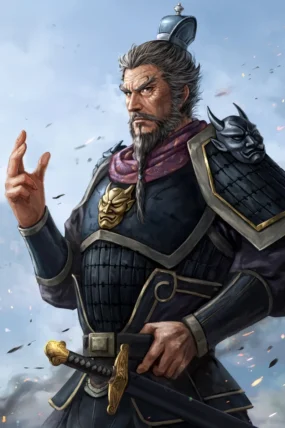
- Lu Bu (吕布, Lã Bố): Adopted son of Dong Zhuo, Diaochan’s lover and later husband; kills Dong Zhuo and dies at Xiapi.
- Zhang Liao (张辽, Trương Liêu): Lu Bu’s officer at Xiapi who urges firm resistance before eventually serving Cao Cao (Chapter 19).
- Chen Gong (陈宫, Trần Cung): Lu Bu’s strategist during the Xiapi siege — debates surrender while Diaochan remains in the inner quarters.
In Novel
Chapter 8
- Diaochan (貂蝉, Điêu Thuyền): In Wang Yun’s moonlit garden she weeps for the state’s ruin, offers her life, and accepts the Chain Stratagem — to be given to Dong Zhuo while binding Lu Bu’s heart — immediately before the Luoyang burning and western removal of the court.
Chapters 8–9 (Fengyi Pavilion)
- Diaochan (貂蝉, Điêu Thuyền): Clings to Lu Bu when Dong Zhuo surprises them at Fengyi Pavilion; accuses Dong Zhuo of seizing her and drives Lu Bu’s jealousy until he joins Wang Yun’s assassination plot.
Chapter 9
- Diaochan (貂蝉, Điêu Thuyền): After Dong Zhuo is killed, passes to Lu Bu’s household; flees Wang Yun’s doomed mansion when Li Jue and Guo Si storm Luoyang.
Chapter 19
- Diaochan (貂蝉, Điêu Thuyền): Lu Bu’s consort during the Xiapi siege — present in the inner quarters while Cao Cao invests the city and Lu Bu’s officers debate surrender; her story ends when Xiapi falls.
In History
Summary
- Diaochan (貂蝉, Điêu Thuyền) is not a historical person. No Eastern Han or Three Kingdoms chronicle records the name. The romance invented her to dramatize how Dong Zhuo’s household destroyed itself.
Historical kernel (Lu Bu biography)
- Pei Songzhi’s annotation to Sanguozhi, Lu Bu biography: Dong Zhuo once gave Lu Bu a serving woman; the two quarreled over her — a one-line anecdote without a personal name, later expanded into Diaochan’s full stratagem in the novel.
Literary afterlife
- Ming–Qing opera (Continuous Stratagems / 连环计), folk painting, and modern games turned Diaochan into a Four Beauties archetype — always fictional, but culturally inseparable from Wang Yun, Dong Zhuo, and Lu Bu.
Historical Record
- Sanguozhi, Lu Bu biography (Pei Songzhi note): unnamed woman, not 貂蝉.
- No entry in Hou Hanshu or formal genealogies — contrast with documented Wang Yun (d. 192 AD) and Dong Zhuo’s 192 assassination in historical annals.
Gallery




1 comment
Một trong tứ đại mỹ nhân