
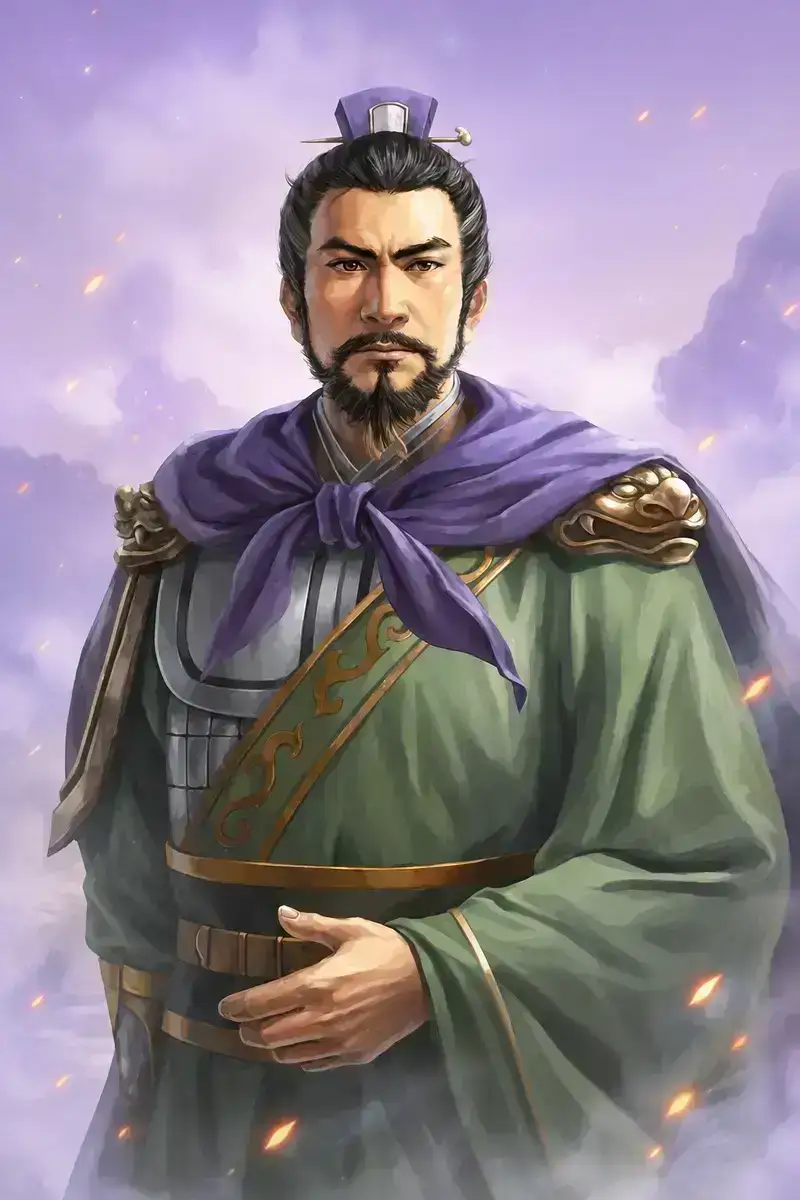
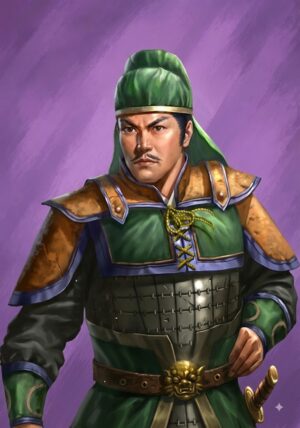

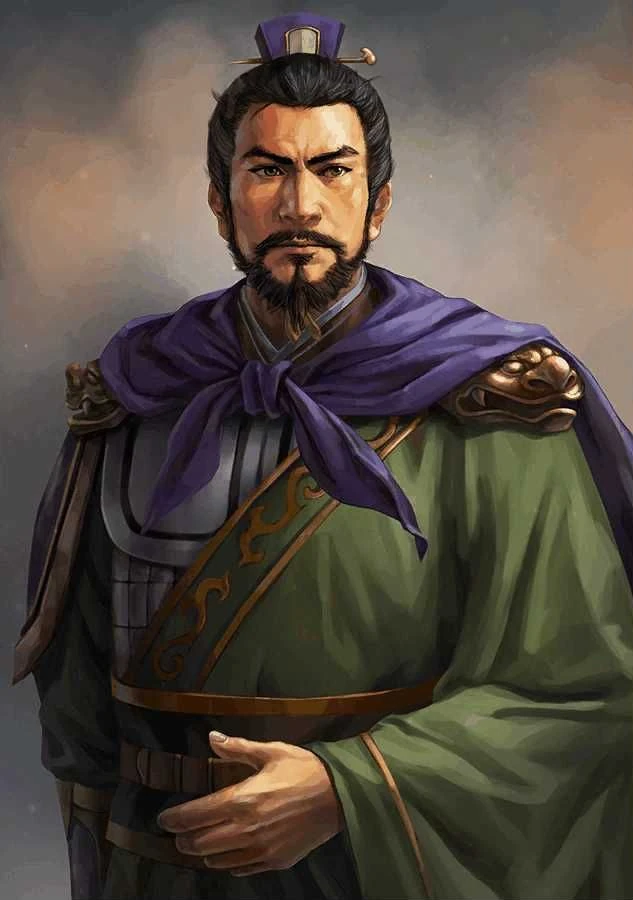
Here is the exhaustive biography of Huang Quan (黃權 / 黄权), courtesy name Gongheng (公衡) (? – 240), a general and official who served Liu Zhang, Liu Bei (Shu), and finally Cao Wei, incorporating historical records and the narrative of Romance of the Three Kingdoms.
Contents
Historical Career
Huang Quan was a native of Langzhong in Baxi Commandery. He first served Liu Zhang and opposed Zhang Song’s plan to invite Liu Bei into Yi Province, warning that treating Liu Bei as an equal would create dual loyalties. After Liu Bei took Yi, Huang Quan entered his service and was highly valued for counsel on both domestic and foreign affairs.
When Liu Bei prepared the eastern campaign against Sun Quan to avenge Guan Yu (221–222), Huang Quan urged caution and a defensive posture, noting that Wu controlled the Yangtze. Liu Bei rejected the advice and instead appointed Huang Quan General Who Guards the North, ordering him to watch the northern bank against possible Wei intervention. After the catastrophic defeat at Yiling / Xiaoting, the Shu retreat routes were cut; Huang Quan, isolated north of the river, had no path back to Shu and surrendered to Wei together with Pang Lin and more than three hundred officers.
Liu Bei refused to punish Huang Quan’s family, declaring, “It is I who have failed Huang Quan; Huang Quan has not failed me.” When Cao Pi asked why he had come over, Huang Quan replied: “Lord Liu treated me generously so I won’t surrender to Sun Quan. I can’t return to Shu so I chose to submit to Wei. As a commander of a defeated army, I already feel grateful for being spared from death.” Cao Pi was impressed, appointed him Palace Attendant and General Who Guards the South, and enfeoffed him as Marquis of Yuyang. Later false reports claimed Liu Bei had executed Huang Quan’s family; Huang Quan correctly judged the news false and asked Cao Pi to wait for confirmation. He alone among Wei officials did not congratulate Cao Pi on Liu Bei’s death in 223. He rose further under Cao Rui and Cao Fang, dying in 240; his son Huang Yong inherited the marquisate, while another son, Huang Chong, remained in Shu and later served under Zhuge Zhan.
Romance of the Three Kingdoms Portrayal
The novel largely follows the historical outline. At the end of Chapter 64 Huang Quan is sent by Liu Zhang to seek aid from Zhang Lu, who in turn releases Ma Chao. During the eastern campaign he again advises against the advance; after the defeat he is forced to surrender to Wei. The novel adds a condemnatory poem:
“That was a pity that Huang Quan grudged to die; / Though he yielded to Wei, not Wu, / Yet he crooked the knee in an alien court, / Which the loyal cannot do.”
Thus the novel acknowledges the forced nature of the surrender yet still frames it as a moral failure.
Huang Quan (黃權) — Historical & Literary Timeline
c. 200–214 AD — Service under Liu Zhang
Opposition to Inviting Liu Bei
Native of Langzhong, Baxi. Serves Liu Zhang; opposes Zhang Song’s proposal to invite Liu Bei. After Liu Bei takes Yi Province, enters his service and becomes a trusted counsellor.
221–222 AD — Battle of Yiling / Xiaoting
Advice Rejected & Forced Defection
Urges Liu Bei to adopt a defensive stance against Wu. Appointed General Who Guards the North to watch the Wei frontier. After the Shu defeat, retreat routes are cut; surrenders to Wei with his isolated command.
222–240 AD — Career in Wei & Death
Marquis of Yuyang
Received by Cao Pi; explains his surrender with dignity. Correctly dismisses false reports of his family’s execution. Serves under Cao Rui and Cao Fang; dies in 240. Posthumously honoured as Marquis Jing. Son Huang Chong remains loyal to Shu.
Historical Note
Historically Huang Quan is remembered as a loyal and clear-sighted officer whose defection was forced by geography rather than choice. Liu Bei’s refusal to punish his family and Huang Quan’s dignified reply to Cao Pi became classic illustrations of mutual trust between lord and vassal. The novel retains the essential facts but adds a moralising poem that treats the surrender itself as a stain, reflecting the later ideal of absolute loyalty to a single dynasty. In both history and fiction he stands as one of the few figures who served three regimes yet preserved a reputation for integrity.
For detailed historical records, archives, and official chronicles, explore Huang Quan on Wikipedia.
Key Relationships
Family
- Huang Yong (黄邕, Hoàng Ung): Son. Followed Huang Quan into Cao Wei service and received a Guannei marquisate (historical; limited novel attention).
- Huang Chong (黄崇, Hoàng Sùng): Son who remained in Shu. Served as Master of Writing; died resisting Deng Ai (邓艾, Đặng Ngải) at Mianzhu (263). Novel/History diverge on Huang Quan’s own path (Wei surrender) but both keep Chong’s Shu loyalty.
Friends
- Liu Zhang (刘璋, Lưu Chương): First lord. Huang Quan remonstrates so fiercely against inviting Liu Bei (刘备, Lưu Bị) that he bites through his own front teeth (novel Ch. 60). Historical: likewise opposed Liu Bei’s entry / soft surrender.
- Liu Bei (刘备, Lưu Bị): After Chengdu falls, receives Huang Quan (novel: only after Liu Zhang yields — Ch. 65). Trusts him in Hanzhong advice and later northern-bank command at Yiling. History: when Huang Quan cannot return after Yiling, Liu Bei does not punish his family.
- Fa Zheng (法正, Pháp Chính): Fellow Yi/Hanzhong strategist in Liu Bei’s brain trust (novel Ch. 71 orbit).
- Cao Pi (曹丕, Tào Phi): Welcomes Huang Quan after the forced Wei surrender (222) with high guard / marquis honors — novel Ch. 82 and SGZ Wei notices.
- Sima Yi (司马懿, Tư Mã Ý): Wei power who respects Huang Quan’s integrity in later court tradition.
Enemies
- Xiahou Yuan (夏侯渊, Hạ Hầu Uyên): Wei commander in Hanzhong against whom Huang Quan’s advice helps Liu Bei’s mountain/ambush design (novel Ch. 71).
- Lu Xun (陆逊, Lục Tốn): Wu commander whose Yiling fire attack (222) cuts Huang Quan’s northern detachment from retreat — forcing the Wei surrender rather than a Wu one.
- Zhang Lu (张鲁, Trương Lỗ): Hanzhong theocrat earlier checked by Huang Quan’s counsel while still under Liu Zhang.
Other
- Zhuge Liang (诸葛亮, Gia Cát Lượng): Shu chancellor of the same late Liu Bei court; parallel civil-military pillar while Huang Quan holds northern river command in the Wu war.
- Wang Lian (王连, Vương Liên) / other Yi holdouts: Historical peers in the Liu Zhang → Liu Bei transition who, like Huang Quan, illustrate reluctant transfer of loyalty.
- Yiling / Xiaoting northern bank: Operational theater that defines Huang Quan’s last Shu assignment and the novel’s surrender climax (Ch. 81–82).






In Novel
Chapter 60
- Huang Quan (黄权, Hoàng Quyền): An advisor to Liu Zhang (刘璋, Lưu Chương), courtesy name Gongheng (公衡), who bit through his own front teeth in grief while desperately admonishing Liu Zhang against inviting Liu Bei (刘备, Lưu Bị) into Yizhou.
Chapter 65
- Huang Quan (黄权, Hoàng Quyền): Surrendered to Liu Bei (刘备, Lưu Bị) only after Liu Zhang formally yielded Chengdu, receiving appointment as Lieutenant General.
Chapter 71
- Huang Quan (黄权, Hoàng Quyền): Devised strategic ambushes in the Hanzhong campaign, helping Liu Bei (刘备, Lưu Bị) outmaneuver Cao Cao’s (曹操, Tào Tháo) northern army.
Chapter 81
- Huang Quan (黄权, Hoàng Quyền): Admonished Liu Bei (刘备, Lưu Bị) against personally commanding the vanguard invasion of Eastern Wu, volunteering to lead the front while urging the Emperor to stay in the rear.
Chapter 82
- Huang Quan (黄权, Hoàng Quyền): Assigned by Liu Bei (刘备, Lưu Bị) to command the northern bank defenses along the Yangtze during the Battle of Xiaoting (Battle of Yiling); after Shu Han’s main force was routed by fire, Huang Quan was cut off from retreat and surrendered to Cao Wei, where Cao Pi (曹丕, Tào Phi) honored him as Senior General of the Guard.
In History
Year: 214 AD
- Huang Quan (黄权, Hoàng Quyền) served Liu Zhang (刘璋, Lưu Chương) in Yi Province and opposed Liu Bei’s advance. He advised Liu Zhang against surrendering and later withdrew toward Guanghan when Liu Bei captured Chengdu.
Year: 221 AD
- Huang Quan (黄权, Hoàng Quyền) was appointed a major commander by Liu Bei (刘备, Lưu Bị) during the campaign against Wu. He was assigned to command forces north of the Yangtze because Liu Bei feared that Wu might block the Shu army’s retreat.
Year: 222 AD
- Huang Quan (黄权, Hoàng Quyền) was cut off from Shu territory after Lu Xun (陆逊, Lục Tốn) defeated Liu Bei at Yiling. Unable to return, Huang Quan surrendered to Wei. Liu Bei did not execute Huang Quan’s family and continued to regard him with respect.
Year: 222 AD
- Huang Quan (黄权, Hoàng Quyền) entered the service of Cao Pi (曹丕, Tào Phi) and was treated with respect. He was appointed a senior Wei official and later received a marquisate.
Year: 240 AD
- Huang Quan (黄权, Hoàng Quyền) died while serving Wei. His historical biography records him as a capable and principled military adviser who served different states as circumstances changed.
Gallery