
Contents
Biography & Historical Record
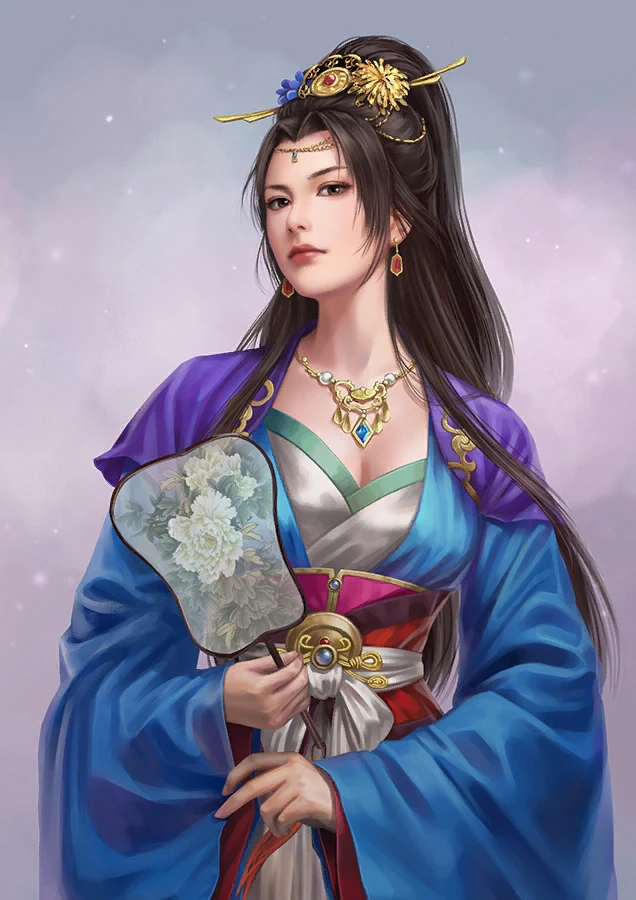
Lady Cui (Cuishi) was a noblewoman of the state of Cao Wei during the late Eastern Han dynasty and Three Kingdoms period. She came from the prestigious Cui clan of Anping Commandery (present-day Anping County, Hebei Province), one of the most eminent gentry families in northern China. She was the niece of Cui Yan, a respected chief minister and senior advisor under Cao Cao.
Lady Cui married Cao Zhi, the Prince of Chensi and the famed poet son of Cao Cao. Known for her beauty, aristocratic elegance, and refined upbringing, she lived at the Wei court during the intense rivalry between Cao Zhi and his older brother Cao Pi for the position of Cao Cao’s heir. Historically, Cao Cao maintained extremely strict sumptuary laws emphasizing frugality, simplicity, and modesty in official attire and palace life. In 216 AD, during an official palace gathering, Cao Cao caught Lady Cui wearing an excessively lavish, embroidered silk dress that breached his imperial frugality edicts. Infuriated by her extravagance and viewing it as a public defiance of state law, Cao Cao ordered Lady Cui to return to her residence and commit suicide by hanging.
Her tragic execution dealt a crushing psychological blow to Cao Zhi and severely damaged his political standing at court, contributing significantly to his ultimate failure in the succession contest against Cao Pi.
Role in Romance of the Three Kingdoms
In Luo Guanzhong’s Romance of the Three Kingdoms, Lady Cui’s background and tragic fate are linked to the court rivalries of Cao Wei. As the niece of Cui Yan and wife of Cao Zhi, her presence highlights the political tensions surrounding the succession dispute between Cao Pi and Cao Zhi. Her execution for wearing forbidden lavish attire underscores Cao Cao’s iron discipline and unyielding enforceability of law, serving as a dark turning point that isolated Cao Zhi from court influence prior to Cao Pi’s ascension.
Lady Cui (崔氏) — Literary Timeline
216 AD
Palace Sumptuary Violation and Death
Attends a court assembly wearing forbidden embroidered silk dress; caught by Cao Cao defying frugality edicts and forced to commit suicide in her quarters.
Key Relationships
Family
- Cui Yan (崔琰, Thôi Diễm) — Uncle and a high-ranking official under Cao Cao who belonged to the prestigious Cui clan of Anping.
- Cao Zhi (曹植, Tào Thực) — Husband and the famed poet-prince of Cao Wei.
Friends
- No information
Enemies
- Cao Cao (曹操, Tào Tháo) — Father-in-law who ordered her to commit suicide in 216 AD for violating imperial sumptuary laws regarding extravagant clothing.
- Cao Pi (曹丕, Tào Phi) — Brother-in-law whose political rivalry with her husband, Cao Zhi, was exacerbated by the scandal surrounding her death.
Other
- Lady Bian (卞氏, Biện Thị) — Mother-in-law and wife of Cao Cao.
In Novel
Chapter 107
- Cuishi (崔氏, Thôi Thị): Cuishi is a woman associated with the Wei court and the Cao family during the later political struggles. Her appearance is brief and is tied to family and court relationships rather than battlefield events.
In History
Summary
- Cui Shi (崔氏, Thôi Thị) is a family-name designation rather than a complete personal name. Several women in Three Kingdoms sources are identified only by the surname Cui, so the exact individual must be distinguished from other Cui women.
Historical Record
- The supplied identity does not provide enough information to attribute a unique biography to one historical Cui Shi without risking conflation. Her page should therefore avoid assigning events belonging to another woman named Cui Shi.
Gallery