


Contents
Biography & Historical Record
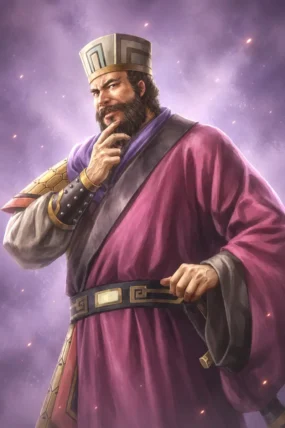
Huang Wan, courtesy name Ziyan, was a renowned Eastern Han dynasty grand minister, scholar, and fierce loyalist who served as Grand Commandant (Taiwei), Palace Attendant (Guanglu Daifu), and Intendant of Henan (Sili Xiaowei). Hailing from Anlu County in Jiangxia Commandery (modern-day Anlu, Hubei Province), Huang Wan belonged to an illustrious, highly influential aristocratic lineage, being the great-grandson of Grand Master of the Secretariat Huang Xiang and the grandson of Grand Commandant Huang Qiong. Documented in Chen Shou’s Records of the Three Kingdoms (Sanguozhi – Book of Wei, Biography of Dong Zhuo) and Fan Ye’s Book of Later Han (Hou Han Shu – Biography of Huang Wan), Huang Wan was famous from early childhood as a prodigy of sharp wit and incorruptible character. Throughout his distinguished public career, he maintained an unyielding devotion to the Han imperial house, openly risking his life to oppose Dong Zhuo’s tyranny and serving as a primary co-conspirator alongside Wang Yun in the successful assassination of Dong Zhuo.
In early 190 AD, following the mobilization of the eighteen-warlord coalition against Dong Zhuo outside Luoyang, a terrified Dong Zhuo proposed forcefully relocating Emperor Xian, the imperial court, and the entire civilian population westward from Luoyang to the ruined ancient capital of Chang’an. At an imperial court assembly, Grand Commandant Huang Wan, alongside Grand Tutor Yang Biao and Minister of Works Xun Shuang, bravely stepped forward to denounce the forced relocation. Huang Wan argued passionately that Chang’an had been reduced to ashes during the Red Eyebrow Rebellion of Wang Mang’s era, warning that abandoning the magnificent ancestral palaces of Luoyang to drag millions of refugees into a desolate wasteland would destroy the empire. Infuriated by Huang Wan’s defiance, Dong Zhuo immediately stripped Huang Wan of his post as Grand Commandant and demoted him to a commoner. Despite his demotion, Huang Wan refused to abandon the state and was subsequently reassigned as Intendant of Henan.
Determined to save the Han dynasty from destruction, Huang Wan secretly collaborated in Chang’an with Minister over the Masses Wang Yun and Master of Writing Shisun Rui to orchestrate a counter-coup. In secret inner-court councils, Huang Wan provided critical strategic insights, identifying the growing emotional rift between Dong Zhuo and his champion general Lu Bu. When Wang Yun agonized over finding a trustworthy envoy to lure Dong Zhuo out of his fortified citadel at Mei’wu into the imperial palace, Huang Wan astutely recommended Tiger General Li Su, knowing that Li Su harbored deep resentment toward Dong Zhuo for failing to grant him proper military promotions. On May 22, 192 AD, the conspiracy succeeded brilliantly when Lu Bu impaled Dong Zhuo outside the palace gates.
However, the restoration of Han imperial authority was tragically short-lived. In July 192 AD, Dong Zhuo’s remnant generals Li Cui and Guo Si rallied a massive Xiliang army, stormed Chang’an, and overwhelmed the palace defenses. While Wang Yun was executed on the steps of the imperial terrace, Huang Wan was arrested and thrown into a subterranean dungeon. Refusing to beg for mercy or compromise his moral principles, Huang Wan was brutally executed in prison at fifty-one years of age. His son, Huang Kui, inherited his father’s deep hatred of tyrants and later co-conspired with Ma Teng to assassinate Cao Cao before being betrayed by Miao Ze.
Role in Romance of the Three Kingdoms
In Luo Guanzhong’s novel Romance of the Three Kingdoms, Huang Wan appears in Chapter 6 and Chapter 9 as a heroic, fearless Han loyalist and master strategist. In Chapter 6, when Dong Zhuo proposes forcibly moving the capital to Chang’an, Huang Wan fearlessly confronts Dong Zhuo alongside Yang Biao, proclaiming: ‘Minister Yang Biao speaks the truth! When Wang Mang usurped power, the Red Eyebrows burned Chang’an to ashes, leaving Guan’zhong desolate. Now the Prime Minister wishes to force the Emperor to abandon our grand ancestral palaces of Luoyang for a dead wasteland; how can the empire endure this?’ Dong Zhuo roars in anger and strips Huang Wan of his office. In Chapter 9, Huang Wan serves as Wang Yun’s primary co-conspirator in Chang’an. When Wang Yun seeks an envoy to lure Dong Zhuo into the palace, Huang Wan steps forward and advises: ‘Tiger General Li Su is the perfect candidate! He is a fellow countryman of Lu Bu and bitterly resents Dong Zhuo for denying his promotion. Entrust this task to him, and our grand enterprise will succeed!’ Following Dong Zhuo’s death and the tragic invasion of Chang’an by Li Cui and Guo Si, Huang Wan is imprisoned and murdered, standing in literary tradition as a noble martyr who sacrificed everything for the Han dynasty.
Huang Wan (黃琬) — Historical & Literary Timeline
Bravely Opposing Dong Zhuo & Stripped of High Office
Serves as Grand Commandant; fearlessly confronts Dong Zhuo alongside Yang Biao against moving the imperial capital to Chang’an, resulting in his immediate demotion by an enraged Dong Zhuo.
Masterminding Dong Zhuo’s Assassination
Secretly collaborates with Wang Yun and Shisun Rui to plan Dong Zhuo’s assassination; recommends Li Su as the envoy to lure Dong Zhuo into Lu Bu’s palace trap.
Imprisonment & Execution at Age Fifty-One
Captured and imprisoned following Li Cui and Guo Si’s siege of Chang’an; brutally executed in prison at age fifty-one after refusing to submit to the rebel generals.
For detailed historical records, archives, and official chronicles, explore Huang Wan on Wikipedia.
Key Relationships
Family
- Huang Xiang (黄香, Hoàng Hương): Great-grandfather; celebrated Eastern Han scholar and Grand Master of the Secretariat who established the family’s prominent lineage.
- Huang Qiong (黄琼, Hoàng Quỳnh): Grandfather; esteemed Eastern Han statesman who served as Grand Commandant and raised Huang Wan in an environment of high civic duty.
- Huang Kui (黄奎, Hoàng Khuê): Son; served as Attendant at the Yellow Gates and inherited his father’s unyielding hatred of tyrants, later conspiring against Cao Cao.
Friends
- Wang Yun (王允, Vương Doãn): Minister over the Masses and primary ally; collaborated closely with Huang Wan in Chang’an to orchestrate the successful counter-coup and assassination of Dong Zhuo in 192 AD.
- Yang Biao (杨彪, Dương Bưu): Grand Tutor and fellow imperial loyalist; stood alongside Huang Wan in 190 AD to openly denounce Dong Zhuo’s forced relocation of the capital to Chang’an.
- Shisun Rui (士孙瑞, Sĩ Tôn Thụy): Master of Writing; served as a core co-conspirator alongside Huang Wan and Wang Yun in formulating the plot to execute Dong Zhuo.
- Li Su (李肃, Lý Túc): Tiger General; identified and recommended by Huang Wan to act as the trusted envoy to lure Dong Zhuo out of Mei’wu Citadel into the palace ambush.
- Lu Bu (吕布, Lữ Bố): Champion general; recruited by Huang Wan and Wang Yun to deliver the fatal strike against Dong Zhuo at the palace gates in 192 AD.
- Xun Shuang (荀爽, Tuân Sảng): Minister of Works; aligned with Huang Wan and Yang Biao in their court opposition against Dong Zhuo’s relocation plan in 190 AD.
Enemies
- Dong Zhuo (董卓, Đổng Trác): Tyrannical warlord; stripped Huang Wan of his Grand Commandant post in 190 AD after Huang Wan opposed his policies, and was ultimately assassinated through the conspiracy Huang Wan co-led in 192 AD.
- Li Jue (李傕, Lý Thôi): Dong Zhuo’s general; invaded Chang’an in July 192 AD, captured Huang Wan, and ordered his execution in prison after Huang Wan refused to surrender his principles.
- Guo Si (郭汜, Quách Dĩ): Xiliang commander; co-led the 192 AD assault on Chang’an that dismantled the loyalist government and led to Huang Wan’s imprisonment and martyrdom.
Other
- Emperor Xian of Han (汉献帝, Hán Hiến Đế): Eastern Han monarch; Huang Wan served as his loyal grand minister and gave his life defending the dignity and authority of the imperial court.
In Novel
Chapter 6
- Huang Wan (黄琬, Huáng Wǎn): Huang Wan serves as Grand Commandant during Dong Zhuo’s decision to move the Han capital from Luoyang to Chang’an. Together with Yang Biao and Xun Shuang, he argues that abandoning Luoyang will damage the Han state and that Chang’an is devastated and unsuitable as a new capital. Dong Zhuo rejects the advice and dismisses Huang Wan from office.
Chapter 9
- Huang Wan (黄琬, Huáng Wǎn): Huang Wan is associated with Wang Yun’s faction after Dong Zhuo’s death and participates in the political effort to restore the Han court. His role is primarily that of a senior Han statesman rather than a battlefield commander.
In History
Summary
- Huang Wan (黄琬, Hoàng Uyển) was a high-ranking official of the late Eastern Han and a member of an influential political family.
Early Career
- He gained distinction at a young age and rose through provincial and central offices.
- Huang Wan was eventually appointed to senior positions at the Han court, including the office of Minister over the Masses.
Political Crisis
- He became involved in the factional politics surrounding Dong Zhuo’s seizure of power.
- Huang Wan opposed Dong Zhuo and was eventually killed during the political purges that followed Dong Zhuo’s domination of Luoyang.
Historical Record
- Classification: Historical.