Contents
Biography & Historical Record
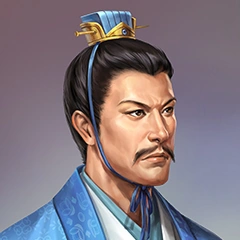
Jiang Ji (died 249 AD), courtesy name Zisu, was a distinguished military strategist, high-ranking statesman, and senior minister of the state of Cao Wei during the Three Kingdoms period. Hailing from Pingling, Dongping Commandery, he began his public career as a regional official in Yan Province before joining Cao Cao’s advisory corps. Renowned for his sharp geopolitical insight, military foresight, and unwavering honesty, Jiang Ji served as a trusted advisor across four generations of Cao Wei rulers: Cao Cao, Cao Pi, Cao Rui, and Cao Fang.
Throughout his long career, Jiang Ji consistently provided critical strategic counsel at pivotal historical junctures. In 208 AD, when Sun Quan besieged Hefei, Jiang Ji devised a brilliant deceptive ruse by spreading fake reports that a 40,000-strong relief army under Zhang Xi was approaching, convincing Sun Quan to burn his siege camps and retreat. In 219 AD, following Guan Yu’s crushing victory over Cao Ren and Yu Jin at Fan Castle, when Cao Cao contemplated relocating the capital northward from Xu to escape the threat, Jiang Ji and Sima Yi famously dissuaded him, pointing out that Sun Quan and Liu Bei were deeply divided and proposing an alliance with Eastern Wu to attack Guan Yu’s rear in Jing Province. Under Emperor Cao Pi and Emperor Cao Rui, Jiang Ji rose to highest ministerial ranks, including Minister of Finance, Director of the Secretariat, and Grand Marshal (Taiwei). In 249 AD, during the Incident at Gaoping Tombs, Jiang Ji supported Sima Yi’s coup against the autocratic regent Cao Shuang, writing a personal letter guaranteeing Cao Shuang’s safety and noble status if he surrendered his military power. However, when Sima Yi broke the pledge and executed Cao Shuang along with his entire clan, Jiang Ji was consumed by intense guilt and remorse, falling ill and passing away shortly thereafter in 249 AD. He was posthumously honored as Marquis Zhong.
Role in Romance of the Three Kingdoms
In Luo Guanzhong’s historical novel Romance of the Three Kingdoms, Jiang Ji is portrayed as a prudent and highly respected senior advisor of Cao Wei. He makes key appearances during major strategic discussions in the middle and late chapters of the novel. In Chapter 53, he devises the ingenious false rumor strategy that successfully scares Sun Quan into lifting the siege of Hefei. In Chapter 73, alongside Sima Yi, he advises Cao Cao against abandoning the capital and instead formulates the secret alliance with Sun Quan that leads to Guan Yu’s capture and death at Maicheng. In Chapter 107, during the Incident at Gaoping Tombs, Jiang Ji plays a decisive role by writing a formal letter of assurance to Cao Shuang on Sima Yi’s behalf, persuading Cao Shuang to lay down his arms. Upon witnessing Sima Yi’s ruthless extermination of Cao Shuang’s family, Jiang Ji dies of grief and remorse, deeply regretting his unwitting role in the betrayal.
Jiang Ji (蔣濟) — Historical & Literary Timeline
Lifting the Siege of Hefei
Fabricates intelligence claiming a 40,000-man relief army under Zhang Xi is near, bluffing Sun Quan into burning his siege engines and retreating from Hefei.
Alliance against Guan Yu
Dissuades Cao Cao from moving the capital from Xu; collaborates with Sima Yi to propose a joint strike with Sun Quan against Guan Yu’s base in Jing Province.
Campaign Against Eastern Wu
Counsels Cao Pi during his southern campaign against Wu, accurately warning him of the logistical dangers of naval warfare on the Yangtze.
Incident at Gaoping Tombs and Death
Assists Sima Yi in ousting Cao Shuang by writing a letter guaranteeing Cao Shuang’s safety. Following Sima Yi’s execution of Cao Shuang’s clan, Jiang Ji dies of grief and guilt shortly after.
Key Relationships
Family
- Jiang Xiu (蒋秀, Tưởng Tú) — Son of Jiang Ji who inherited his father’s title and peerage within the Cao Wei state.
Friends
- Sima Yi (司马懿, Tư Mã Ý) — A long-term political and military colleague who collaborated with Jiang Ji to advise against moving the capital in 219 AD and later orchestrated the Incident at Gaoping Tombs in 249 AD.
Enemies
- Sun Quan (孙权, Tôn Quyền) — The ruler of Eastern Wu whom Jiang Ji deceived with false intelligence during the siege of Hefei in 208 AD, forcing him to retreat.
- Guan Yu (关羽, Quan Vũ) — The Shu Han general whose encirclement of Fan Castle was countered by a strategic alliance between Wei and Wu, a plan co-formulated by Jiang Ji in 219 AD.
- Cao Shuang (曹爽, Tào Sảng) — The regent of Cao Wei who was ousted from power during the 249 AD Incident at Gaoping Tombs; Jiang Ji’s role in guaranteeing his safety, which was later betrayed by Sima Yi, led to Jiang Ji’s death from remorse.
Other
- Cao Cao (曹操, Tào Tháo) — The founder of Cao Wei who recruited Jiang Ji and relied on his geopolitical insight and military foresight.
- Cao Pi (曹丕, Tào Phi) — The second ruler of Cao Wei who valued Jiang Ji’s counsel, particularly regarding the logistical risks of naval campaigns against Eastern Wu.
- Cao Rui (曹叡, Tào Duệ) — The third ruler of Cao Wei who continued to employ Jiang Ji in high-ranking ministerial positions.
- Cao Fang (曹芳, Tào Phương) — The fourth ruler of Cao Wei under whom Jiang Ji served until his death in 249 AD.
In Novel
Chapter 95
- Jiang Ji (蒋济, Tưởng Tế): Jiang Ji is one of Sima Yi’s advisers during the crisis at Xincheng. He participates in the planning against Meng Da and supports the rapid march intended to prevent Meng Da from completing his rebellion.
Chapter 96
- Jiang Ji (蒋济, Tưởng Tế): Jiang Ji remains involved in Wei’s strategic response after Meng Da’s death and helps assess the military consequences of the campaign.
In History
Summary
- Jiang Ji (蒋济, Tưởng Tế), courtesy name Zitong (子通), was an important Wei statesman, military adviser, and political administrator.
- He served successive Cao Wei rulers and became especially influential in the political and military affairs of the central government.
Early Career
- Jiang Ji first became known as an administrator in the Huainan region and was later recruited into Cao Cao’s government.
- His ability to combine administrative knowledge with strategic judgment led to continued promotion.
Period I — Service under Cao Cao
- Jiang Ji advised Cao Cao on military and logistical affairs and held important administrative responsibilities.
Period II — Cao Wei Court
- Under Cao Pi and Cao Rui, Jiang Ji became a senior official and participated in important decisions involving military command, taxation, and court administration.
- He was also involved in the political controversies surrounding succession and the conduct of senior officials.
Later Career
- Jiang Ji continued to serve under Cao Fang and became involved in the political struggle that eventually brought Sima Yi to the forefront.
- He died in 249 AD, during the period when the Sima clan was consolidating its control over Wei politics.
Historical Record
- Jiang Ji was a securely documented historical figure. His biography appears in Wei Book 14 of the Records of the Three Kingdoms.