
Contents
Biography & Historical Record
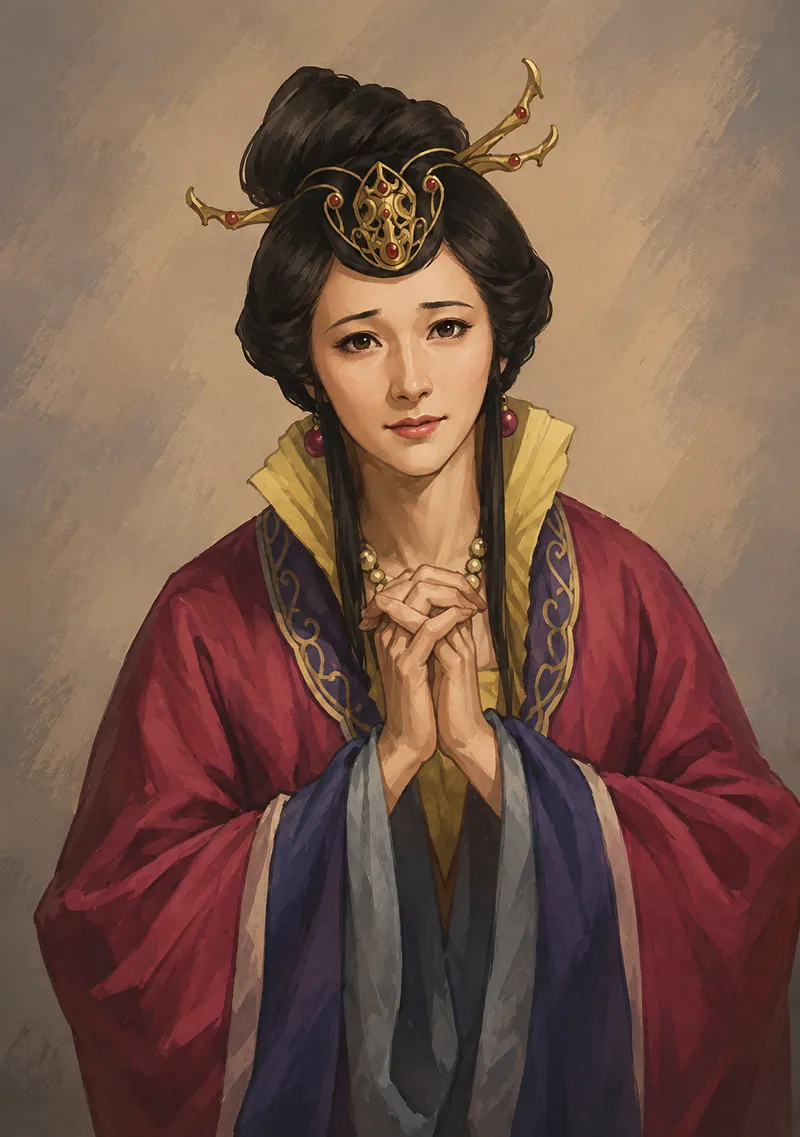
Lady Gan (died c. 210 AD), posthumously honored as Empress Zhaolie, was the principal consort of Liu Bei, the founding emperor of Shu Han, and the biological mother of his successor, Liu Shan (A’Dou). Hailing from Pei Commandery, she was born into an impoverished peasant family during the late Eastern Han dynasty. According to historical anecdotes recorded in the Shi Yi Ji, when Lady Gan grew into adolescence, a local fortune teller observed her ethereal physical appearance and predicted that she was destined for extraordinary royalty and would one day reside in an imperial palace. Her legendary beauty—characterized by skin as white and translucent as pure jade—earned her the celebrated cultural moniker ‘Jade Beauty’. It was said that Liu Bei possessed a three-foot-tall jade statue and that, in the lamplight, Lady Gan’s skin was indistinguishable from the precious stone. When court officials grew distracted by the statue, Lady Gan famously advised Liu Bei to discard the ornament to avoid losing his focus on statecraft and military liberation, earning her praise as a woman of profound wisdom.
In 194 AD, while stationed in Yu Province, Liu Bei took Lady Gan as his consort. Because Liu Bei’s previous wives had passed away prematurely, Lady Gan managed all household affairs and functioned as the de facto lady of the clan. Throughout Liu Bei’s volatile career, Lady Gan endured extraordinary hardship and was repeatedly captured by rival forces during military retreats. In 196 AD and 198 AD, she was captured during Lu Bu’s surprise attacks on Xiapi and Xiaopei, respectively. In 200 AD, following Cao Cao’s invasion of Xu Province, she was taken prisoner alongside Lady Mi and escorted to Xuchang under the protective custody of Guan Yu. In 208 AD, during the disastrous retreat at Changban in Dangyang, Liu Bei was forced to abandon his family once again under heavy pursuit from Cao Cao’s elite cavalry. Lady Gan, holding her infant son Liu Shan, was separated from the main army amidst the chaos. She was heroically rescued by Zhao Yun, who safely escorted her through enemy lines and delivered her to Zhang Fei at Changban Bridge. Following the Battle of Red Cliffs, as Liu Bei secured the commanderies of Jing Province, Lady Gan passed away from illness around 210 AD and was buried in Nan Commandery. In 221 AD, upon ascending the imperial throne, Liu Bei posthumously honored her as Lady Huangsi. In 223 AD, following Liu Bei’s death, Chancellor Zhuge Liang petitioned Emperor Liu Shan to elevate Lady Gan to Empress Zhaolie, formally entombing her alongside Liu Bei at the Hui Mausoleum in Chengdu.
Related arc: Zhao Yun Rescues A Dou at Dangyang (ROTK Chapter 41).
Role in Romance of the Three Kingdoms
In Luo Guanzhong’s historical novel Romance of the Three Kingdoms, Lady Gan is depicted as a virtuous, patient, and deeply dutiful noblewoman who endures endless hardship by Liu Bei’s side. Her narrative prominence centers on Chapters 25 through 27 during her captivity in Xuchang. Cao Cao, attempting to compromise Guan Yu’s integrity, assigns Guan Yu to share a single room with Lady Gan and Lady Mi. Guan Yu stands guard outside the door all night holding a burning torch, demonstrating unyielding moral rectitude and chivalry. Lady Gan is later escorted by Guan Yu through the famous ‘Overcoming Five Passes and Slaying Six Generals’ journey to reunite with Liu Bei. In Chapter 41 and Chapter 42, during the Siege of Changban, Lady Gan is separated from Liu Bei amidst the panicked fleeing refugees. Zhao Yun rides back into the thick of battle, locates Lady Gan crying among the crowd, and escorts her to safety at Changban Bridge before returning into enemy lines to rescue Lady Mi and infant A’Dou.
Lady Gan (甘夫人) — Historical & Literary Timeline
Marriage to Liu Bei
Marries Liu Bei in Yu Province as a consort; assumes complete management of the household as de facto matriarch following the deaths of Liu Bei’s earlier wives.
Captivity Under Lu Bu
Captured twice during Lu Bu’s surprise assaults on Xiapi and Xiaopei, eventually rescued and returned to Liu Bei after Cao Cao defeats Lu Bu at Xiapi.
Xuchang Captivity and Five Passes Journey
Captured at Xu Province by Cao Cao; protected by Guan Yu during their stay in Xuchang and escorted safely back to Liu Bei during the famous journey across five passes.
Birth of Liu Shan
Gives birth to Liu Bei’s eldest surviving son and heir, Liu Shan (A’Dou), at Xinye in Jing Province.
Battle of Changban and Rescue by Zhao Yun
Separated from Liu Bei’s main body during Cao Cao’s cavalry pursuit at Dangyang; rescued from the battlefield by Zhao Yun and delivered safely to Zhang Fei at Changban Bridge.
Death and Imperial Posthumous Honors
Passes away from illness in Nan Commandery around 210 AD; posthumously honored as Empress Zhaolie by Zhuge Liang and Liu Shan in 223 AD and reinterred alongside Liu Bei in Chengdu.
Key Relationships
Family
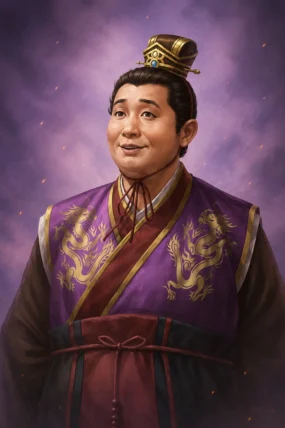
- Liu Bei (刘备, Lưu Bị) — Husband and founding emperor of Shu Han; he married her in 194 AD and she served as his primary consort and household manager.
- Liu Shan (刘禅, Lưu Thiện) — Son and successor to Liu Bei; she gave birth to him in 207 AD and he later honored her as Empress Zhaolie.
- Lady Mi (糜夫人, Mi Phu Nhân) — Co-wife and sister of Mi Zhu; they were both captured by Cao Cao’s forces in 200 AD and shared the hardships of the retreat at Changban in 208 AD.
- Lady Sun (孙夫人, Tôn Phu Nhân) — Co-wife; she married Liu Bei after Lady Gan’s death.
- Empress Wu (吴皇后, Ngô Hoàng Hậu) — Successor consort; she became Liu Bei’s empress after Lady Gan was posthumously honored.
Friends
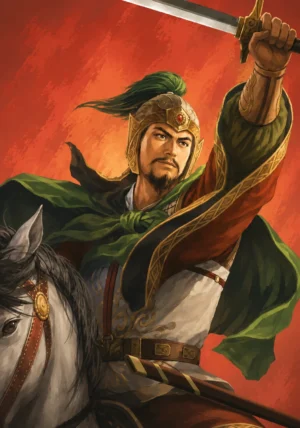
- Zhao Yun (赵云, Triệu Vân) — A loyal general who heroically rescued Lady Gan and her son during the chaotic retreat at the Battle of Changban in 208 AD.
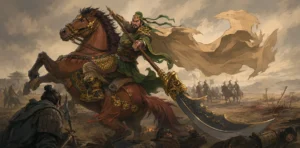
- Guan Yu (关羽, Quan Vũ) — Liu Bei’s sworn brother who protected Lady Gan during her captivity in Xuchang and escorted her safely through the five passes to reunite with Liu Bei.
- Zhang Fei (张飞, Trương Phi) — Liu Bei’s sworn brother who held the Changban Bridge in 208 AD to receive Lady Gan and Zhao Yun after their escape from enemy lines.
- Zhuge Liang (诸葛亮, Gia Cát Lượng) — Chancellor of Shu Han who, in 223 AD, petitioned Emperor Liu Shan to posthumously elevate Lady Gan to the rank of Empress Zhaolie.
Enemies
- Cao Cao (曹操, Tào Tháo) — Warlord who captured Lady Gan in 200 AD and whose cavalry pursuit at the Battle of Changban in 208 AD forced her separation from the main army.
- Lu Bu (吕布, Lã Bố) — Warlord who captured Lady Gan twice during his surprise attacks on Xiapi and Xiaopei between 196 AD and 198 AD.
Other
- No information
Appearance


In Novel
Chapter 41 — Liu Bei Flees Jingzhou; Zhao Yun Rescues A Dou at Dangyang
- Lady Gan (甘夫人, Cam phu nhân): Separated from Liu Bei‘s main body during Cao Cao’s cavalry pursuit at Dangyang while clutching infant Liu Shan (A Dou). Zhao Yun (赵云, Triệu Vân) found her among the refugees, escorted her through enemy lines, and delivered her to Zhang Fei (张飞, Trương Phi) at Changban Bridge before riding back into the battle to search for Lady Mi and A Dou.
In History
Summary
- Lady Gan (甘夫人, Cam Phu nhân) was a consort of Liu Bei and the mother of Liu Shan, the later emperor of Shu Han.
- Her personal name is not securely recorded in the contemporary historical sources. The name Gan Mei (甘梅), sometimes encountered in later tradition, is specifically treated as a later invention rather than a securely historical name.
Family and Relationship with Liu Bei
- Lady Gan became one of Liu Bei’s consorts during his years of political and military instability.
- She was the mother of Liu Shan, making her an important figure in the succession history of Shu Han even though the surviving historical record provides little personal detail about her life.
Year: 208 AD — Changban
- During the retreat from Jing Province after Cao Cao’s advance, Liu Bei’s family became separated from the main army. Later tradition and historical biography preserve the memory of the family members being recovered during the retreat.
Death and Posthumous Honours
- Lady Gan died before Liu Bei became emperor. Liu Bei later gave her the posthumous title Huangsi Furen (皇思夫人).
- After Liu Bei’s death, Liu Shan posthumously honored her as Empress Zhaolie (昭烈皇后) to match his father’s imperial posthumous title.
Historical Name versus Folklore
- The historical figure Lady Gan is genuine, but a personal name such as Gan Mei should not be presented as certain historical fact.
- Many dramatic episodes involving Lady Gan in Romance of the Three Kingdoms, including supernatural elements surrounding Liu Shan’s birth, are literary additions rather than securely documented history.
Historical Record
- Lady Gan was a historical figure. Her relationship with Liu Bei and Liu Shan is recorded in the Shu biographies of the Records of the Three Kingdoms.
Famous Allusion
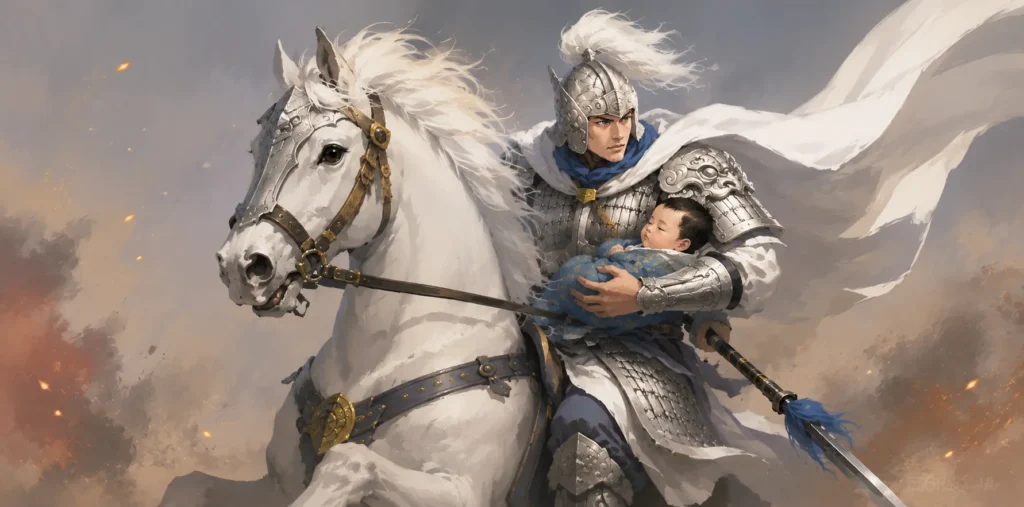
Zhao Yun Rescues A'Dou at Dangyang
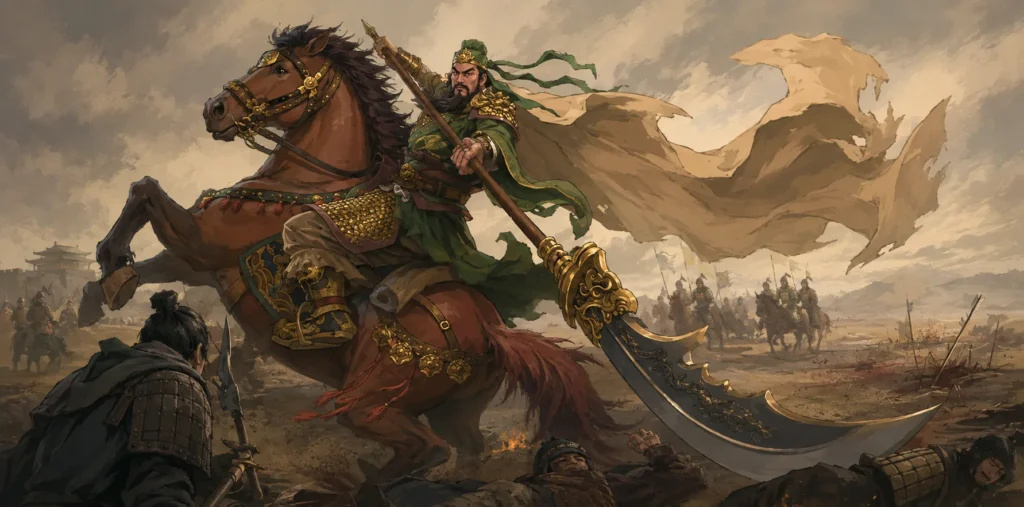
Crossing Five Passes and Slaying Six Generals